Materials
Aluminum vs HDPE patio furniture
Neither one rusts. One of them has a coating and hardware that can fail; the other has neither.
How this page is funded: Deck & Dusk earns a commission when you buy through the Amazon links below, at no extra cost to you. Commission never decides a ranking — our picks and our criteria are set before any link is added. Read the full disclosure.
Quick picks
One piece from each side at furniture scale, plus the two cases where the choice is clearest - metal with no cushion, and poly lumber doing lounge seating.
| # | Product | Best for | Score | Price |
|---|---|---|---|---|
| 1 | 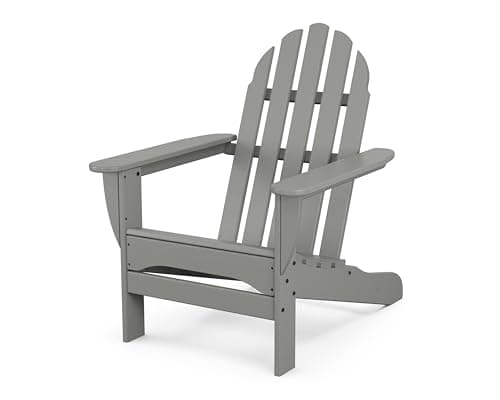 POLYWOOD Classic Adirondack ChairColor compounded through the lumber and a warranty that names the failures it covers. | The HDPE case | 9.3 | $180.49 · View on Amazon #ad How we earn · Price as of November 24, 2026 |
| 2 | 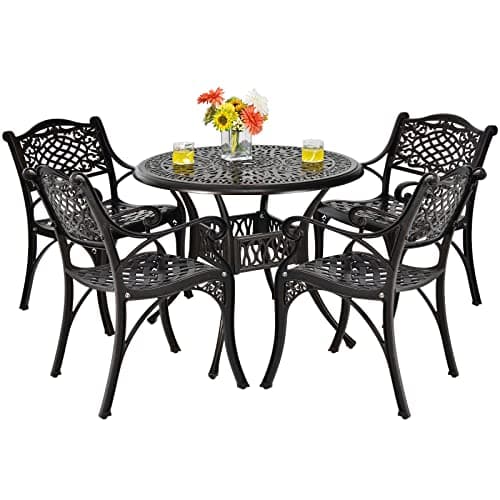 Tangkula 5-Piece Cast Aluminum Outdoor Dining SetSolid cast sections, dining geometry no poly lumber set matches, and nothing in it to rust. | The aluminum case | 7.5 | $529.99 · View on Amazon #ad How we earn · Price as of November 24, 2026 |
| 3 | 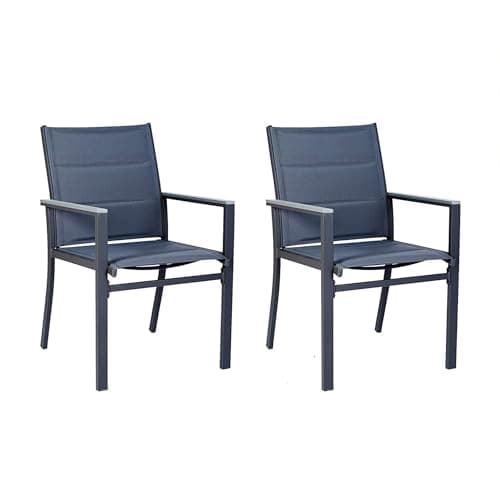 Kozyard Textilene Sling Patio Dining Chairs Set of 2A tensioned sling on a tube frame removes the cushion, which is where aluminum sets usually age. | Aluminum with nothing to fade | 6.9 | $129.99 · View on Amazon #ad How we earn · Price as of November 24, 2026 |
| 4 | 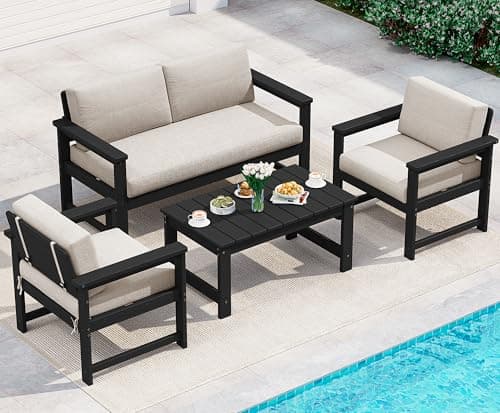 SERWALL 4 Pieces HDPE Outdoor Conversation Sofa Set with CushionsPoly lumber frames under deep cushions - the layout aluminum normally owns. | HDPE doing lounge seating | 8.2 | $436.04 · View on Amazon #ad How we earn · Price as of November 24, 2026 |
Scores are our own, assessed from published specifications, warranty terms and owner-reported outcomes — not from laboratory testing. Prices are shown live on Amazon; we never print a figure we cannot verify.
This is the comparison that matters most on a site about furniture that survives weather, because aluminum and HDPE poly lumber are the only two mainstream patio materials that cannot rust and cannot rot. Everything else on a showroom floor is on a clock: steel is waiting for its coating to break, wood is waiting for its next reseal, PVC-based wicker is waiting to go brittle. These two are not. So the question is not which one survives. It is which one survives in a way you will still be happy with in year twelve.
The answer turns on one structural fact. Aluminum furniture gets its color from a coating applied to the outside of the metal. HDPE furniture gets its color from pigment mixed into the material before it is ever formed. Every practical difference below - fade, scratches, touch-ups, how it looks at ten years, warranty language - is that one fact playing out over a decade.
The short answer
Buy HDPE if the furniture is going to live outside permanently, uncovered, and you want to stop thinking about it. There is no finish to fail, scratches are the same color all the way through, and the warranties are written in failure modes rather than vague terms. POLYWOOD's 20-year residential lumber warranty names splintering, cracking, chipping, peeling and rot specifically.
Buy aluminum if you need shapes poly lumber cannot do, weight you can move on your own, or a dining set at a price poly lumber does not reach. Cast and extruded aluminum both make slim frames, curved arms, swivel bases and tall seating that would be absurd in two-inch lumber - and a cast aluminum dining set with four chairs costs a fraction of the poly lumber equivalent.
What the two materials are
Aluminum in patio furniture is almost always a 6000-series alloy, either poured into a mold as a solid section (cast) or pushed through a die as hollow tube (extruded). The two extrusion alloys you will meet are 6061 and 6063, and 6061 runs harder at a typical 95 Brinell against 6063 at 73, while 6063 is rated the more corrosion-resistant and the easier to extrude. Aluminum does not rust: it forms a thin oxide skin that seals itself rather than flaking and creeping the way iron oxide does. What it does have is paint. The full cast-versus-extruded argument is on its own page.
HDPE poly lumber is high-density polyethylene formed into boards that are machined and bolted like timber. POLYWOOD states that its lumber is 100% HDPE with UV inhibitors and pigments compounded through the material rather than applied as a surface coat. There is no grain to lift, no finish to renew, and no metal in the structure at all - the only metal on a good poly lumber chair is the hardware, and on the better ones that is 18-8 marine-grade stainless. The reference page for the material is HDPE poly lumber.
Side by side
Aluminum against HDPE poly lumber on the things that decide how the furniture ages
| Aluminum | HDPE poly lumber | |
|---|---|---|
| Can it rust? | No - oxide layer is self-sealing | No metal in the structure at all |
| Where the color lives | A coating on the surface | Compounded through the material |
| What a deep scratch shows | Bare metal, which then stains gray | The same color underneath |
| Can you repair the finish? | Touch-up paint, visibly | Nothing to repair |
| Typical frame warranty | Often 1-5 years; 5 on Trex metal parts | 20 years residential on POLYWOOD and Trex lumber |
| Weight | Light (extruded) to moderate (cast) | Heavy - a chair is a two-hand lift |
| Behavior in wind | Extruded tube travels; cast stays | Stays put by mass |
| Maintenance | Wash; inspect and touch up chips | Wash; nothing else, ever |
| Shapes available | Slim frames, curves, swivels, bar height | Slat-built forms in thicker sections |
| Price per seat | The cheaper route to a dining set | A multiple of it |
Warranty rows are the published residential terms from each manufacturer, not an average across the category. Prices move constantly and are shown live above rather than written into this text.
The coating is the whole difference
An aluminum frame is as durable as its powder coat, because the coat is the part that is exposed and the part that ages. The industry has a yardstick for this that patio listings almost never quote: the AAMA 2603, 2604 and 2605 finish tiers. The difference between the top two is not marketing. AAMA 2604 requires 5 years of South Florida natural weathering and roughly 50% fluoropolymer resin; AAMA 2605 requires 10 years and about 70%. That is an architectural standard for window frames and curtain walls. Outdoor furniture is typically finished to something nearer the bottom tier, and no consumer patio listing we have read states a tier at all.
HDPE has no equivalent exposure, because there is no layer to lose. This is also why the two materials age so differently. A chipped aluminum frame does not rust - there is no iron - but the bare spot oxidizes to a dull gray patch that does not come back, and from a few feet away a patchwork of touch-ups is what makes ten-year-old metal furniture look ten years old. A gouged poly lumber arm looks like a gouge in the same color. The mechanism and the consequence, laid out across every material, is on how long patio furniture lasts.
Fade: surface color against through color
Both materials fade. The difference is what fading does to the object. A powder coat fades from the top down, so the exposed faces of an aluminum frame lighten while the undersides stay original - and that contrast is what reads as worn. HDPE fades uniformly and very slowly, because the pigment and the UV inhibitors are distributed through the section rather than sitting in the top few microns, and there is the same color below whatever the sun has reached.
In practice the fade you will actually notice on an aluminum set is not the frame at all. It is the cushions. Almost every aluminum conversation set ships with printed polyester, where the dye sits on the surface of the fiber; solution-dyed acrylic has the color in the fiber and Sunbrella publishes 5 years on its upholstery and sling fabrics. That is the single highest-value upgrade on a metal set, and the options are on the cushions roundup. HDPE seating sidesteps the problem when you buy it slat-bare and sidesteps nothing when you buy it with cushions - the frames last, the fabric does not. Which pieces hold color longest across the whole category is on fade-resistant patio furniture.
Weight, wind and where each one sits
Poly lumber is heavy, and on an exposed deck that is a feature rather than a cost. An HDPE Adirondack is a two-hand lift and it does not move on its own. Extruded aluminum is the opposite: hollow tube is light enough to rearrange single-handed, which also means an empty chair can travel. The NOAA Beaufort chart puts small branches moving and dust being raised at roughly 13 to 18 mph, which is an ordinary gusty afternoon on a lakeside deck, not a storm.
- Exposed deck, no shelter, nobody home mid-week. HDPE, or cast aluminum if you want metal. Not extruded tube.
- Covered porch or a courtyard with walls. Either. This is where extruded aluminum makes the most sense, because the thing that limits it is not present.
- Furniture you rearrange constantly. Aluminum, without much argument. Poly lumber punishes rearranging.
The wind-specific tactics for either material - and why anchoring furniture beats buying heavier furniture - are on protecting patio furniture from wind.
Heat, and the honest version of it
Both get hot in direct sun, and the usual claim that one is cooler than the other is unreliable, because the color matters more than the material. A dark powder-coated frame and a black poly lumber slat both become unpleasant to touch on a south-facing deck in July; a light gray or sand finish in either material does not. Metal conducts heat away from your skin faster, which makes a hot metal arm feel hotter at first touch and makes a cool metal arm feel colder in April.
The one real difference is recovery. Aluminum sheds heat quickly once shaded, so a frame in the shade of an umbrella cools in minutes. A thick HDPE section holds its temperature longer in both directions, which is why a dark poly bench in late-afternoon shade can still be warm. Choose the lighter color in either material if the furniture sits in all-day sun - the color decision is the heat decision. The same logic drives canopy color on the umbrella color page.
What each one does with temperature
HDPE expands and contracts noticeably across a season, which is why poly lumber furniture is bolted rather than glued and why the better makers use slotted fixings and stainless hardware that will not seize. It is also why you should not over-tighten a poly lumber bolt in cold weather: the board needs room to move. Where that hardware matters most is near salt water, and there 316 stainless resists the chloride pitting that 304 does not, thanks to a 2-3% molybdenum addition.
Hollow aluminum has a different seasonal problem, and it is water rather than movement. A retailer in the category recommends storing extruded furniture over winter specifically to stop water getting inside and causing freeze damage. Water that gets into a tube through an unplugged leg or a drilled fastener hole has nowhere to drain, and a hard freeze can split the section from the inside. Keeping the glides and drain holes clear is the cheap version of that fix; the seasonal routine is on storing patio furniture for winter.
What you are paying for
Aluminum is substantially cheaper per seat, and the gap is widest exactly where you need the most seats. A cast aluminum dining set with four or six chairs sits in the price territory of a single pair of poly lumber chairs, which is the real reason aluminum dominates the dining category and poly lumber dominates porch seating. Buying HDPE is front-loading twenty years of cost into one purchase; buying aluminum is paying less now and accepting that the finish is the part with a clock on it.
That trade is defensible either way, and it is worth being clear about what the premium actually buys. It does not buy more strength - cast aluminum is extremely strong. It buys the removal of the maintenance decision: no chips to inspect, no touch-up paint to match, no annual choice about whether this is the year to repaint the frames. Whether that is worth it for you is the argument on is patio furniture worth it, and the brand-level version is on the outdoor furniture brands page.
How to choose
- Permanent, uncovered, set-and-forget: HDPE. This is the material's home ground and nothing else in the category competes on it.
- A dining set for six on a real budget: cast aluminum. Check that the chairs are aluminum too, not steel - the mixed set is the common trap, and it is documented on the metal patio dining sets page.
- Deep lounge seating: either, and compare the cushions rather than the frames, because that is what will age first on both.
- Coastal or poolside: HDPE first, aluminum second, and insist on stainless hardware in both cases. The salt-air specifics are on the salt air page.
- Bar height, swivels, or anything slim: aluminum. Poly lumber does not make those shapes well, and the outdoor bar stool page shows why weight and geometry matter more up there.
- You want zero rust risk and lounge seating: that intersection is narrower than it sounds, and it is the whole subject of rust-proof conversation sets.
The picks in full
Each entry states what the product is, how it scores on our five criteria, what it gives up, and how the pick was made.
1. The HDPE case
POLYWOOD Classic Adirondack Chair
POLYWOOD · Score 9.3/10
The reference HDPE Adirondack: color compounded through the lumber, a 20-year residential warranty, and nothing on it to rust or splinter.
Key specifications
- 100% HDPE lumber, color and UV inhibitors compounded through the material
- Marine-grade stainless hardware
- 20-year residential lumber warranty
- Arrives flat-packed; bolt-together assembly
How it scores
- Fade resistance
- 9.5
- Rust and corrosion
- 9.5
- Wind and stability
- 8.5
- Build and hardware
- 9.0
- Warranty strength
- 9.5
What works
- Fade behavior is a material property here, not a surface coat that can wear off
- Warranty language explicitly covers splintering, cracking, chipping, peeling and rot
- Heavy enough to stay put on a gusty evening
- Washes clean with soap and water — no sealing, oiling or refinishing, ever
The trade-offs
- Costs multiples of a big-box resin chair, and the value only shows up over years
- Heavy to move around a deck on your own
- Sanding it voids the warranty, so deep scratches stay
#ad How we earn · Price as of November 24, 2026
Selected on published specification, warranty terms and owner-reported outcomes; not personally tested.
2. The aluminum case
Tangkula 5-Piece Cast Aluminum Outdoor Dining Set
Tangkula · Score 7.5/10
Cast aluminum is the quiet right answer for a small dining set: it cannot rust, and the weight problem solves itself.
Key specifications
- Cast aluminum frame and chairs
- Powder-coated finish
- Four chairs and a table
- No cushions required
How it scores
- Fade resistance
- 7.5
- Rust and corrosion
- 9.0
- Wind and stability
- 7.5
- Build and hardware
- 7.5
- Warranty strength
- 5.5
What works
- Aluminum does not rust — the single biggest failure mode in metal furniture is gone
- Cast sections are heavy enough to stay put without being immovable
- Powder coat is repairable with touch-up paint
The trade-offs
- The surface gets hot in direct sun
- Powder-coat grade is rarely stated, so coating life is the unknown
- Cast aluminum chips if something hard hits an edge
#ad How we earn · Price as of November 24, 2026
Selected on published specification, warranty terms and owner-reported outcomes; not personally tested.
3. Aluminum with nothing to fade
Kozyard Textilene Sling Patio Dining Chairs Set of 2
Kozyard · Score 6.9/10
A seat with nothing in it to soak up water: an extruded aluminum frame with a tensioned textilene sling, which is the lowest-maintenance way to sit outdoors.
Key specifications
- Extruded aluminum frame, listed as rust-resistant
- Padded textilene sling seat and back
- Listing describes the sling as breathable and quick-drying
- Sold as a pair
How it scores
- Fade resistance
- 6.5
- Rust and corrosion
- 8.5
- Wind and stability
- 6.0
- Build and hardware
- 6.5
- Warranty strength
- 4.5
What works
- No cushion means nothing to bring in, store or replace
- A sling dries in minutes rather than days, so rain is a non-event
- Light enough to move one-handed, which is the point of a tubular frame
- Hoses clean - dirt sits on the surface of the mesh rather than inside a filling
The trade-offs
- A sling is the component that fails: the fabric goes slack and brittle before the frame does
- Light frames move in wind, which is the trade for carrying them easily
- Sling replacement is a specialist job and almost never offered by budget brands
- Less supportive than deep-seat cushions over a long dinner
#ad How we earn · Price as of November 24, 2026
Selected on published specification, warranty terms and owner-reported outcomes; not personally tested.
4. HDPE doing lounge seating
SERWALL 4 Pieces HDPE Outdoor Conversation Sofa Set with Cushions
SERWALL · Score 8.2/10
A loveseat, two chairs and a table built out of poly lumber rather than tube, which removes corrosion from the set entirely instead of coating over it.
Key specifications
- HDPE poly lumber frames; no metal structure to corrode
- Four pieces: loveseat, two chairs, coffee table
- Removable cushions with washable covers
- Bolt-together assembly
How it scores
- Fade resistance
- 9.0
- Rust and corrosion
- 9.5
- Wind and stability
- 8.5
- Build and hardware
- 7.5
- Warranty strength
- 5.5
What works
- There is no frame metal, so there is no rust path at all - not at a scratch, not at a fastener
- HDPE carries color through the material, so the frame does not need repainting
- Heavy enough to stay where you put it on an exposed deck
The trade-offs
- Warranty term is not published on the listing, which is the gap against POLYWOOD
- Cushion fabric is not solution-dyed acrylic, so the cushions will fade before the frames do
- Heavy to move once assembled, and it is a two-person build
#ad How we earn · Price as of November 24, 2026
Selected on published specification, warranty terms and owner-reported outcomes; not personally tested.
Common questions
Is HDPE better than aluminum for patio furniture?
Does aluminum patio furniture rust?
Does HDPE furniture fade in the sun?
Which is heavier, aluminum or HDPE patio furniture?
Is aluminum or HDPE better near the ocean?
Can you paint aluminum patio furniture, and can you paint HDPE?
Sources
- Our Materials — POLYWOOD. Checked 2026-09-23.
Manufacturer statement that POLYWOOD lumber is 100% HDPE with UV inhibitors and pigments compounded through the material rather than applied as a surface coat.
- POLYWOOD Limited Residential Warranty — POLYWOOD. Checked 2026-09-23.
The 20-year residential lumber warranty terms, including the splinter / crack / chip / peel / rot language and the sanding and painting exclusions.
- Trex Outdoor Furniture Warranty — Trex Outdoor Furniture (POLYWOOD, LLC). Checked 2026-09-24.
The 20-year residential lumber warranty and its splinter / crack / chip / peel / rot language, the separate 5-year terms on welds, powder coat and hardware, and the fact that POLYWOOD, LLC is the warrantor and licensee.
- AAMA Paint Specifications — Linetec. Checked 2026-09-23.
The AAMA 2603 / 2604 / 2605 architectural finish tiers used as the yardstick for what a powder coat on aluminum is actually rated to do.
- Understanding AAMA 2604 vs. AAMA 2605 — AMICO Architectural Metals. Checked 2026-09-23.
The South Florida natural-weathering requirement behind each tier — 5 years for 2604, 10 years for 2605 — and the 50% vs 70% fluoropolymer resin difference.
- Grade Guide: Aluminum 6061 vs 6063 — Metal Supermarkets. Checked 2026-10-29.
The two extrusion alloys behind most outdoor metal furniture: 6061 at a typical 95 Brinell against 6063 at 73, 6063 rated the more corrosion-resistant and the more extrudable of the pair, and 6061 described as the more robust choice in most extrusion configurations.
- The Difference Between Cast Aluminum and Extruded Aluminum Patio Furniture — SKH (Sun, Kitchen and Home). Checked 2026-10-29.
Retailer description of the two constructions: cast as solid and mold-formed rather than hollow, extruded as hollow and lightweight with winter storage recommended to prevent water getting in and causing freeze damage, plus the Hanamint hybrid of extruded legs and arms with cast seats and backs.
- 304 vs 316 Stainless Steel Screws — SFS USA. Checked 2026-09-23.
Why 316 fasteners resist chloride pitting and 304 do not: the 2-3% molybdenum addition that stabilizes the passive layer.
- Sunbrella Warranty — Sunbrella (Glen Raven). Checked 2026-09-23.
Published warranty lengths: 5 years on upholstery and sling fabrics, 10 years on shade and marine fabrics, 3.5 years on recycled lines.
- Beaufort Wind Chart — Estimating Wind Speeds — National Weather Service (NOAA). Checked 2026-09-23.
Wind-speed bands and their observable effects, used instead of manufacturer wind claims we cannot verify.
Read next
More from Materials
Five materials, five very different outcomes after five summers. Start here if you are choosing.