How-to
How to protect patio furniture from wind
Light, flat and tall is the losing combination. Fix that first and the rest is easy.

How this page is funded: Deck & Dusk earns a commission when you buy through the Amazon links below, at no extra cost to you. Commission never decides a ranking — our picks and our criteria are set before any link is added. Read the full disclosure.
Quick picks
The three things that actually keep furniture where you put it: ballast, a cover that cannot become a sail, and a heavy base under the piece most likely to fly.
| # | Product | Best for | Score | Price |
|---|---|---|---|---|
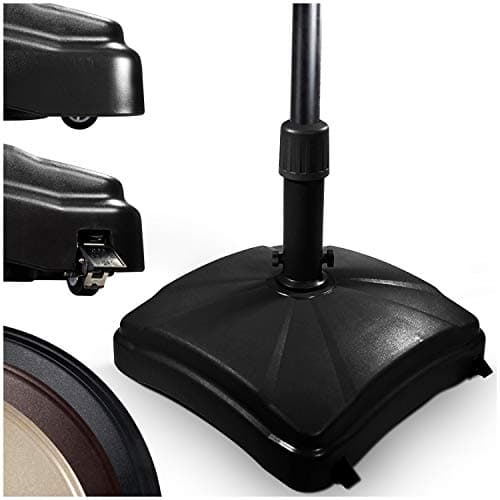
| 1 | 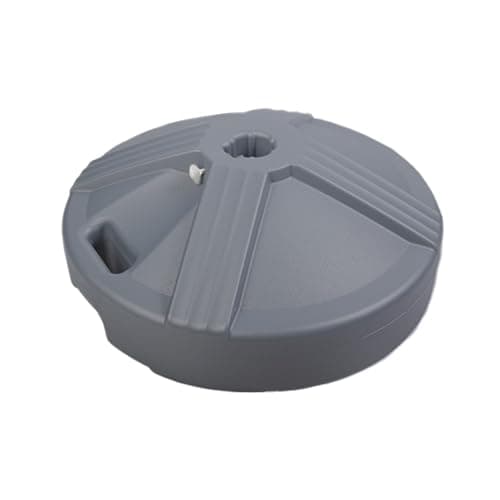 US Weight Durable Umbrella BaseAn umbrella is a sail on a stick. Weight at the bottom is the whole answer. | The piece most likely to fly | 7.4 | $22.87 · View on Amazon #ad How we earn · Price as of October 11, 2026 |
| 2 | 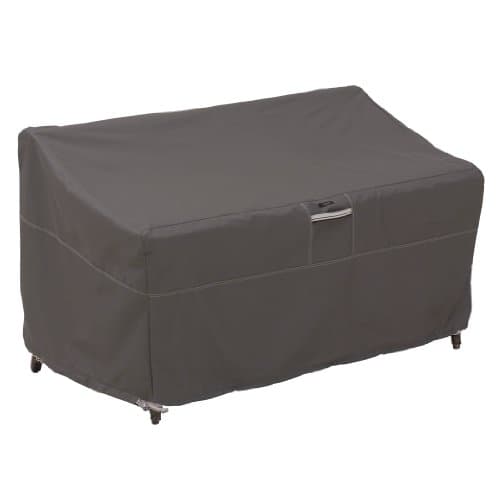 Classic Accessories Ravenna Patio Furniture CoverElasticated hems and tie-downs - a loose cover is itself a sail. | A cover that stays on | 8.1 | $55.42 · View on Amazon #ad How we earn · Price as of October 11, 2026 |
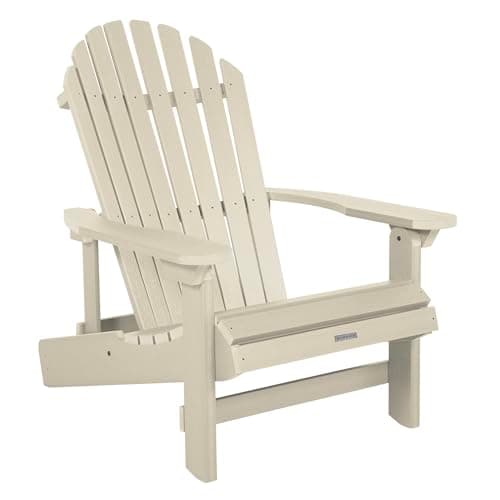
| 3 | 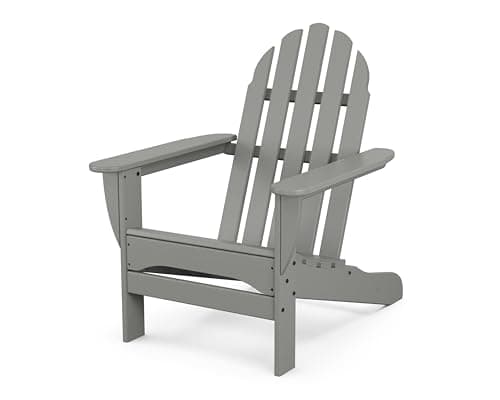 POLYWOOD Classic Adirondack ChairSolid HDPE is heavy enough to stay put on a gusty evening. | Furniture that does not move | 9.3 | $199.00 · View on Amazon #ad How we earn · Price as of October 11, 2026 |
Scores are our own, assessed from published specifications, warranty terms and owner-reported outcomes — not from laboratory testing. Prices are shown live on Amazon; we never print a figure we cannot verify.
The short answer
Protect patio furniture from wind by fixing the three properties that make a piece vulnerable: low weight, a large flat surface, and height. Close and secure the umbrella first, because it is the only item on a patio that is genuinely dangerous. Then add mass low down on anything light, group and interlock the furniture rather than leaving it spread out, stack or lay down the pieces that will tumble, and bring in everything loose. Tie-downs are a distant fourth priority on furniture — mass and geometry do far more.
What goes first
Wind sorts a patio in a predictable order, and knowing it tells you where to spend your five minutes:
Vulnerability in rough order
| Item | Why it goes | What fixes it |
|---|---|---|
| Open umbrella | A large sail several feet above its only anchor point | Close it. Nothing else is sufficient |
| Cushions | Light, flat and loose | Bring them in or strap them under a cover |
| Stacking and folding chairs | Built light on purpose | Stack and strap, or lay them face down |
| Light extruded aluminum chairs | Hollow tube and a large seat and back area | Weight on the lower rails, or group them |
| Resin and molded chairs | Very light, and shaped to catch wind | Stack and strap; they nest well |
| Loose covers | A loose cover is a sail attached to your furniture | Elasticated hem plus tie-downs, fitted tight |
| Glass table tops | Lifted by wind getting under a cover or a cloth | Remove cloths; keep covers tight; consider not having glass |
| Cast aluminum, HDPE, teak dining sets | Rarely move at all | Nothing, usually |
The pattern is mass, not material: anything you can lift comfortably with one hand will move in a strong gust, whatever it is made of.
The routine
- Walk the patio and lift each piece. One-handed means vulnerable. This takes two minutes and tells you which three or four items actually matter.
- Close and secure the umbrella. Every time, not just before a storm. See our guide to stopping umbrellas blowing over.
- Add mass low down. Sandbags or weight bags over the bottom rails and feet. Low weight resists tipping; weight on a seat does much less, because it raises the center of mass of the whole assembly.
- Group and interlock. Chairs pushed under the table and seating pulled against a wall or planter behave like one heavy object instead of six light ones.
- Stack or lay down what will tumble. Strap a stack — an unstrapped stack is a taller, more unstable object than a single chair. A chair laid on its face gives the wind nothing to get under.
- Clear everything loose. Cushions, lanterns, table-top objects, side tables. In a real blow these do the damage, not the furniture.
Umbrellas are a separate problem
Everything else on the patio is a weight problem. An umbrella is a leverage problem, and it deserves its own treatment because it is the item that breaks windows and hurts people.
Wind force acts on the canopy several feet above the ground, and the base resists it as a turning moment — force multiplied by height. That is why doubling the canopy area more than doubles what the base is fighting, and why base geometry matters as much as base mass: a cross base that spreads weight to the corners generates far more restoring moment than the same weight stacked in a puck under the pole. Our bases roundup and wind-resistant umbrella roundup cover this in detail.
Three habits that matter more than any product: close it when you leave the patio, use a vented canopy so gusts pass through rather than inflating it, and if it is a through-table umbrella, remember the table is sharing the load only while the umbrella is actually in the hole.
Covers in wind
A cover is genuinely useful in wind and genuinely counterproductive if it is loose. The requirements:
- It must fit. A baggy cover inflates and then either tears or takes the furniture with it. Measuring properly is the fix — see how to measure for a cover.
- It needs an elasticated hem and tie-downs, and they need to be used. Covers that specify both are worth the difference.
- It needs vents. Vents let pressure equalize so the cover does not balloon, and they let moisture out. Both at once.
- Weight it down inside on a light set — a sandbag on the seat under the cover stops the whole assembly lifting.
Buying for a windy site
If wind is a permanent condition rather than an occasional event, it should drive the purchase:
- Buy mass. Cast aluminum over extruded, solid HDPE over hollow resin, hardwood over anything light. Solid poly lumber is heavy for its size, which is a feature here. Our heavy-duty roundup is effectively a windy-site shortlist.
- Prefer slatted to solid. Slats let air through; a solid back or a solid table top is a sail.
- Avoid glass tops. Wind plus a cover or a tablecloth is how they lift.
- Choose a cantilever only with the cross base, or choose through-table shade instead.
- Check the warranty excludes wind, because it will. Brands that publish frame terms in detail, as the Yardbird warranty does, make that exclusion explicit. Wind damage is a prevention problem, not a claim.
The picks in full
Each entry states what the product is, how it scores on our five criteria, what it gives up, and how the pick was made.
1. The piece most likely to fly
US Weight Durable Umbrella Base
US Weight · Score 7.4/10
Fillable rather than cast, so it ships light and weighs what it needs to once you fill it — and it cannot rust.
Key specifications
- Fillable resin base
- Accepts sand or water fill
- Fits standard market umbrella poles
- No steel structure to corrode
How it scores
- Fade resistance
- 7.0
- Rust and corrosion
- 9.5
- Wind and stability
- 7.5
- Build and hardware
- 7.0
- Warranty strength
- 5.0
What works
- Cheap to ship empty, heavy once filled with sand
- Nothing on it rusts, unlike a cast-iron base
- Sand fill weighs considerably more than the same volume of water
The trade-offs
- Water fill is much lighter than sand — most disappointment traces to this
- Resin looks less substantial than cast metal
#ad How we earn · Price as of October 11, 2026
Selected on published specification, warranty terms and owner-reported outcomes; not personally tested.
2. A cover that stays on
Classic Accessories Ravenna Patio Furniture Cover
Classic Accessories · Score 8.1/10
The cover that does the two things cheap covers skip: it vents, and it has enough structure to shed water instead of pooling it.
Key specifications
- Woven polyester fabric with a water-resistant backing
- Air vents to reduce condensation
- Elastic hem with click-close straps
- Padded handles for fitting and removal
How it scores
- Fade resistance
- 7.5
- Rust and corrosion
- 9.0
- Wind and stability
- 8.0
- Build and hardware
- 8.5
- Warranty strength
- 7.0
What works
- Vents matter more than waterproofing — a sealed cover traps moisture and grows mildew
- Straps stop the cover becoming a sail in the first storm
- Size ranges actually fit real furniture dimensions
The trade-offs
- Costs several times a generic cover
- Still needs the furniture dry before you cover it
#ad How we earn · Price as of October 11, 2026
Selected on published specification, warranty terms and owner-reported outcomes; not personally tested.
3. Furniture that does not move
POLYWOOD Classic Adirondack Chair
POLYWOOD · Score 9.3/10
The reference HDPE Adirondack: color compounded through the lumber, a 20-year residential warranty, and nothing on it to rust or splinter.
Key specifications
- 100% HDPE lumber, color and UV inhibitors compounded through the material
- Marine-grade stainless hardware
- 20-year residential lumber warranty
- Arrives flat-packed; bolt-together assembly
How it scores
- Fade resistance
- 9.5
- Rust and corrosion
- 9.5
- Wind and stability
- 8.5
- Build and hardware
- 9.0
- Warranty strength
- 9.5
What works
- Fade behavior is a material property here, not a surface coat that can wear off
- Warranty language explicitly covers splintering, cracking, chipping, peeling and rot
- Heavy enough to stay put on a gusty evening
- Washes clean with soap and water — no sealing, oiling or refinishing, ever
The trade-offs
- Costs multiples of a big-box resin chair, and the value only shows up over years
- Heavy to move around a deck on your own
- Sanding it voids the warranty, so deep scratches stay
#ad How we earn · Price as of October 11, 2026
Selected on published specification, warranty terms and owner-reported outcomes; not personally tested.
Common questions
How do you keep patio furniture from blowing away?
Should you tie down patio furniture in high wind?
What patio furniture is best for windy areas?
At what wind speed should you take down a patio umbrella?
Does a cover protect patio furniture in wind?
Sources
- Beaufort Wind Chart — Estimating Wind Speeds — National Weather Service (NOAA). Checked 2026-09-23.
Wind-speed bands and their observable effects, used instead of manufacturer wind claims we cannot verify.
- Ravenna Water-Resistant Patio Sofa/Loveseat Cover — Classic Accessories. Checked 2026-09-24.
The two-year limited warranty on this cover, the Gardelle One fabric description, and the published air-vent and WindLock click-close strap features.
- Our Materials — POLYWOOD. Checked 2026-09-23.
Manufacturer statement that POLYWOOD lumber is 100% HDPE with UV inhibitors and pigments compounded through the material rather than applied as a surface coat.
- Yardbird Outdoor Furniture Warranty — Yardbird. Checked 2026-09-24.
Published cover by component — 10 years on aluminum, teak and HDPE poly frames, 5 years on the aluminum finish, 3 years on the HDPE wicker weave and 1 year on cushions.
Read next
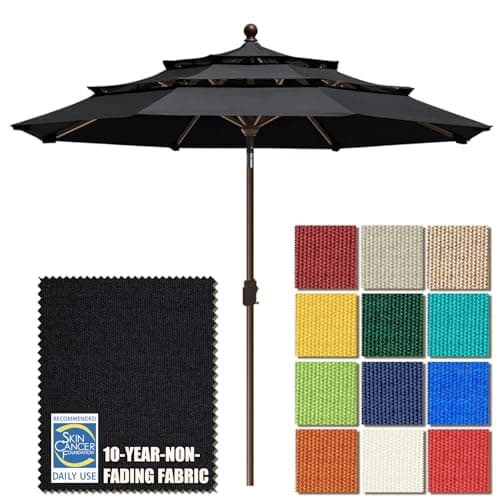
More from Covers & Care
Covers that vent, cushions that hold color, and the four maintenance jobs worth doing.