Durability
The best patio furniture for coastal salt air
Chloride attacks fasteners before it attacks frames. That decides everything here.
How this page is funded: Deck & Dusk earns a commission when you buy through the Amazon links below, at no extra cost to you. Commission never decides a ranking — our picks and our criteria are set before any link is added. Read the full disclosure.
Quick picks
Ranked by how little there is for chloride to attack. Pieces with no structural metal lead, then aluminum, then everything that depends on a coating.
| # | Product | Best for | Score | Price |
|---|---|---|---|---|
| 1 | 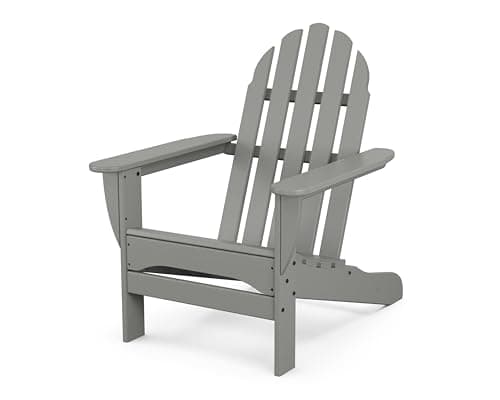 POLYWOOD Classic Adirondack ChairNo metal structure at all, and 18-8 marine-grade stainless at the only fasteners. | Best overall | 9.3 | $199.00 · View on Amazon #ad How we earn · Price as of October 11, 2026 |
| 2 | 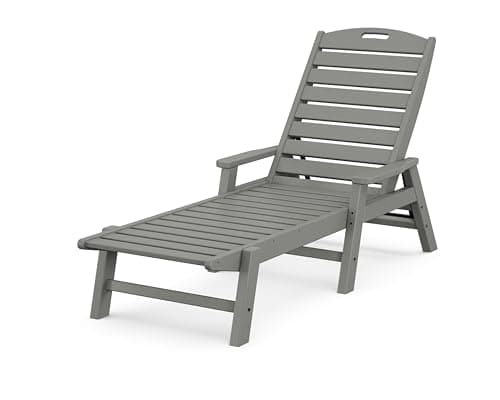 POLYWOOD Nautical Chaise LoungeThe same material story in the hardest environment on this site. | Poolside and beachfront | 9.2 | $263.20 · View on Amazon #ad How we earn · Price as of October 11, 2026 |
| 3 | 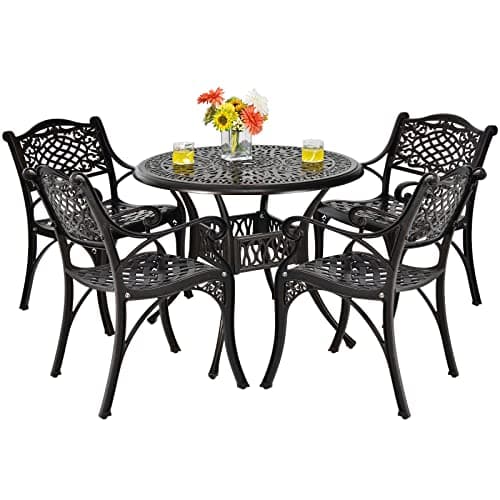 Tangkula 5-Piece Cast Aluminum Outdoor Dining SetAluminum oxidation is protective; iron oxide is not. That is the whole argument. | Best metal dining set | 7.5 | $529.99 · View on Amazon #ad How we earn · Price as of October 11, 2026 |
| 4 | No image Yardbird Harriet Outdoor Wicker SectionalPowder-coated aluminum frame under an HDPE weave - no steel anywhere structural. | Best coastal sectional | 8.7 | Check price on Amazon #ad How we earn · Live price at Amazon |
| 5 | 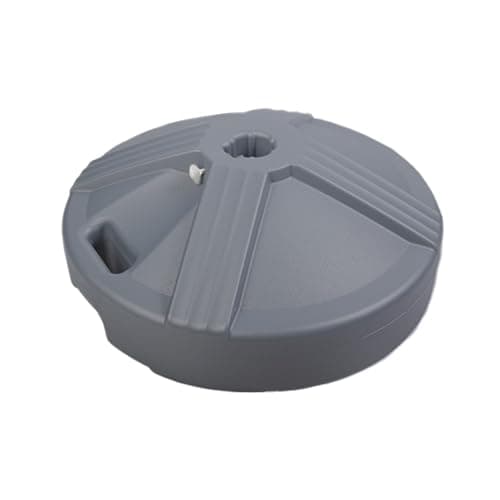 US Weight Durable Umbrella BaseA fillable resin base instead of the cast iron that stains a coastal deck. | Umbrella ballast | 7.4 | $22.87 · View on Amazon #ad How we earn · Price as of October 11, 2026 |
Scores are our own, assessed from published specifications, warranty terms and owner-reported outcomes — not from laboratory testing. Prices are shown live on Amazon; we never print a figure we cannot verify.
What salt air actually does
Coastal air carries chloride. Chloride does not simply speed up ordinary rusting; it attacks a specific defense mechanism. Stainless steel and aluminum both rely on a thin passive oxide layer that re-forms the instant it is scratched, and chloride ions break that layer down locally. The result is pitting: small, deep, concentrated attacks rather than the even surface rust you get inland.
Three consequences follow, and they are the reason coastal furniture fails differently from inland furniture:
- Small parts fail first. A pit that is cosmetic on a frame tube is structural on a screw.
- Failures are hidden. Pitting happens in the fastener holes and under the joints, which is where nobody looks until something moves.
- Distance from the water matters enormously. Chloride deposition drops off quickly inland, so a set that would be destroyed on a beachfront deck can be fine half a mile back.
The fastener problem: 304 vs 316
This is the detail the whole category gets wrong, and it is worth being exact about. There are two common stainless grades in outdoor hardware:
- 304, also sold as 18-8, is the standard outdoor stainless. It resists general corrosion well and chloride pitting poorly.
- 316 adds roughly 2-3% molybdenum, which stabilizes the passive layer against chloride specifically. It is the marine grade in any real sense of the word.
Now the uncomfortable part. The best consumer patio furniture publishes 304 or 18-8: POLYWOOD specifies 18-8 marine-grade stainless fasteners, highwood specifies 304-grade stainless on the King Hamilton. Those are genuinely good specifications — and neither is 316. We could not find a mainstream consumer outdoor furniture brand that publishes 316 hardware across a collection.
Which leads to the practical move: buy furniture whose fasteners you can replace. Bolted poly-lumber furniture comes apart with a wrench, and a bag of 316 bolts from a marine supplier is cheap. Welded or riveted frames do not offer you that option, and crimped joints on budget sets offer it even less.
Frames: aluminum, steel and no metal at all
The frame hierarchy on the coast is the same as the one on our rust-proof page, only more so.
Coastal performance by structural material
| Structure | Chloride behavior | What fails first | Coastal verdict |
|---|---|---|---|
| HDPE poly lumber (no metal structure) | Inert - chloride does nothing to it | The fasteners, and only those | The right answer. Replaceable hardware is the only exposure |
| Aluminum, cast or extruded | Pits where the coating is breached, but oxide is protective | Powder coat, then surface staining | Very good. The best metal option by a wide margin |
| Teak heartwood | Unaffected by salt; it is wood | Joint hardware and trapped debris | Good, with the usual annual cleaning |
| Aluminum frame under synthetic weave | Frame fine; weave is a UV question not a salt one | Weave strands, from sun rather than salt | Good, provided you confirm the frame is aluminum |
| Powder-coated steel | Pits fast, then rusts through from inside the tube | Every fastener hole and every chip | Avoid on the coast. This is not a maintenance problem, it is a wrong-material problem |
| Cast iron bases and accessories | Rusts and leaves staining | The base itself, then whatever it sits on | Avoid. Use a fillable resin base instead |
The frame material on wicker furniture is often unstated in listings. On a coastal site, an unstated frame should be read as steel until the seller confirms otherwise.
Coatings, and the tier nobody publishes
Aluminum furniture lives or dies by its finish, and there is an architectural yardstick for finishes that the furniture industry quietly ignores. The AAMA specifications set tiers for coatings on aluminum: AAMA 2604 requires five years of South Florida natural weathering and AAMA 2605 requires ten, with the higher tier built on roughly 70% fluoropolymer resin against 50%.
South Florida weathering is, for our purposes, a coastal test. A finish that holds up there for ten years is the finish you want on a beachfront deck. The problem is that consumer patio furniture almost never states a tier at all, which means you are buying an unknown coating and should price the furniture accordingly. Our aluminum reference page goes through the tiers in detail.
The coastal routine
Coastal maintenance is short and non-negotiable, and it is mostly about removing chloride rather than protecting surfaces:
- Rinse with fresh water regularly. This is the whole program. Salt that has been rinsed off is not attacking anything.
- Inspect fasteners twice a year, not frames. Look for staining streaks running out of bolt holes, which is pitting announcing itself.
- Touch up coating chips immediately on anything metal. Inland you have months; on the coast a breach starts pitting straight away. The sequence is on our rust guide.
- Do not seal salt under a cover. Rinse and dry first, then cover. Covering a salt-coated frame traps the chloride against the metal with moisture — worse than leaving it open.
The picks in full
Each entry states what the product is, how it scores on our five criteria, what it gives up, and how the pick was made.
1. Best overall
POLYWOOD Classic Adirondack Chair
POLYWOOD · Score 9.3/10
The reference HDPE Adirondack: color compounded through the lumber, a 20-year residential warranty, and nothing on it to rust or splinter.
Key specifications
- 100% HDPE lumber, color and UV inhibitors compounded through the material
- Marine-grade stainless hardware
- 20-year residential lumber warranty
- Arrives flat-packed; bolt-together assembly
How it scores
- Fade resistance
- 9.5
- Rust and corrosion
- 9.5
- Wind and stability
- 8.5
- Build and hardware
- 9.0
- Warranty strength
- 9.5
What works
- Fade behavior is a material property here, not a surface coat that can wear off
- Warranty language explicitly covers splintering, cracking, chipping, peeling and rot
- Heavy enough to stay put on a gusty evening
- Washes clean with soap and water — no sealing, oiling or refinishing, ever
The trade-offs
- Costs multiples of a big-box resin chair, and the value only shows up over years
- Heavy to move around a deck on your own
- Sanding it voids the warranty, so deep scratches stay
#ad How we earn · Price as of October 11, 2026
Selected on published specification, warranty terms and owner-reported outcomes; not personally tested.
2. Poolside and beachfront
POLYWOOD Nautical Chaise Lounge
POLYWOOD · Score 9.2/10
Poolside is the hardest environment on this site — chlorine, sun, constant wet — and HDPE is the material that ignores all three.
Key specifications
- HDPE lumber, through-color
- Marine-grade stainless hardware
- Adjustable back; wheels on most configurations
- 20-year residential warranty
How it scores
- Fade resistance
- 9.5
- Rust and corrosion
- 9.5
- Wind and stability
- 8.5
- Build and hardware
- 9.0
- Warranty strength
- 9.5
What works
- Chlorinated splash-out destroys coated steel and does nothing to HDPE
- No cushion required, so nothing to bring in at night
- Wheels make a very heavy chair manageable
The trade-offs
- Hard surface without a pad
- Heavy
- Premium price
#ad How we earn · Price as of October 11, 2026
Selected on published specification, warranty terms and owner-reported outcomes; not personally tested.
3. Best metal dining set
Tangkula 5-Piece Cast Aluminum Outdoor Dining Set
Tangkula · Score 7.5/10
Cast aluminum is the quiet right answer for a small dining set: it cannot rust, and the weight problem solves itself.
Key specifications
- Cast aluminum frame and chairs
- Powder-coated finish
- Four chairs and a table
- No cushions required
How it scores
- Fade resistance
- 7.5
- Rust and corrosion
- 9.0
- Wind and stability
- 7.5
- Build and hardware
- 7.5
- Warranty strength
- 5.5
What works
- Aluminum does not rust — the single biggest failure mode in metal furniture is gone
- Cast sections are heavy enough to stay put without being immovable
- Powder coat is repairable with touch-up paint
The trade-offs
- The surface gets hot in direct sun
- Powder-coat grade is rarely stated, so coating life is the unknown
- Cast aluminum chips if something hard hits an edge
#ad How we earn · Price as of October 11, 2026
Selected on published specification, warranty terms and owner-reported outcomes; not personally tested.
4. Best coastal sectional
Yardbird Harriet Outdoor Wicker Sectional
Yardbird · Score 8.7/10
The build most people mean when they say they want a patio set that lasts: aluminum frame, HDPE-based weave, performance fabric.
Key specifications
- Powder-coated aluminum frame
- HDPE-based all-weather wicker weave
- Performance fabric cushions
- 10-year frame warranty on premium pieces
How it scores
- Fade resistance
- 8.5
- Rust and corrosion
- 9.0
- Wind and stability
- 7.5
- Build and hardware
- 9.0
- Warranty strength
- 8.5
What works
- An aluminum frame cannot rust from the inside out the way a steel frame does
- HDPE weave is the only wicker type that survives real UV exposure
- Replacement cushions and parts are actually available
The trade-offs
- Premium pricing; this is a several-thousand-dollar category
- Cushions still need storing or covering off-season
#ad How we earn · Live price at Amazon
Selected on published specification, warranty terms and owner-reported outcomes; not personally tested.
5. Umbrella ballast
US Weight Durable Umbrella Base
US Weight · Score 7.4/10
Fillable rather than cast, so it ships light and weighs what it needs to once you fill it — and it cannot rust.
Key specifications
- Fillable resin base
- Accepts sand or water fill
- Fits standard market umbrella poles
- No steel structure to corrode
How it scores
- Fade resistance
- 7.0
- Rust and corrosion
- 9.5
- Wind and stability
- 7.5
- Build and hardware
- 7.0
- Warranty strength
- 5.0
What works
- Cheap to ship empty, heavy once filled with sand
- Nothing on it rusts, unlike a cast-iron base
- Sand fill weighs considerably more than the same volume of water
The trade-offs
- Water fill is much lighter than sand — most disappointment traces to this
- Resin looks less substantial than cast metal
#ad How we earn · Price as of October 11, 2026
Selected on published specification, warranty terms and owner-reported outcomes; not personally tested.
Common questions
What patio furniture is best for salt air?
Is 304 stainless steel good enough for coastal patio furniture?
Does salt air damage aluminum patio furniture?
How often should coastal patio furniture be rinsed?
Sources
- 304 vs 316 Stainless Steel Screws — SFS USA. Checked 2026-09-23.
Why 316 fasteners resist chloride pitting and 304 do not: the 2-3% molybdenum addition that stabilizes the passive layer.
- AAMA Paint Specifications — Linetec. Checked 2026-09-23.
The AAMA 2603 / 2604 / 2605 architectural finish tiers used as the yardstick for what a powder coat on aluminum is actually rated to do.
- Understanding AAMA 2604 vs. AAMA 2605 — AMICO Architectural Metals. Checked 2026-09-23.
The South Florida natural-weathering requirement behind each tier — 5 years for 2604, 10 years for 2605 — and the 50% vs 70% fluoropolymer resin difference.
- Classic Adirondack Chair (AD4030) product details — POLYWOOD. Checked 2026-10-08.
The published 300 lb weight capacity, 34.5 lb chair weight, 20 in seat width, 18-8 marine-grade stainless fasteners, 20-year lumber warranty and the 24 color options listed for POLYWOOD's Classic Adirondack.
- King Hamilton Folding & Reclining Adirondack Chair — highwood USA. Checked 2026-10-08.
The published 400 lb weight capacity, the ASTM F1858-98 (2008) load test for outdoor reclining plastic furniture, the 22.25 in seat width, 304-grade stainless hardware, 12-year residential limited warranty and Pennsylvania manufacture.
- Yardbird Outdoor Furniture Warranty — Yardbird. Checked 2026-09-24.
Published cover by component — 10 years on aluminum, teak and HDPE poly frames, 5 years on the aluminum finish, 3 years on the HDPE wicker weave and 1 year on cushions.
Read next
More from Durability & Lifespan
Lifespan by material, the three failure modes that end most patio sets, and how to read a warranty.