Durability
How long does wicker patio furniture last?
Two products share one word. One lasts a season outdoors, the other a decade.
How this page is funded: Deck & Dusk earns a commission when you buy through the Amazon links below, at no extra cost to you. Commission never decides a ranking — our picks and our criteria are set before any link is added. Read the full disclosure.
Quick picks
Two pieces that show the range: a stated-aluminum frame under PE weave, and a budget rattan set where the frame is the unstated variable.
| # | Product | Best for | Score | Price |
|---|---|---|---|---|
| 1 | No image Yardbird Harriet Outdoor Wicker SectionalPE weave over a stated aluminum frame - the combination that reaches a decade. | The long-lasting end | 8.7 | Check price on Amazon #ad How we earn · Live price at Amazon |
| 2 | No image Devoko 5-Piece Patio Rattan Sectional Sofa SetThe weave may outlive the frame underneath it, which is the whole problem. | The budget end | 4.8 | Check price on Amazon #ad How we earn · Live price at Amazon |
| 3 | 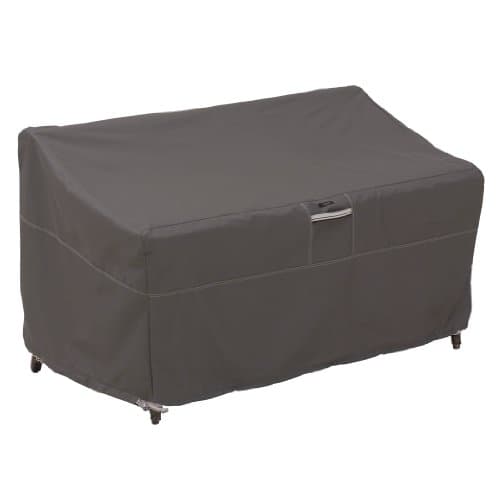 Classic Accessories Ravenna Patio Furniture CoverKeeping UV off the weave is the single cheapest way to add years. | Extending either one | 8.1 | $55.42 · View on Amazon #ad How we earn · Price as of October 11, 2026 |
Scores are our own, assessed from published specifications, warranty terms and owner-reported outcomes — not from laboratory testing. Prices are shown live on Amazon; we never print a figure we cannot verify.
The short answer
Outdoor wicker furniture lasts anywhere from two years to around twelve, and the deciding factor is not the weave at all — it is the polymer the strand is made of and the metal underneath it. PE (high-density polyethylene) weave over a powder-coated aluminum frame is the combination that reaches eight to twelve years. PVC weave over a steel frame typically gives two to four. Natural rattan, used outdoors, does not last a full season of weather and was never meant to. If you only check one thing in a listing, check what the frame is made of.
Three materials, one word
What the strand is actually made of
| Strand material | Typical outdoor life | How it fails | How to spot it |
|---|---|---|---|
| Natural rattan or cane | Indoors only - weeks to a season outdoors | Swells, splits, grows mold, then goes brittle | Porous, matte, warm to the touch; absorbs water |
| PVC resin weave | Roughly 2 to 4 years in sun | Becomes brittle and snaps; strands crack at the bends | Shiny, often lighter in weight, cheaper sets |
| PE (HDPE) weave | Roughly 8 to 12 years | Fades slowly; stays flexible far longer before cracking | Matte or lightly textured, slightly waxy feel |
| PE weave with UV inhibitors stated | Longest in this category | Surface fade, usually before any structural failure | The listing says UV-stabilized or names the resin |
PVC becomes brittle from UV exposure because the plasticizer that keeps it flexible migrates out over time. PE has no plasticizer to lose, which is the whole reason it outlasts PVC outdoors.
That plasticizer difference is the mechanism behind the entire price gap in this category, and it is why a PVC set can look perfect for three summers and then shed strands all at once. Our resin wicker vs PE wicker page covers the polymer chemistry, and resin wicker vs rattan covers the natural material.
The frame fails first
Here is the part most buying guides skip. On the great majority of wicker furniture, the weave is not what ends the furniture's life. The frame is.
A powder-coated steel frame rusts from the inside of the tube and from every fastener hole outward. By the time rust staining appears on the weave, the structural damage is already done, and because the frame is wrapped in weave you cannot inspect it, clean it or touch it up. An aluminum frame has no iron in it and therefore cannot rust — its oxide is protective rather than destructive. The AAMA coating specifications set the yardstick for how long a finish on aluminum should hold up, which on aluminum is a cosmetic question rather than a survival one. Our best metal page covers that contrast in full.
The practical consequence is a single rule:
- Frame stated as aluminum: plan on the weave or the cushions deciding when you replace the set.
- Frame stated as steel: plan on the frame deciding, usually sooner than the weave would have.
- Frame not stated at all: read it as steel. Sellers who have aluminum say aluminum, because it is the more expensive material and it sells.
Warranty language is a useful cross-check here, because a brand confident in its frame tends to cover it separately — the Yardbird warranty distinguishes frame coverage from weave and fabric coverage in writing.
What actually goes wrong
In rough order of how often it ends a set:
- Steel frame corrosion. Invisible until it is terminal, because the weave hides it.
- Strand embrittlement and snapping. A PVC problem mostly, concentrated at the tight bends around the frame where the strand is already stressed.
- Cushion failure. Fade and waterlogged fill, on a much shorter clock than either the weave or the frame. Deep-seating wicker almost always needs cushions, so this is a running cost built into the category.
- Fastener failure. Plated steel screws through an aluminum frame will corrode and seize long before the frame does; the grades worth knowing are on 304 versus 316 stainless.
- Mold on the weave. Not the polymer rotting — polymers do not rot — but organic debris in the weave gaps holding moisture. Fungal growth needs an organic substrate, and a dirty weave supplies one. It cleans off.
How to add years
Wicker responds well to maintenance, and three habits account for most of the available improvement:
- Keep UV off it when it is not in use. This is the single highest-value intervention, because UV drives the embrittlement that kills the strand. A cover through the off-season, or furniture positioned in shade, measurably extends the weave. See protecting furniture from sun.
- Clean the weave gaps, not just the surface. Debris in the gaps holds moisture against the frame, which is exactly where you cannot see corrosion starting.
- Replace fasteners with stainless when you reassemble anything. Cheap and it removes a whole failure mode.
- Bring cushions in. They are on the shortest clock in the set and nothing extends them like not being rained on.
For the broader picture of how this compares with other materials, our lifespan-by-material table puts wicker alongside teak, HDPE, aluminum and steel.
The picks in full
Each entry states what the product is, how it scores on our five criteria, what it gives up, and how the pick was made.
1. The long-lasting end
Yardbird Harriet Outdoor Wicker Sectional
Yardbird · Score 8.7/10
The build most people mean when they say they want a patio set that lasts: aluminum frame, HDPE-based weave, performance fabric.
Key specifications
- Powder-coated aluminum frame
- HDPE-based all-weather wicker weave
- Performance fabric cushions
- 10-year frame warranty on premium pieces
How it scores
- Fade resistance
- 8.5
- Rust and corrosion
- 9.0
- Wind and stability
- 7.5
- Build and hardware
- 9.0
- Warranty strength
- 8.5
What works
- An aluminum frame cannot rust from the inside out the way a steel frame does
- HDPE weave is the only wicker type that survives real UV exposure
- Replacement cushions and parts are actually available
The trade-offs
- Premium pricing; this is a several-thousand-dollar category
- Cushions still need storing or covering off-season
#ad How we earn · Live price at Amazon
Selected on published specification, warranty terms and owner-reported outcomes; not personally tested.
2. The budget end
Devoko 5-Piece Patio Rattan Sectional Sofa Set
Devoko · Score 4.8/10
Aggressively priced and widely stocked, and dependent entirely on which frame variant the listing is actually shipping.
Key specifications
- PE rattan weave
- Steel frame on most variants
- Removable cushion covers
- Flat-pack assembly
How it scores
- Fade resistance
- 5.0
- Rust and corrosion
- 4.5
- Wind and stability
- 5.0
- Build and hardware
- 5.0
- Warranty strength
- 3.5
What works
- Lowest cost per seat in the category
- Cushion covers come off for washing
The trade-offs
- Steel frames rust at every scratch and every fastener
- Weave quality varies between production runs
- Light enough to shift in strong wind
#ad How we earn · Live price at Amazon
Selected on published specification, warranty terms and owner-reported outcomes; not personally tested.
3. Extending either one
Classic Accessories Ravenna Patio Furniture Cover
Classic Accessories · Score 8.1/10
The cover that does the two things cheap covers skip: it vents, and it has enough structure to shed water instead of pooling it.
Key specifications
- Woven polyester fabric with a water-resistant backing
- Air vents to reduce condensation
- Elastic hem with click-close straps
- Padded handles for fitting and removal
How it scores
- Fade resistance
- 7.5
- Rust and corrosion
- 9.0
- Wind and stability
- 8.0
- Build and hardware
- 8.5
- Warranty strength
- 7.0
What works
- Vents matter more than waterproofing — a sealed cover traps moisture and grows mildew
- Straps stop the cover becoming a sail in the first storm
- Size ranges actually fit real furniture dimensions
The trade-offs
- Costs several times a generic cover
- Still needs the furniture dry before you cover it
#ad How we earn · Price as of October 11, 2026
Selected on published specification, warranty terms and owner-reported outcomes; not personally tested.
Common questions
How long does wicker patio furniture last outside?
What is the difference between resin wicker and PE wicker?
Does wicker patio furniture rust?
Can you leave wicker furniture outside in winter?
How do you make wicker patio furniture last longer?
Sources
- AAMA Paint Specifications — Linetec. Checked 2026-09-23.
The AAMA 2603 / 2604 / 2605 architectural finish tiers used as the yardstick for what a powder coat on aluminum is actually rated to do.
- Yardbird Outdoor Furniture Warranty — Yardbird. Checked 2026-09-24.
Published cover by component — 10 years on aluminum, teak and HDPE poly frames, 5 years on the aluminum finish, 3 years on the HDPE wicker weave and 1 year on cushions.
- Wood Handbook, Chapter 14: Biodeterioration of Wood — USDA Forest Products Laboratory. Checked 2026-09-23.
Heartwood decay-resistance categories, and the point that heartwood — not sapwood — carries a species' decay resistance.
- 304 vs 316 Stainless Steel Screws — SFS USA. Checked 2026-09-23.
Why 316 fasteners resist chloride pitting and 304 do not: the 2-3% molybdenum addition that stabilizes the passive layer.
Read next
More from Durability & Lifespan
Lifespan by material, the three failure modes that end most patio sets, and how to read a warranty.