How-to
How to protect patio furniture from sun
UV is the slowest and most certain destroyer on the patio. Shade beats every product you can buy.
How this page is funded: Deck & Dusk earns a commission when you buy through the Amazon links below, at no extra cost to you. Commission never decides a ranking — our picks and our criteria are set before any link is added. Read the full disclosure.
Quick picks
The three things that do the work, in the order they matter: shade, a cover for the off-season, and a protectant for the surfaces that accept one.
| # | Product | Best for | Score | Price |
|---|---|---|---|---|
| 1 | 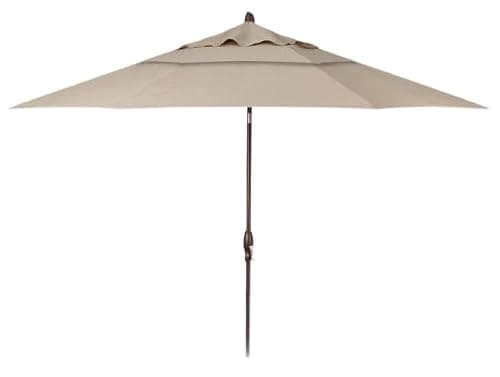 Treasure Garden Deluxe Auto-Tilt Market UmbrellaShade is prevention. An auto-tilt canopy follows the sun as it drops. | The fix that works | 8.6 | $499.00 · View on Amazon #ad How we earn · Price as of October 11, 2026 |
| 2 | 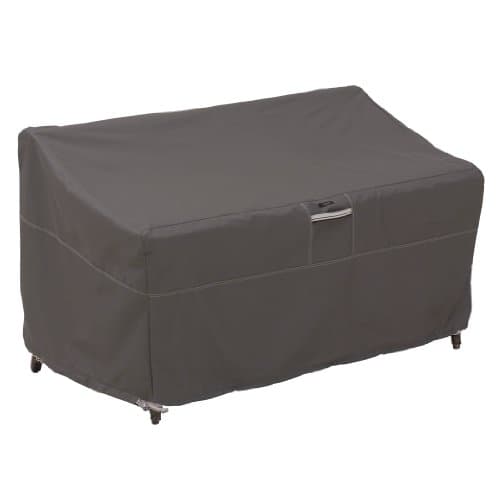 Classic Accessories Ravenna Patio Furniture CoverUV cannot reach what it cannot see, which is most of the year. | When it is not in use | 8.1 | $55.42 · View on Amazon #ad How we earn · Price as of October 11, 2026 |
| 3 | 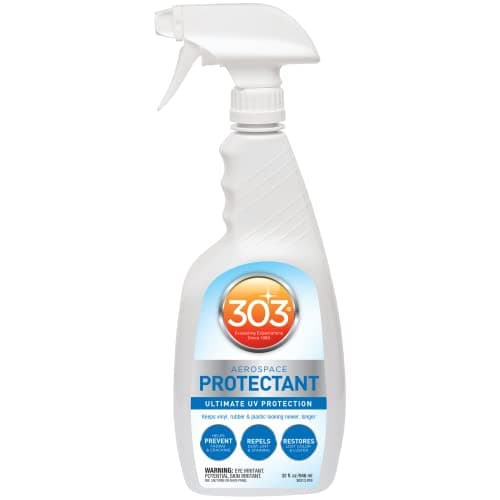 303 Aerospace ProtectantA real UV blocker for synthetics - not a substitute for shade. | Plastics, vinyl and rubber | 7.4 | $23.90 · View on Amazon #ad How we earn · Price as of October 11, 2026 |
Scores are our own, assessed from published specifications, warranty terms and owner-reported outcomes — not from laboratory testing. Prices are shown live on Amazon; we never print a figure we cannot verify.
The short answer
The most effective way to protect patio furniture from sun is to stop the sun reaching it: shade it with an umbrella, a pergola or an eave, and cover it when it is not in use. Everything you can apply to a surface is a distant second, and on some materials it does nothing at all. That is the honest version of this answer, and it is the opposite of what most advice implies, which is that the right product solves fade. The right product helps on specific materials. Shade solves it.
What UV actually does
Sunlight damages outdoor furniture in two distinct ways, and they call for different responses:
- Photodegradation of the polymer. UV photons break the chemical bonds in plastics and synthetic fibers. The material becomes chalky, then brittle, then cracks. This is structural damage, it is irreversible, and it is why a cheap resin chair snaps in year four.
- Pigment breakdown. UV destroys the dye molecules, which is fade. It is cosmetic, and whether it matters depends entirely on where the pigment is — on the surface, or through the material.
Heat and moisture accelerate both. That is why a south-facing deck in a hot climate ages furniture much faster than the same furniture in a mild one, and why the AAMA weathering specifications use South Florida exposure as their benchmark — AAMA 2604 requires five years of it, 2605 requires ten.
What fades and what cannot
UV behavior by material, and what helps
| Material | How it fails in sun | What helps | What is pointless |
|---|---|---|---|
| HDPE poly lumber | Very slight tone shift; no structural change | Nothing needed - color and inhibitors go through the material | Sealers and oils; there is nothing to seal |
| Teak | Silvers to gray; structurally unaffected | Penetrating teak oil, if you want to keep the honey color | Varnish or any film finish - it cracks and peels |
| Painted or powder-coated metal | Gloss loss, chalking, then fade | Shade, and automotive wax on a sound finish | Protectant on bare rusted metal |
| PVC resin wicker | Plasticizer migrates out; strand embrittles and snaps | Shade and covering - this is the material that needs it most | Anything applied after the strand has gone brittle |
| PE wicker | Gradual surface fade, stays flexible much longer | UV protectant for plastics; covering | Oils, which just collect dirt |
| Printed polyester cushions | Pattern washes out from the surface | Keeping them out of the sun, full stop | Fabric protector sprays, which are water repellents |
| Solution-dyed acrylic cushions | Very slow tone softening | Little needed; storage still extends them | Dye restorers |
The pattern: materials with pigment compounded through them need shade and nothing else. Materials with pigment on the surface need shade and will still fade.
This is the whole argument for buying fade-resistant material in the first place rather than managing fade afterwards. HDPE carries its color and UV inhibitors through the material, and solution-dyed acrylic has the pigment inside the fiber, which is why the Sunbrella warranty can be written against fade at all. Our fade-resistant roundup covers the buying side.
The routine
- Shade it. An umbrella positioned for the afternoon rather than for noon does most of the work, because the low late sun is both the harshest angle on seats and the hour the patio is used. See umbrellas for sun protection.
- Rotate and reposition. Turn chairs and swap cushion positions through the season so one face is not always aimed at the sun. Even fading reads as patina; one bleached side reads as neglect.
- Clean first, always. Protectant over pollen and body oils bonds to the dirt. The method is on our cleaning guide.
- Apply the right product for the material. A UV protectant for plastics, vinyl and rubber on synthetics; penetrating oil on teak only if you want to hold the color. Never a film finish outdoors — our oil versus varnish page explains why film finishes fail.
- Store cushions out of the sun. They are the fastest-fading part of any set, so this one habit changes more than anything else you do.
- Cover it for the off-season, once the furniture is dry. That removes a large share of the set's lifetime UV exposure in one step.
What does not work
- Sealing HDPE or poly lumber. There is no surface finish to protect and nothing for a sealer to key into. It will collect dirt and nothing else.
- Varnishing teak to stop it silvering. A film finish on outdoor wood cracks as the wood moves, water gets underneath, and the finish lifts. Penetrating oil or nothing.
- Fabric protector sprays for fade. They are water repellents. They do not block UV and they do not restore dye.
- Protectant on already-chalked plastic. Chalking is degraded polymer at the surface. A protectant will wet it and make it look better for a fortnight. Restoring it is a different job — see restoring faded furniture.
The picks in full
Each entry states what the product is, how it scores on our five criteria, what it gives up, and how the pick was made.
1. The fix that works
Treasure Garden Deluxe Auto-Tilt Market Umbrella
Treasure Garden · Score 8.6/10
The market umbrella people replace their third cheap umbrella with, usually after the third cheap umbrella.
Key specifications
- Aluminum pole with auto-tilt crank
- Sunbrella and other performance canopy fabrics offered
- Replaceable canopy and ribs
- Fabric warranty follows the fabric maker's terms
How it scores
- Fade resistance
- 9.0
- Rust and corrosion
- 8.5
- Wind and stability
- 7.0
- Build and hardware
- 9.0
- Warranty strength
- 8.5
What works
- Parts are replaceable, so a broken rib is not a landfill event
- Solution-dyed acrylic canopies are the only ones that hold color for years
- Auto-tilt actually works under load
The trade-offs
- Costs more than most people expect to spend on an umbrella
- Still must be closed in wind — no umbrella is a wind product
#ad How we earn · Price as of October 11, 2026
Selected on published specification, warranty terms and owner-reported outcomes; not personally tested.
2. When it is not in use
Classic Accessories Ravenna Patio Furniture Cover
Classic Accessories · Score 8.1/10
The cover that does the two things cheap covers skip: it vents, and it has enough structure to shed water instead of pooling it.
Key specifications
- Woven polyester fabric with a water-resistant backing
- Air vents to reduce condensation
- Elastic hem with click-close straps
- Padded handles for fitting and removal
How it scores
- Fade resistance
- 7.5
- Rust and corrosion
- 9.0
- Wind and stability
- 8.0
- Build and hardware
- 8.5
- Warranty strength
- 7.0
What works
- Vents matter more than waterproofing — a sealed cover traps moisture and grows mildew
- Straps stop the cover becoming a sail in the first storm
- Size ranges actually fit real furniture dimensions
The trade-offs
- Costs several times a generic cover
- Still needs the furniture dry before you cover it
#ad How we earn · Price as of October 11, 2026
Selected on published specification, warranty terms and owner-reported outcomes; not personally tested.
3. Plastics, vinyl and rubber
303 Aerospace Protectant
303 Products · Score 7.4/10
A UV screen for the materials that chalk — resin, vinyl, plastic and painted metal — rather than another cleaner.
Key specifications
- UV-blocking protectant, not a cleaner
- For resin, vinyl, plastic, fiberglass and painted surfaces
- Wipe on, buff off
- Reapply seasonally
How it scores
- Fade resistance
- 8.5
- Rust and corrosion
- 7.0
- Wind and stability
- 6.0
- Build and hardware
- 7.5
- Warranty strength
- 5.0
What works
- Targets the actual failure mode on plastics: UV chalking and color loss
- Leaves a dry, non-greasy finish that does not attract dust
The trade-offs
- Does nothing for wood, and does not clean anything
- Needs reapplying every few months in full sun to be worth doing
#ad How we earn · Price as of October 11, 2026
Selected on published specification, warranty terms and owner-reported outcomes; not personally tested.
Common questions
How do you protect patio furniture from sun damage?
Does UV protectant spray actually work on patio furniture?
What patio furniture does not fade in the sun?
Should you cover patio furniture in summer?
Can you varnish outdoor furniture to stop sun damage?
Sources
- Understanding AAMA 2604 vs. AAMA 2605 — AMICO Architectural Metals. Checked 2026-09-23.
The South Florida natural-weathering requirement behind each tier — 5 years for 2604, 10 years for 2605 — and the 50% vs 70% fluoropolymer resin difference.
- AAMA Paint Specifications — Linetec. Checked 2026-09-23.
The AAMA 2603 / 2604 / 2605 architectural finish tiers used as the yardstick for what a powder coat on aluminum is actually rated to do.
- Sunbrella Warranty — Sunbrella (Glen Raven). Checked 2026-09-23.
Published warranty lengths: 5 years on upholstery and sling fabrics, 10 years on shade and marine fabrics, 3.5 years on recycled lines.
- Our Materials — POLYWOOD. Checked 2026-09-23.
Manufacturer statement that POLYWOOD lumber is 100% HDPE with UV inhibitors and pigments compounded through the material rather than applied as a surface coat.
Read next
More from Covers & Care
Covers that vent, cushions that hold color, and the four maintenance jobs worth doing.