Materials
Resin wicker vs PE wicker
Resin wicker is a category, not a material. PE is the version of it worth buying.
How this page is funded: Deck & Dusk earns a commission when you buy through the Amazon links below, at no extra cost to you. Commission never decides a ranking — our picks and our criteria are set before any link is added. Read the full disclosure.
Quick picks
The three tiers of synthetic weave in our registry, from the HDPE-based build down to the variants where the polymer is unstated.
| # | Product | Best for | Score | Price |
|---|---|---|---|---|
| 1 | No image Yardbird Harriet Outdoor Wicker SectionalThe only weave type that survives real UV exposure, on an aluminum frame. | HDPE-based weave | 8.7 | Check price on Amazon #ad How we earn · Live price at Amazon |
| 2 | No image Christopher Knight Home 4-Piece Wicker Conversation SetFine on a covered patio; the cheapest variants use PVC-based weave. | Unstated polymer, mainstream price | 5.4 | Check price on Amazon #ad How we earn · Live price at Amazon |
| 3 | No image Devoko 5-Piece Patio Rattan Sectional Sofa SetPE rattan weave over steel - the weave outlives the frame here. | Entry price | 4.8 | Check price on Amazon #ad How we earn · Live price at Amazon |
Scores are our own, assessed from published specifications, warranty terms and owner-reported outcomes — not from laboratory testing. Prices are shown live on Amazon; we never print a figure we cannot verify.
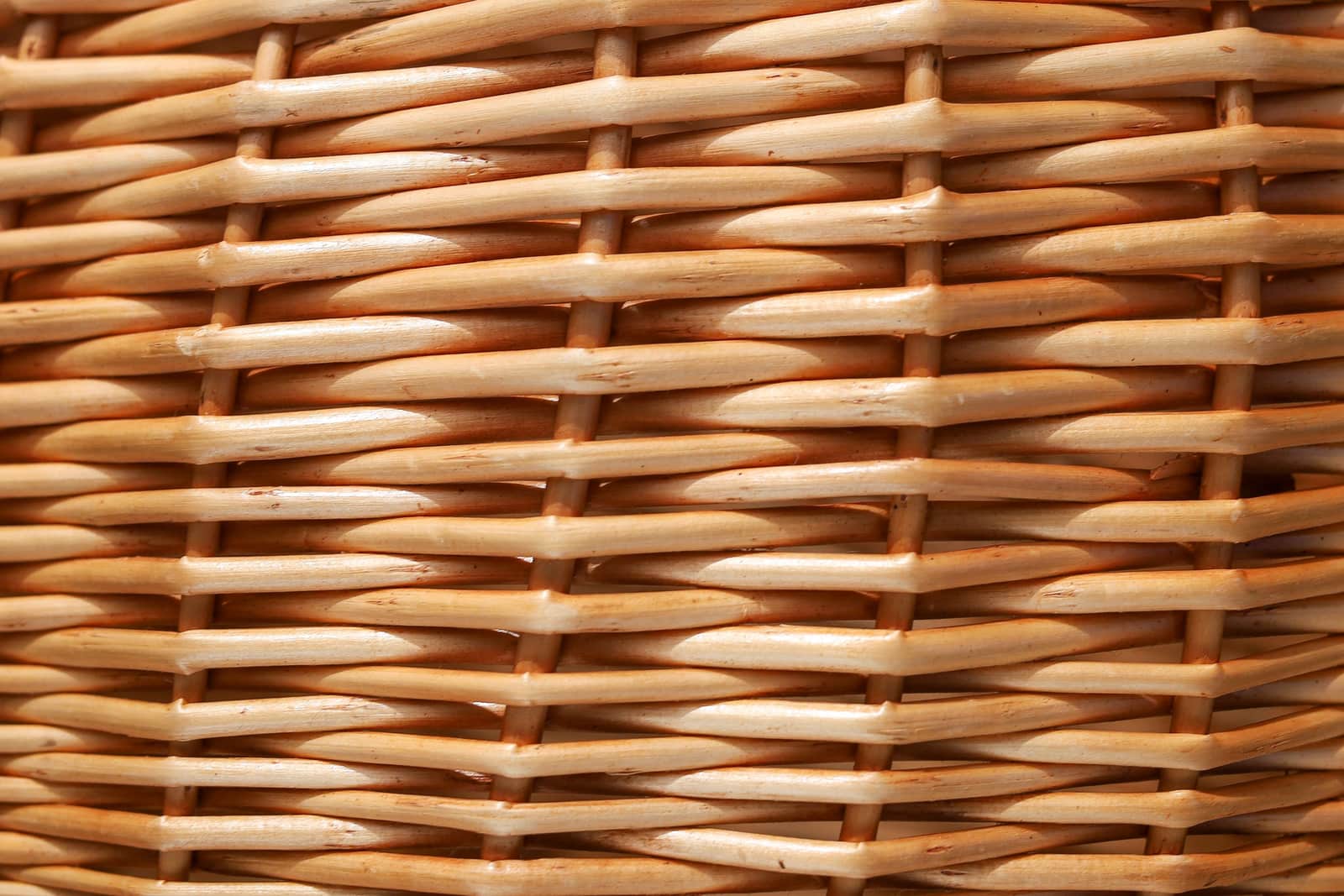
PE wicker is a type of resin wicker, not an alternative to it. "Resin wicker" is an umbrella term for any synthetic weave, and it covers three polymers with very different outdoor lifespans: HDPE at the top, general PE and PP in the middle, PVC at the bottom. If a listing says resin wicker and nothing more, you are being told nothing useful.
The short answer
Buy the weave whose polymer is named. HDPE-based weave is the version that holds up under UV, for the same reason HDPE poly lumber holds up: the pigments and UV inhibitors are compounded through the strand rather than coated on it. PVC-based weave is the one that goes chalky and snaps at the corners after two or three summers.
This is a different question from resin wicker vs rattan, which is synthetic against natural. Here both sides are synthetic and the argument is about which plastic.
The three polymers behind the label
Synthetic weave polymers
| Polymer | Sold as | UV behavior | Typical outdoor life |
|---|---|---|---|
| HDPE | HDPE wicker, high-density PE resin wicker | Pigment and UV inhibitors compounded through the strand | The long end of the category |
| PE / PP (general) | PE rattan, resin wicker, all-weather wicker | Varies widely by formulation and additive package | Mid-range, and genuinely unpredictable |
| PVC | Resin wicker, usually with no polymer named | Plasticizer migrates out; the strand goes chalky then brittle | The short end - the strands snap at stress points |
We have deliberately not put year figures in the last column. There is no published category standard for weave lifespan, so a precise-looking number here would be invented. The ranking is sound; the arithmetic is not available.
The mechanism is the same one that runs through this whole site. A property compounded into a material is permanent; a property applied to a surface wears off. HDPE weave gets its UV resistance from the first route, which is why it is the only synthetic weave we are comfortable recommending for full exposure.
Why the naming is so loose
Three reasons, and they are worth knowing because they tell you what a listing is doing:
- There is no standard to breach. Unlike the AAMA finish tiers for coatings on aluminum, no published specification governs outdoor weave. Nobody is cutting a corner; there is no corner defined.
- "Rattan" is a search term, not a claim. Natural rattan is a palm. A listing titled "PE rattan" is telling you it is plastic in the shape of rattan, which is fine - but the word is there for the search traffic.
- Weave quality varies between production runs on the same model, which makes a single reviewer's experience a weak guide to what will arrive in your box.
Spotting the good weave
- The polymer is named with a density. "HDPE" is a specification. "Resin" is a category.
- The strand has substance. Good weave is thick enough to hold its shape when you press a panel; thin, glossy, hollow-feeling strand is the budget tell.
- Color runs through a cut end. On through-colored strand the inside matches the outside. On coated strand you can see the difference, and that difference is what eventually chalks.
- Replacement parts exist. A maker who sells replacement cushions and panels expects the furniture to be around long enough to need them.
- There is a frame warranty, separate from the weave. That separation is a sign the maker understands the furniture is two products.
The frame still matters more
A final piece of perspective. Weave polymer sets how the furniture looks in year five; the frame sets whether it is still furniture. A superb HDPE weave over a powder-coated steel frame will outlive its own structure — the steel rusts from the fastener holes outward while the weave is still fine.
So the order of checks is: frame material first, weave polymer second, cushion fabric third. We set that priority out on aluminum vs wicker, and the cushion half of it on the cushion roundup.
The picks in full
Each entry states what the product is, how it scores on our five criteria, what it gives up, and how the pick was made.
1. HDPE-based weave
Yardbird Harriet Outdoor Wicker Sectional
Yardbird · Score 8.7/10
The build most people mean when they say they want a patio set that lasts: aluminum frame, HDPE-based weave, performance fabric.
Key specifications
- Powder-coated aluminum frame
- HDPE-based all-weather wicker weave
- Performance fabric cushions
- 10-year frame warranty on premium pieces
How it scores
- Fade resistance
- 8.5
- Rust and corrosion
- 9.0
- Wind and stability
- 7.5
- Build and hardware
- 9.0
- Warranty strength
- 8.5
What works
- An aluminum frame cannot rust from the inside out the way a steel frame does
- HDPE weave is the only wicker type that survives real UV exposure
- Replacement cushions and parts are actually available
The trade-offs
- Premium pricing; this is a several-thousand-dollar category
- Cushions still need storing or covering off-season
#ad How we earn · Live price at Amazon
Selected on published specification, warranty terms and owner-reported outcomes; not personally tested.
2. Unstated polymer, mainstream price
Christopher Knight Home 4-Piece Wicker Conversation Set
Christopher Knight Home · Score 5.4/10
The volume-selling budget sectional. Fine for a covered patio, and honest about its limits anywhere else.
Key specifications
- Resin wicker over a steel or aluminum frame depending on model
- Water-resistant polyester cushions
- Modular four-piece layout
- Limited 1-year warranty typical
How it scores
- Fade resistance
- 5.0
- Rust and corrosion
- 5.5
- Wind and stability
- 6.0
- Build and hardware
- 5.5
- Warranty strength
- 4.0
What works
- By far the cheapest way to fill a patio with matching seating
- Modular pieces move around easily
The trade-offs
- Check the frame: steel-framed versions rust where the coating chips
- Polyester cushions are water-resistant, not solution-dyed — they fade
- PVC-based weave on the cheapest variants goes brittle after two or three summers
#ad How we earn · Live price at Amazon
Selected on published specification, warranty terms and owner-reported outcomes; not personally tested.
3. Entry price
Devoko 5-Piece Patio Rattan Sectional Sofa Set
Devoko · Score 4.8/10
Aggressively priced and widely stocked, and dependent entirely on which frame variant the listing is actually shipping.
Key specifications
- PE rattan weave
- Steel frame on most variants
- Removable cushion covers
- Flat-pack assembly
How it scores
- Fade resistance
- 5.0
- Rust and corrosion
- 4.5
- Wind and stability
- 5.0
- Build and hardware
- 5.0
- Warranty strength
- 3.5
What works
- Lowest cost per seat in the category
- Cushion covers come off for washing
The trade-offs
- Steel frames rust at every scratch and every fastener
- Weave quality varies between production runs
- Light enough to shift in strong wind
#ad How we earn · Live price at Amazon
Selected on published specification, warranty terms and owner-reported outcomes; not personally tested.
Common questions
What is the difference between resin wicker and PE wicker?
Is HDPE wicker better than PE wicker?
How can I tell if wicker furniture uses PVC weave?
Does the weave or the frame matter more on wicker furniture?
Sources
- Our Materials — POLYWOOD. Checked 2026-09-23.
Manufacturer statement that POLYWOOD lumber is 100% HDPE with UV inhibitors and pigments compounded through the material rather than applied as a surface coat.
- Understanding AAMA 2604 vs. AAMA 2605 — AMICO Architectural Metals. Checked 2026-09-23.
The South Florida natural-weathering requirement behind each tier — 5 years for 2604, 10 years for 2605 — and the 50% vs 70% fluoropolymer resin difference.
- Yardbird Outdoor Furniture Warranty — Yardbird. Checked 2026-09-24.
Published cover by component — 10 years on aluminum, teak and HDPE poly frames, 5 years on the aluminum finish, 3 years on the HDPE wicker weave and 1 year on cushions.
- Sunbrella Warranty — Sunbrella (Glen Raven). Checked 2026-09-23.
Published warranty lengths: 5 years on upholstery and sling fabrics, 10 years on shade and marine fabrics, 3.5 years on recycled lines.
Read next
More from Materials
Five materials, five very different outcomes after five summers. Start here if you are choosing.