Covers & Care
How to protect a deck box from UV damage and weathering
The rain is not what ages it. Sunlight breaking the polymer at the surface is.
How this page is funded: Deck & Dusk earns a commission when you buy through the Amazon links below, at no extra cost to you. Commission never decides a ranking — our picks and our criteria are set before any link is added. Read the full disclosure.
Quick picks
What the routine below needs: a protectant for the surface, a cover for the boxes that never get shade, and a box built in a material that starts further ahead.
| # | Product | Best for | Score | Price |
|---|---|---|---|---|
| 1 | 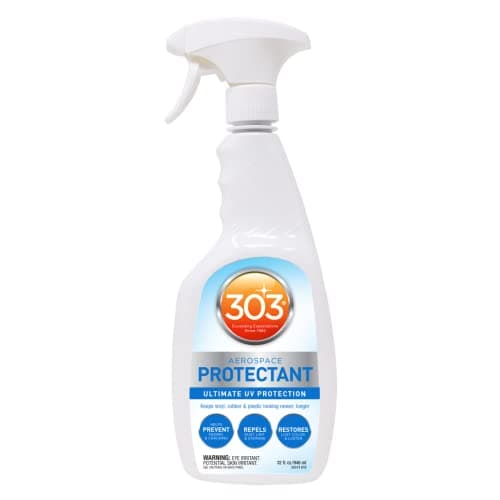 303 Aerospace ProtectantA wipe-on protectant for resin, vinyl and painted surfaces - the one maintenance a box needs. | The UV screen | 7.4 | $28.05 · View on Amazon #ad How we earn · Price as of November 2, 2026 |
| 2 | 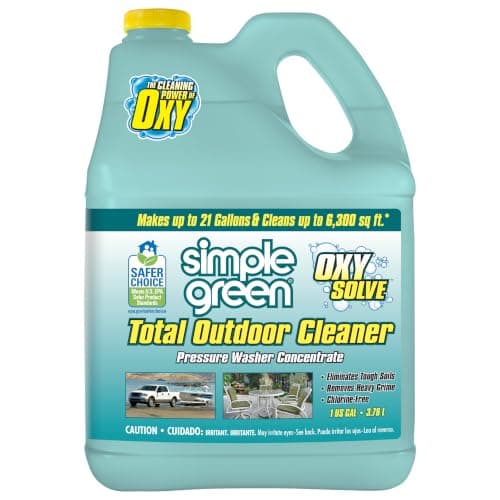 Simple Green Oxy Solve Total Outdoor CleanerProtectant on a dirty box seals the dirt in; this takes it back to a clean surface first. | Cleaning before you treat | 6.9 | $23.99 · View on Amazon #ad How we earn · Price as of November 2, 2026 |
| 3 | 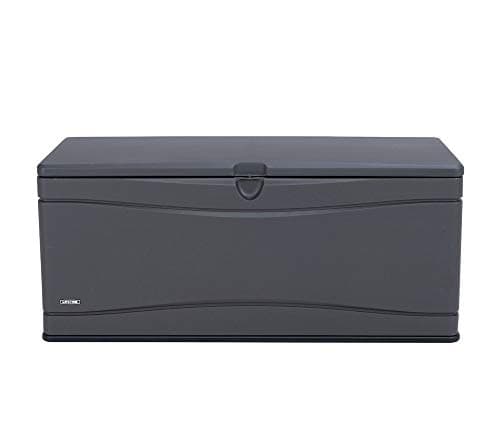 LIFETIME Heavy Duty Outdoor Storage Deck Box 130 GallonHDPE with UV stabilizers through the material rather than a coating on top of it. | Starting further ahead | 7.8 | $178.99 · View on Amazon #ad How we earn · Price as of November 2, 2026 |
Scores are our own, assessed from published specifications, warranty terms and owner-reported outcomes — not from laboratory testing. Prices are shown live on Amazon; we never print a figure we cannot verify.
A deck box is aged by ultraviolet light, not by rain. Resin and polyethylene both survive water indefinitely; what degrades them is UV breaking polymer chains at the surface, which shows up as a chalky, faded bloom you can rub off on a finger. The routine that prevents it is short: clean it, dry it, wipe a UV protectant over the sun-facing surfaces two or three times a season, and — more effective than any of that — keep the box out of all-day direct sun in the first place.
The short answer
Three facts set the whole approach:
- Water does nothing. Keter's own specification for its resin boxes says they will not rot, rust or peel. That is a material property and it is true.
- UV does everything. Fading and chalking are surface degradation of the polymer, and they are cumulative with exposure hours.
- The damage is cosmetic long before it is structural. A chalked box is still a perfectly good box. Knowing that stops people replacing one that has years left.
Why resin chalks
Polymers used outdoors carry UV stabilizers, and the two ways of getting them in behave very differently — which is the same distinction that runs through our fade-resistant page.
Compounded through the material means pigment and UV inhibitors are mixed into the polymer before it is formed, so every layer carries them. POLYWOOD describes its HDPE lumber exactly this way, and it is why poly lumber furniture holds color for decades. A box made of named HDPE starts from that position.
Applied to the surface — a pigmented skin layer or a coating — means the protection lives in a thin outer film. UV attacks the film, the film degrades, and the loose degraded polymer and pigment sit on the surface as chalk. Once it chalks, the layer beneath is unprotected and the process accelerates.
The five-step routine
The whole job is under half an hour, two or three times a season:
- 1. Clean first. Outdoor cleaner and a soft brush, working into any molded texture, which holds dirt in the pattern. Protectant over dirt seals the dirt in.
- 2. Dry fully. A day with the lid up. Protectant on a damp surface beads instead of bonding.
- 3. Wipe on a UV protectant. Lid first and twice, since it takes the most radiation, then the sun-facing walls. Buff off the excess or it stays tacky and collects dust.
- 4. Check the hardware while you are there. Lid pistons, hinge pins and panel clips are what actually fail on a deck box. A seized piston is a lid that drops.
- 5. Reload it. With the cushions dry and an air gap under the lid, as in our deck box roundup.
Placement does more than product
This is the part that is free and the part most people skip. UV damage is a function of accumulated exposure, so halving the hours of direct sun roughly halves the rate at which the surface degrades — and no wipe-on product comes close to that.
In order of effect: under a roof overhang or a deep eave; against a north or east wall, so the box takes morning sun rather than the harsher afternoon; beside rather than in front of a planting that casts afternoon shade; or, failing all of those, under the swing of a tilting umbrella, which is the point of a tilt mechanism in the sun protection roundup.
There is one caveat worth stating. A box pushed hard against a wall or a fence cannot dry on that side, and that is where algae and green bloom start. Leave a couple of inches of air behind it.
What works, and what does not
Deck box protection measures by effect
| Measure | Effect on UV aging | Effort | Verdict |
|---|---|---|---|
| Siting it out of all-day sun | Large. Fewer exposure hours is the whole mechanism | One-off | Do this first, before buying anything |
| UV protectant, two to three times a season | Moderate and real on resin and vinyl | 20 minutes a time | The one product worth owning |
| A furniture cover over the box in winter | Large, if the box sits in open sun year-round | Seasonal | Worth it only for fully exposed boxes |
| Buying HDPE instead of generic resin | Large, and it is baked in rather than applied | At purchase only | The structural version of the fix |
| Car wax or furniture polish | Little. Not formulated for UV on polymers | Same as protectant | Use an actual UV protectant instead |
| Painting a faded box | Negative. Paint on flexing polyethylene peels | High | Do not. Clean and treat, or accept the patina |
| Pressure washing | Negative. Drives water into seams and abrades the surface | Fast and tempting | Soft brush and cleaner instead |
The two most effective entries are both decisions rather than products: where the box lives, and what it is made of.
Two things that make it worse
- Pressure washing it. The instinct is right and the tool is wrong. High pressure drives water past lid seams into the contents and abrades an already-degraded surface, taking off more of the stabilized layer. A bucket, an outdoor cleaner and a soft brush restore more and remove less — the same argument as our cleaning guide.
- Sealing damp contents in for winter. A closed box full of damp cushions spends five months at high humidity with no sun to drive it off. Everything on winter storage applies: dry first, then store. If there is any doubt, cushions come indoors and the box holds covers and tools instead.
And one thing worth being relaxed about: a box that has chalked is not a box that has failed. Clean it, treat it, and judge it on whether the lid still seals and the hinges still hold. If the finish genuinely matters to you, the restoration sequence on faded patio furniture works on resin as well as it does on furniture.
The picks in full
Each entry states what the product is, how it scores on our five criteria, what it gives up, and how the pick was made.
1. The UV screen
303 Aerospace Protectant
303 Products · Score 7.4/10
A UV screen for the materials that chalk — resin, vinyl, plastic and painted metal — rather than another cleaner.
Key specifications
- UV-blocking protectant, not a cleaner
- For resin, vinyl, plastic, fiberglass and painted surfaces
- Wipe on, buff off
- Reapply seasonally
How it scores
- Fade resistance
- 8.5
- Rust and corrosion
- 7.0
- Wind and stability
- 6.0
- Build and hardware
- 7.5
- Warranty strength
- 5.0
What works
- Targets the actual failure mode on plastics: UV chalking and color loss
- Leaves a dry, non-greasy finish that does not attract dust
The trade-offs
- Does nothing for wood, and does not clean anything
- Needs reapplying every few months in full sun to be worth doing
#ad How we earn · Price as of November 2, 2026
Selected on published specification, warranty terms and owner-reported outcomes; not personally tested.
2. Cleaning before you treat
Simple Green Oxy Solve Total Outdoor Cleaner
Simple Green · Score 6.9/10
The general-purpose concentrate for the grime and green film that builds up on everything outdoors.
Key specifications
- Oxygenated concentrate
- Works with a pressure washer or a bucket
- For composite, wood, vinyl and painted surfaces
- Dilutes to a large working volume
How it scores
- Fade resistance
- 7.0
- Rust and corrosion
- 7.5
- Wind and stability
- 6.0
- Build and hardware
- 7.0
- Warranty strength
- 5.0
What works
- One product covers deck, furniture and cushion fabric
- Concentrate makes it cheap per use
- Oxygen bleaching lifts algae film without chlorine bleach
The trade-offs
- Not a teak brightener — gray teak needs a dedicated two-step product
- Rinse thoroughly or residue leaves a film
#ad How we earn · Price as of November 2, 2026
Selected on published specification, warranty terms and owner-reported outcomes; not personally tested.
3. Starting further ahead
LIFETIME Heavy Duty Outdoor Storage Deck Box 130 Gallon
Lifetime · Score 7.8/10
High-density polyethylene rather than generic resin, from the one brand on this list that builds the rest of its catalog out of the same material.
Key specifications
- 130 gallon stated capacity
- High-density polyethylene construction
- Heavy-duty lid
- Flat-pack assembly
How it scores
- Fade resistance
- 8.0
- Rust and corrosion
- 9.5
- Wind and stability
- 7.0
- Build and hardware
- 8.0
- Warranty strength
- 6.5
What works
- HDPE is the material this whole site argues for, and it behaves the same in a storage box
- Noticeably heavier wall sections than the budget boxes, so it stays put better
- Lifetime publishes material and construction detail that most storage brands do not
The trade-offs
- Costs more than a comparable resin box of the same capacity
- Heavier to reposition once it is assembled, and it has no wheels
- Listings often quote a shipping lead time rather than same-week delivery
#ad How we earn · Price as of November 2, 2026
Selected on published specification, warranty terms and owner-reported outcomes; not personally tested.
Common questions
How do you protect a plastic deck box from the sun?
Why is my deck box turning chalky and white?
Can you paint a faded resin deck box?
Should you cover a deck box in winter?
Sources
- Circa 37 Gallon Deck Box - product page — Keter. Checked 2026-10-22.
Keter's own published terms for a resin deck box: a Limited 2-Year Warranty, material listed as Resin, 'Weather Resistant: Yes', a description calling the box UV-resistant and ventilated and saying it 'will not rot, rust or peel', a 'Does Not Fade' feature icon - and no waterproof claim anywhere on the page.
- Our Materials — POLYWOOD. Checked 2026-09-23.
Manufacturer statement that POLYWOOD lumber is 100% HDPE with UV inhibitors and pigments compounded through the material rather than applied as a surface coat.
- Understanding AAMA 2604 vs. AAMA 2605 — AMICO Architectural Metals. Checked 2026-09-23.
The South Florida natural-weathering requirement behind each tier — 5 years for 2604, 10 years for 2605 — and the 50% vs 70% fluoropolymer resin difference.
Read next
More from Covers & Care
Covers that vent, cushions that hold color, and the four maintenance jobs worth doing.