Covers & Care
Outdoor furniture: oil vs varnish
Oil wears away gracefully. Varnish fails all at once, and then you own a stripping job.
How this page is funded: Deck & Dusk earns a commission when you buy through the Amazon links below, at no extra cost to you. Commission never decides a ranking — our picks and our criteria are set before any link is added. Read the full disclosure.
Quick picks
What the sections below actually point to: clean the wood properly, protect the materials that chalk, and buy a material that needs neither if you would rather not do this.
| # | Product | Best for | Score | Price |
|---|---|---|---|---|
| 1 | 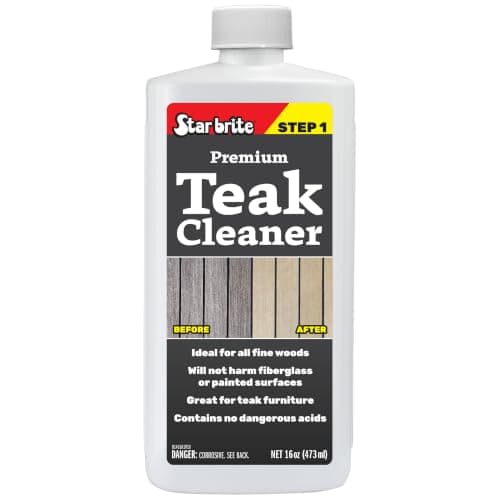 Star brite Premium Outdoor Teak CleanerA two-part cleaner removes far less material than sanding a varnish film off. | Cleaning before you treat | 7.5 | $13.59 · View on Amazon #ad How we earn · Price as of October 11, 2026 |
| 2 | 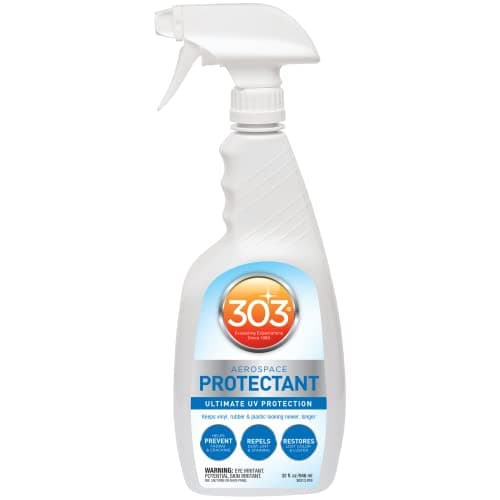 303 Aerospace ProtectantA UV screen for resin, vinyl and painted metal - where oil and varnish both do nothing. | The non-wood surfaces | 7.4 | $23.90 · View on Amazon #ad How we earn · Price as of October 11, 2026 |
| 3 | No image Cambridge Casual Teak Adirondack ChairTeak heartwood carries its own decay resistance, so a finish is optional. | Wood that needs neither | 7.8 | Check price on Amazon #ad How we earn · Live price at Amazon |
Scores are our own, assessed from published specifications, warranty terms and owner-reported outcomes — not from laboratory testing. Prices are shown live on Amazon; we never print a figure we cannot verify.
Use a penetrating oil or a wood sealer on outdoor furniture, not a varnish. Oil soaks into the wood and wears away gradually, so you top it up. Varnish forms a film on the surface, and when that film cracks under UV and seasonal movement, water gets underneath it and the only fix is stripping the whole piece back.
The short answer
This is one of the few questions in outdoor furniture care with a clear answer. The failure modes are not equivalent:
- Oil fails gracefully. It thins, the color fades back toward gray, and you clean and reapply. No stripping, no sanding, no point of no return.
- Varnish fails catastrophically. A film that has lost adhesion lifts in sheets, traps moisture against the wood underneath, and cannot be recoated over — applying more varnish onto a failing film just seals the problem in.
Marine spar varnish is the exception that proves the rule. It exists, it is genuinely UV-tolerant, and it survives on boats because owners recoat it on a schedule. A patio chair does not get that attention, which is exactly why varnish is the wrong finish for one.
Why a film fails outdoors
Three forces work on a surface film, and wood outdoors gives all three a lot to work with.
Movement. Wood expands and contracts with moisture. A hard film has to move with it or lose adhesion, and over enough wet-dry cycles the film loses.
UV. Sunlight degrades both the finish and the wood surface immediately beneath it. Once the bond at that interface breaks down, the film lifts even though it still looks intact from above.
Water, once it is in. A breach in a film is worse than no film at all, because the surrounding coating stops the trapped water evaporating. This is the same mechanism that makes a sealed, unvented furniture cover worse than an open one — covered on our page about covers.
Oil, varnish and sealer compared
Outdoor wood finishes
| Finish | How it works | How it fails | Reapplication |
|---|---|---|---|
| Penetrating teak or hardwood oil | Soaks into the surface fibers | Thins and fades; wood grays | Clean and recoat, no stripping |
| Wood sealer | Penetrates with added UV blockers and water repellency | Gradual loss of repellency | Clean and recoat |
| Varnish or polyurethane | Cures into a hard film on the surface | Cracks, lifts, traps water beneath | Strip to bare wood and start again |
| Marine spar varnish | A flexible, UV-stabilized film | Same as varnish, more slowly | Scheduled recoats - realistic on a boat, not a chair |
| Paint | An opaque film | Peels and flakes | Scrape, prime, repaint |
| Nothing at all | Relies on the wood's own decay resistance | Surface grays; heartwood stays sound | None - a valid plan on teak |
Teak oil contains no teak. It is a name for a penetrating oil blend, and it is the finish type rather than the species in the bottle that matters.
What to use, by wood
- Teak heartwood: nothing is a legitimate choice, because the decay resistance is in the wood rather than in a finish — the USDA Forest Products Laboratory is clear that heartwood carries a species' resistance. Oil only if you want to keep the honey color. Details on how long teak furniture lasts.
- Acacia and eucalyptus: sealer or oil, every year, not optional. These woods do not have teak's extractives, so the finish is doing real protective work. Our teak vs acacia page is blunt about what happens when the schedule slips.
- Painted or stained softwood: you already have a film, so maintain it as a film — scrape, prime and repaint rather than oiling over it.
- Poly lumber, aluminum, resin and wicker: neither oil nor varnish does anything useful. Plastics and painted metal need a UV protectant, not a wood finish.
The three common mistakes
- Oiling over damp wood. This traps moisture in the surface fibers and can encourage mildew under the finish. Give the wood a full day of drying after cleaning.
- Varnishing to "seal it properly". The instinct is understandable and it creates a future stripping job. Sealer and varnish are different products despite the overlapping language.
- Sanding instead of cleaning. Sanding removes material every time, and a two-part chemical cleaner restores gray wood with far less loss — the sequence is in our restoration guide.
The broader version of this argument is that outdoor furniture cannot be waterproofed at all, only drained: how to waterproof patio furniture works through it material by material.
The picks in full
Each entry states what the product is, how it scores on our five criteria, what it gives up, and how the pick was made.
1. Cleaning before you treat
Star brite Premium Outdoor Teak Cleaner
Star brite · Score 7.5/10
The two-step teak cleaner that brings gray wood back without the aggressive sanding that thins a board every time.
Key specifications
- Two-part cleaner and brightener system
- Formulated for weathered gray or blackened teak
- Applied to dry wood, worked in for a few minutes, rinsed
- Compatible with teak oil and sealer afterward
How it scores
- Fade resistance
- 7.5
- Rust and corrosion
- 8.0
- Wind and stability
- 7.0
- Build and hardware
- 8.0
- Warranty strength
- 5.0
What works
- Chemical cleaning removes far less material than sanding does
- Works on the gray and black staining that soap alone will not shift
The trade-offs
- The two-step process takes an afternoon on a full set
- Needs rinsing away from planting — it is a cleaner, not a soap
#ad How we earn · Price as of October 11, 2026
Selected on published specification, warranty terms and owner-reported outcomes; not personally tested.
2. The non-wood surfaces
303 Aerospace Protectant
303 Products · Score 7.4/10
A UV screen for the materials that chalk — resin, vinyl, plastic and painted metal — rather than another cleaner.
Key specifications
- UV-blocking protectant, not a cleaner
- For resin, vinyl, plastic, fiberglass and painted surfaces
- Wipe on, buff off
- Reapply seasonally
How it scores
- Fade resistance
- 8.5
- Rust and corrosion
- 7.0
- Wind and stability
- 6.0
- Build and hardware
- 7.5
- Warranty strength
- 5.0
What works
- Targets the actual failure mode on plastics: UV chalking and color loss
- Leaves a dry, non-greasy finish that does not attract dust
The trade-offs
- Does nothing for wood, and does not clean anything
- Needs reapplying every few months in full sun to be worth doing
#ad How we earn · Price as of October 11, 2026
Selected on published specification, warranty terms and owner-reported outcomes; not personally tested.
3. Wood that needs neither
Cambridge Casual Teak Adirondack Chair
Cambridge Casual · Score 7.8/10
Real teak at an accessible price, which in practice means plantation teak: genuinely weatherproof, with more sapwood than a marine-grade board.
Key specifications
- Plantation-grown teak
- Brass or stainless fasteners depending on model
- Ships partly assembled
- Will silver within roughly a year outdoors unless oiled
How it scores
- Fade resistance
- 7.0
- Rust and corrosion
- 8.5
- Wind and stability
- 8.5
- Build and hardware
- 8.0
- Warranty strength
- 6.0
What works
- Teak heartwood carries its own decay resistance — no coating to fail
- Repairable and sandable, unlike every plastic in this list
- Ages into a gray that many people prefer to the honey color
The trade-offs
- Needs cleaning and optional oiling if you want to keep the color
- Lower grades include sapwood, which is the weak link outdoors
- Heavier and pricier than HDPE for a similar service life
#ad How we earn · Live price at Amazon
Selected on published specification, warranty terms and owner-reported outcomes; not personally tested.
Common questions
Should I use oil or varnish on outdoor furniture?
Why does varnish peel on garden furniture?
Is marine spar varnish good for patio furniture?
Does teak furniture need oil at all?
Sources
- Wood Handbook, Chapter 14: Biodeterioration of Wood — USDA Forest Products Laboratory. Checked 2026-09-23.
Heartwood decay-resistance categories, and the point that heartwood — not sapwood — carries a species' decay resistance.
- Effect of age on heartwood proportion, color, chemical composition, and biological resistance of teakwood — BioResources (NC State University). Checked 2026-09-23.
Peer-reviewed finding that teak heartwood is highly resistant to fungal attack while positions near pith and sapwood are only resistant — the basis for the Grade A / B / C distinction.
- Product Warranty — Cambridge Casual. Checked 2026-09-24.
The one-year manufacturer limited warranty on wood frames and cushions, and the exclusion of natural fading and changes in wood frames from that cover.
Read next
More from Covers & Care
Covers that vent, cushions that hold color, and the four maintenance jobs worth doing.