Covers & Care
Best outdoor furniture cleaners
The right product depends entirely on the material. The wrong one does damage.
How this page is funded: Deck & Dusk earns a commission when you buy through the Amazon links below, at no extra cost to you. Commission never decides a ranking — our picks and our criteria are set before any link is added. Read the full disclosure.
Quick picks
One product per job. Buying a single all-purpose cleaner for four different materials is how surfaces get damaged.
| # | Product | Best for | Score | Price |
|---|---|---|---|---|
| 1 | 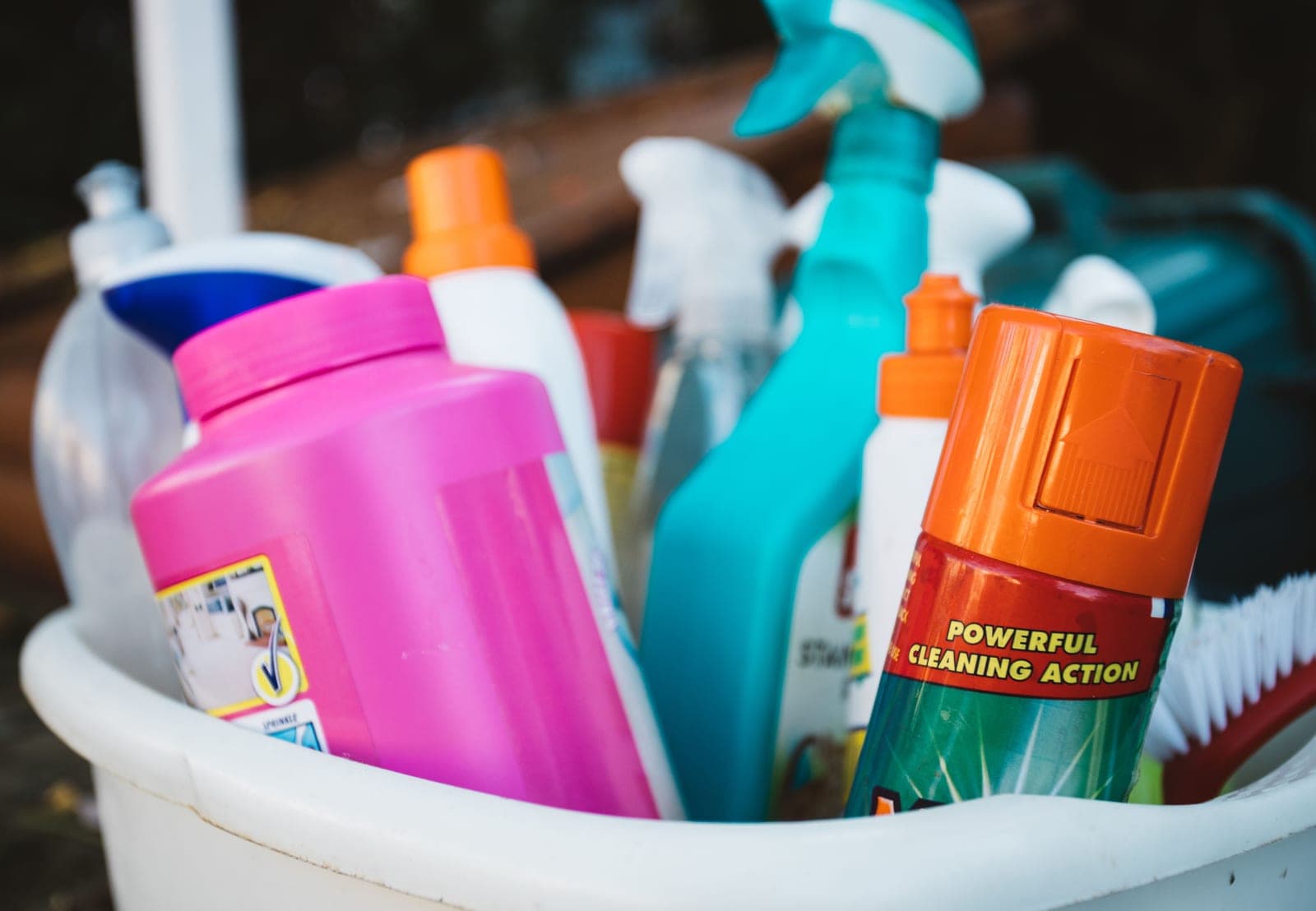 Simple Green Oxy Solve Total Outdoor CleanerOne product covers deck, frames and fabric; cheap per use. | Best all-round concentrate | 6.9 | Check price on Amazon #ad How we earn · Live price at Amazon |
| 2 | Star brite Premium Outdoor Teak CleanerTwo-step chemical clean removes far less wood than sanding. | Gray or blackened teak | 7.5 | Check price on Amazon #ad How we earn · Live price at Amazon |
| 3 | 303 Aerospace ProtectantA UV screen that slows the chalking cleaning cannot fix. | After cleaning plastics and painted metal | 7.4 | Check price on Amazon #ad How we earn · Live price at Amazon |
| 4 | Star brite Outdoor Furniture CleanerReady-to-use spray, so it actually gets used. | Quick routine jobs | 6.5 | Check price on Amazon #ad How we earn · Live price at Amazon |
| 5 | Rust-Oleum Stops Rust Rust ReformerConverts rust to a paintable surface — cleaning will not fix rust. | Rust that has already started | 6.6 | Check price on Amazon #ad How we earn · Live price at Amazon |
Scores are our own, assessed from published specifications, warranty terms and owner-reported outcomes — not from laboratory testing. Prices are shown live on Amazon; we never print a figure we cannot verify.
Cleaner by material
The single most useful idea on this page: there is no one outdoor furniture cleaner. What works on resin is wrong for teak, and what restores teak will strip a painted finish.
| Material | What to use | What it is doing | What to avoid |
|---|---|---|---|
| Teak and hardwoods | A dedicated two-step teak cleaner and brightener | Chemically lifting gray oxidized lignin and black mildew staining | Aggressive sanding, which thins the board every time |
| HDPE poly lumber and resin | Mild soap and water, or an oxygenated concentrate | Removing surface grime and algae film | Solvents and abrasives, which scratch the surface permanently |
| Powder-coated metal | Mild soap and water; touch-up paint for chips | Cleaning without stressing the coating | Abrasive pads, which breach the coating and start rust |
| Wicker and woven resin | Oxygenated concentrate, soft brush, hose rinse | Getting grit out of the weave, which is what abrades strands | Pressure washing, which snaps strands and drives water into frames |
| Outdoor fabric and cushions | Mild soap; diluted bleach on solution-dyed acrylic only | Killing mildew on the organic matter it actually grows on | Bleach on printed polyester, which leaves pale patches |
Teak is a special case
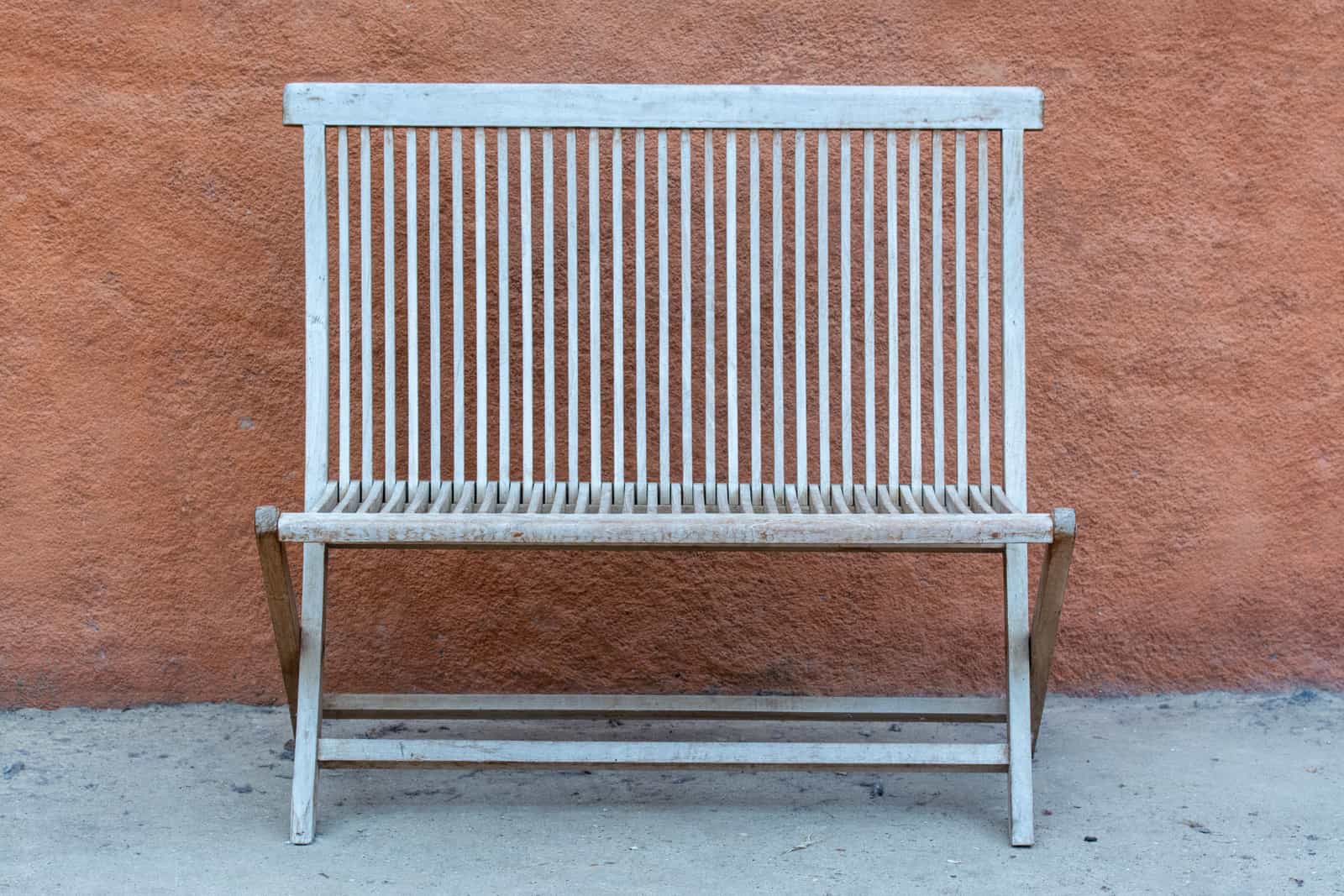
Teak grays because ultraviolet light photo-oxidizes lignin in roughly the top 0.1mm of the surface. It is purely cosmetic — the decay resistance is inside the heartwood, not on the surface, so gray teak is structurally identical to honey-colored teak.
If you want the color back, a two-step cleaner and brightener dissolves that oxidized layer chemically. The alternative — sanding — removes wood, and doing it every couple of years measurably thins a board over a decade. Chemical cleaning is gentler and faster.
The trade-off is that teak cleaners are genuinely strong products. Rinse well, keep them off adjacent planting, and do not use them on anything with a painted or stained finish. The full procedure is on our restoration guide.
What to avoid
- Pressure washers on almost everything. They break wicker strands, drive water into frame tubes where it sits and rusts, raise the grain on wood, and can blast through a powder coat. Use a hose.
- Abrasive pads on coated metal. Every scratch is a place rust starts.
- Chlorine bleach on printed fabric. It removes the mildew and the color together. Only solution-dyed acrylic tolerates it, because the color is in the fiber.
- Solvents on plastics. Many solvents craze HDPE and resin surfaces permanently.
- Sealing over dirt. Applying oil or sealer to wood that has not been cleaned locks the grime and algae in under the finish.
The right order of operations
- Dry-brush first. Loose leaf litter, cobwebs, grit in weave. More grime comes off dry than people expect, and it stops you turning dust into mud.
- Clean with the right product for the material. Work in shade where you can — cleaner drying on a hot surface leaves streaks.
- Rinse thoroughly. Residue attracts dirt and leaves a film.
- Let it dry completely. Especially before sealing, oiling or covering.
- Then treat: oil for wood, protectant for plastics and painted metal, rust treatment for steel. Treating before cleaning is the most common sequencing mistake.
The material-by-material walkthrough is on our cleaning guide.
The picks in full
Each entry states what the product is, how it scores on our five criteria, what it gives up, and how the pick was made.
1. Best all-round concentrate
Simple Green Oxy Solve Total Outdoor Cleaner
Simple Green · Score 6.9/10
The general-purpose concentrate for the grime and green film that builds up on everything outdoors.
Key specifications
- Oxygenated concentrate
- Works with a pressure washer or a bucket
- For composite, wood, vinyl and painted surfaces
- Dilutes to a large working volume
How it scores
- Fade resistance
- 7.0
- Rust and corrosion
- 7.5
- Wind and stability
- 6.0
- Build and hardware
- 7.0
- Warranty strength
- 5.0
What works
- One product covers deck, furniture and cushion fabric
- Concentrate makes it cheap per use
- Oxygen bleaching lifts algae film without chlorine bleach
The trade-offs
- Not a teak brightener — gray teak needs a dedicated two-step product
- Rinse thoroughly or residue leaves a film
#ad How we earn · Live price at Amazon
Selected on published specification, warranty terms and owner-reported outcomes; not personally tested.
2. Gray or blackened teak
Star brite Premium Outdoor Teak Cleaner
Star brite · Score 7.5/10
The two-step teak cleaner that brings gray wood back without the aggressive sanding that thins a board every time.
Key specifications
- Two-part cleaner and brightener system
- Formulated for weathered gray or blackened teak
- Applied to dry wood, worked in for a few minutes, rinsed
- Compatible with teak oil and sealer afterward
How it scores
- Fade resistance
- 7.5
- Rust and corrosion
- 8.0
- Wind and stability
- 7.0
- Build and hardware
- 8.0
- Warranty strength
- 5.0
What works
- Chemical cleaning removes far less material than sanding does
- Works on the gray and black staining that soap alone will not shift
The trade-offs
- The two-step process takes an afternoon on a full set
- Needs rinsing away from planting — it is a cleaner, not a soap
#ad How we earn · Live price at Amazon
Selected on published specification, warranty terms and owner-reported outcomes; not personally tested.
3. After cleaning plastics and painted metal
303 Aerospace Protectant
303 Products · Score 7.4/10
A UV screen for the materials that chalk — resin, vinyl, plastic and painted metal — rather than another cleaner.
Key specifications
- UV-blocking protectant, not a cleaner
- For resin, vinyl, plastic, fiberglass and painted surfaces
- Wipe on, buff off
- Reapply seasonally
How it scores
- Fade resistance
- 8.5
- Rust and corrosion
- 7.0
- Wind and stability
- 6.0
- Build and hardware
- 7.5
- Warranty strength
- 5.0
What works
- Targets the actual failure mode on plastics: UV chalking and color loss
- Leaves a dry, non-greasy finish that does not attract dust
The trade-offs
- Does nothing for wood, and does not clean anything
- Needs reapplying every few months in full sun to be worth doing
#ad How we earn · Live price at Amazon
Selected on published specification, warranty terms and owner-reported outcomes; not personally tested.
4. Quick routine jobs
Star brite Outdoor Furniture Cleaner
Star brite · Score 6.5/10
A spray-and-wipe all-surface cleaner for the routine jobs that do not justify mixing a bucket.
Key specifications
- Ready-to-use spray
- For resin, painted metal, vinyl and fabric
- No dilution required
- Frequent light-duty use
How it scores
- Fade resistance
- 6.5
- Rust and corrosion
- 7.5
- Wind and stability
- 6.0
- Build and hardware
- 6.5
- Warranty strength
- 5.0
What works
- No mixing, so it actually gets used
- Safe across most outdoor surfaces
The trade-offs
- Expensive per ounce next to a concentrate
- Not strong enough for a season of built-up grime
#ad How we earn · Live price at Amazon
Selected on published specification, warranty terms and owner-reported outcomes; not personally tested.
5. Rust that has already started
Rust-Oleum Stops Rust Rust Reformer
Rust-Oleum · Score 6.6/10
Converts existing rust into a paintable surface, which is the only honest fix once a powder coat has already failed.
Key specifications
- Converts rust to a flat black paintable surface
- Spray application over wire-brushed rust
- Top-coat with an enamel afterward
- For steel and iron, not aluminum
How it scores
- Fade resistance
- 6.0
- Rust and corrosion
- 8.0
- Wind and stability
- 6.0
- Build and hardware
- 7.0
- Warranty strength
- 4.5
What works
- Buys years on a steel frame that would otherwise be scrapped
- Cheap relative to replacing the furniture
The trade-offs
- It treats rust; it does not undo the metal loss already there
- Needs a top coat or it will not last
- Pointless on aluminum, which does not rust in the first place
#ad How we earn · Live price at Amazon
Selected on published specification, warranty terms and owner-reported outcomes; not personally tested.
Common questions
What is the best cleaner for outdoor furniture?
Can I pressure wash patio furniture?
Can I use bleach on outdoor cushions?
Should I clean patio furniture before oiling or sealing it?
Sources
- Sunbrella Warranty — Sunbrella (Glen Raven). Checked 2026-09-23.
Published warranty lengths: 5 years on upholstery and sling fabrics, 10 years on shade and marine fabrics, 3.5 years on recycled lines.
- Wood Handbook, Chapter 14: Biodeterioration of Wood — USDA Forest Products Laboratory. Checked 2026-09-23.
Heartwood decay-resistance categories, and the point that heartwood — not sapwood — carries a species' decay resistance.
Read next
More from Covers & Care
Covers that vent, cushions that hold color, and the four maintenance jobs worth doing.