Guide
How to waterproof patio furniture
You cannot. What you can do is manage where water goes, and that works far better.
How this page is funded: Deck & Dusk earns a commission when you buy through the Amazon links below, at no extra cost to you. Commission never decides a ranking — our picks and our criteria are set before any link is added. Read the full disclosure.
Quick picks
The three products that do the real work: a penetrating treatment, a cover, and the cleaner you use before either.
| # | Product | Best for | Score | Price |
|---|---|---|---|---|
| 1 | 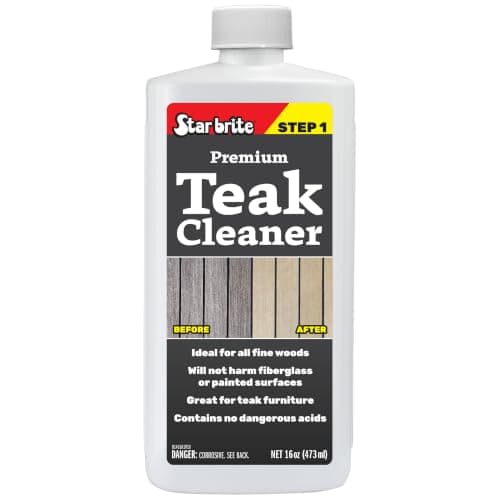 Star brite Premium Outdoor Teak CleanerNothing penetrates or bonds through gray weathered surface and grime. | Before any treatment | 7.5 | $13.59 · View on Amazon #ad How we earn · Price as of October 11, 2026 |
| 2 | 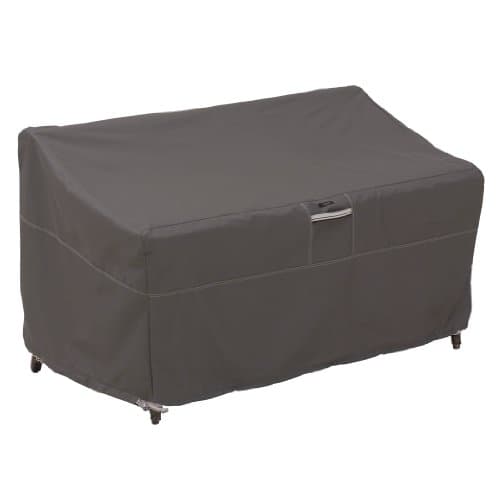 Classic Accessories Ravenna Patio Furniture CoverA vented cover beats any surface treatment at keeping rain off a frame. | What actually keeps water off | 8.1 | $55.42 · View on Amazon #ad How we earn · Price as of October 11, 2026 |
| 3 | 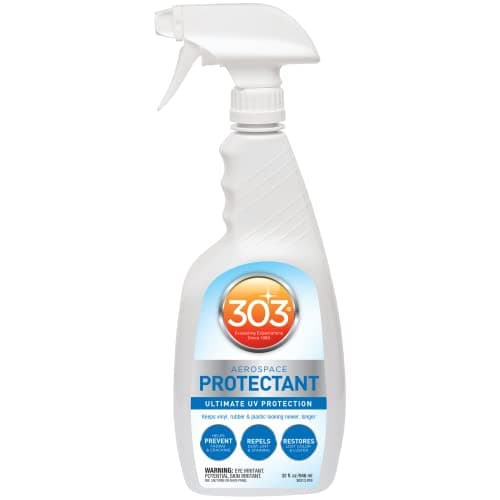 303 Aerospace ProtectantRestores repellency on plastics without forming a film that can peel. | Synthetics and vinyl | 7.4 | $23.90 · View on Amazon #ad How we earn · Price as of October 11, 2026 |
Scores are our own, assessed from published specifications, warranty terms and owner-reported outcomes — not from laboratory testing. Prices are shown live on Amazon; we never print a figure we cannot verify.
The short answer
You cannot waterproof patio furniture, and the attempts that come closest are the ones that do the most damage. Outdoor furniture is not meant to exclude water; it is meant to shed it and dry. The useful goal is drainage: make sure water leaves quickly, use penetrating treatments rather than film-forming ones, and cover the furniture when it is not in use. A varnish or polyurethane that genuinely seals wood will crack as the wood moves, let water in behind itself, and then hold it there — which is worse than no treatment at all.
Why sealing is the wrong goal
Three reasons, and they apply across materials:
- Wood moves. It takes up and gives off moisture with every change in humidity, swelling and shrinking as it does. A hard film on the surface cannot follow that movement, so it cracks. Water enters the crack, cannot evaporate back out through the film, and sits against the wood — which is the ideal condition for fungal decay. Our oil versus varnish page covers this failure in detail.
- Most outdoor materials do not need it. HDPE poly lumber does not absorb water at all; it is a solid non-porous polymer. Aluminum does not care. Teak heartwood contains natural extractives that give it its own decay resistance. Sealing any of these achieves nothing.
- Sealing the wrong part makes it worse. Plugging drainage holes in a tube frame, or sealing the gap between a seat slat and a rail, turns a self-draining design into a water reservoir.
What to do, by material
Water management by material
| Material | Does it need treating? | What to use | What to avoid |
|---|---|---|---|
| HDPE poly lumber | No - it does not absorb water | Soap and water; nothing else | Sealers, oils, anything film-forming |
| Teak | Optional - for color, not protection | Penetrating teak oil, if you want the honey tone | Varnish, polyurethane, decking stain |
| Acacia and eucalyptus | Yes - annually. These need the oil | Penetrating hardwood or teak oil | Film finishes; letting it go two seasons |
| Powder-coated steel | Not sealing - chip repair | Rust converter plus a top coat on breaches | Painting over active rust |
| Aluminum | No | Wax on a sound finish, for appearance | Anything on bare oxidized metal |
| Synthetic wicker | No | UV protectant for plastics, if anything | Oils, which hold dirt in the weave |
| Cushions and slings | Repellency only, never waterproofing | Fabric guard made for outdoor fabric | A sealed, non-breathing cushion cover |
Note the pattern: the only materials that genuinely want an annual treatment are the non-teak hardwoods, and what they want is a penetrating oil, not a seal.
Drainage beats coating
This is where the real gains are, and it costs nothing. Five checks, done once:
- Find the drainage holes and clear them. Tube-frame furniture has them in the feet or the lower rails. Blocked with debris, the tube fills, and in a freeze it splits.
- Make sure feet and glides are present. An open tube end standing in a puddle is a straw. A missing plastic foot is a cheap part and a significant failure mode.
- Keep slat gaps open. Leaves packed between slats hold a wet poultice against the wood or the finish indefinitely.
- Do not let furniture sit in standing water. On a deck that means keeping the drainage gaps clear beneath it; on a patio it may mean moving a chair two feet.
- Tip or stack what holds water. A dished seat pan without perforations is a bowl. Tipping chairs forward against a table after rain is a habit worth having.
For metal specifically, the same logic produces the rust routine on our rust guide, and the terminology confusion behind most of this is unpicked on weatherproof versus weather resistant.
Where covers fit
A cover is the closest thing to waterproofing that actually helps, because it keeps water off rather than sealing it in — but only if it is used correctly:
- The furniture has to be dry first. Covering a wet frame is the single most common way covers cause damage instead of preventing it.
- The cover has to breathe or vent. Water-resistant with vents beats fully waterproof and sealed, every time. What these products actually claim is worth reading — this one specifies water-resistant, not waterproof, and that is the honest description.
- It must not seal to the ground. Air has to move underneath or the cover becomes a humidity chamber.
The full case for and against is on do patio furniture covers work, and cushions get their own treatment on can cushions get wet.
The picks in full
Each entry states what the product is, how it scores on our five criteria, what it gives up, and how the pick was made.
1. Before any treatment
Star brite Premium Outdoor Teak Cleaner
Star brite · Score 7.5/10
The two-step teak cleaner that brings gray wood back without the aggressive sanding that thins a board every time.
Key specifications
- Two-part cleaner and brightener system
- Formulated for weathered gray or blackened teak
- Applied to dry wood, worked in for a few minutes, rinsed
- Compatible with teak oil and sealer afterward
How it scores
- Fade resistance
- 7.5
- Rust and corrosion
- 8.0
- Wind and stability
- 7.0
- Build and hardware
- 8.0
- Warranty strength
- 5.0
What works
- Chemical cleaning removes far less material than sanding does
- Works on the gray and black staining that soap alone will not shift
The trade-offs
- The two-step process takes an afternoon on a full set
- Needs rinsing away from planting — it is a cleaner, not a soap
#ad How we earn · Price as of October 11, 2026
Selected on published specification, warranty terms and owner-reported outcomes; not personally tested.
2. What actually keeps water off
Classic Accessories Ravenna Patio Furniture Cover
Classic Accessories · Score 8.1/10
The cover that does the two things cheap covers skip: it vents, and it has enough structure to shed water instead of pooling it.
Key specifications
- Woven polyester fabric with a water-resistant backing
- Air vents to reduce condensation
- Elastic hem with click-close straps
- Padded handles for fitting and removal
How it scores
- Fade resistance
- 7.5
- Rust and corrosion
- 9.0
- Wind and stability
- 8.0
- Build and hardware
- 8.5
- Warranty strength
- 7.0
What works
- Vents matter more than waterproofing — a sealed cover traps moisture and grows mildew
- Straps stop the cover becoming a sail in the first storm
- Size ranges actually fit real furniture dimensions
The trade-offs
- Costs several times a generic cover
- Still needs the furniture dry before you cover it
#ad How we earn · Price as of October 11, 2026
Selected on published specification, warranty terms and owner-reported outcomes; not personally tested.
3. Synthetics and vinyl
303 Aerospace Protectant
303 Products · Score 7.4/10
A UV screen for the materials that chalk — resin, vinyl, plastic and painted metal — rather than another cleaner.
Key specifications
- UV-blocking protectant, not a cleaner
- For resin, vinyl, plastic, fiberglass and painted surfaces
- Wipe on, buff off
- Reapply seasonally
How it scores
- Fade resistance
- 8.5
- Rust and corrosion
- 7.0
- Wind and stability
- 6.0
- Build and hardware
- 7.5
- Warranty strength
- 5.0
What works
- Targets the actual failure mode on plastics: UV chalking and color loss
- Leaves a dry, non-greasy finish that does not attract dust
The trade-offs
- Does nothing for wood, and does not clean anything
- Needs reapplying every few months in full sun to be worth doing
#ad How we earn · Price as of October 11, 2026
Selected on published specification, warranty terms and owner-reported outcomes; not personally tested.
Common questions
Can you waterproof outdoor furniture?
What is the best waterproofing for wooden patio furniture?
Should you seal patio furniture?
Is it bad to cover wet patio furniture?
Can you use decking stain on patio furniture?
Sources
- Wood Handbook, Chapter 14: Biodeterioration of Wood — USDA Forest Products Laboratory. Checked 2026-09-23.
Heartwood decay-resistance categories, and the point that heartwood — not sapwood — carries a species' decay resistance.
- Effect of age on heartwood proportion, color, chemical composition, and biological resistance of teakwood — BioResources (NC State University). Checked 2026-09-23.
Peer-reviewed finding that teak heartwood is highly resistant to fungal attack while positions near pith and sapwood are only resistant — the basis for the Grade A / B / C distinction.
- Ravenna Water-Resistant Patio Sofa/Loveseat Cover — Classic Accessories. Checked 2026-09-24.
The two-year limited warranty on this cover, the Gardelle One fabric description, and the published air-vent and WindLock click-close strap features.
- Our Materials — POLYWOOD. Checked 2026-09-23.
Manufacturer statement that POLYWOOD lumber is 100% HDPE with UV inhibitors and pigments compounded through the material rather than applied as a surface coat.
Read next
More from Covers & Care
Covers that vent, cushions that hold color, and the four maintenance jobs worth doing.