Shade
The best patio umbrella with a base
Nobody buys half an umbrella, but almost everybody buys half a base.
How this page is funded: Deck & Dusk earns a commission when you buy through the Amazon links below, at no extra cost to you. Commission never decides a ranking — our picks and our criteria are set before any link is added. Read the full disclosure.
Quick picks
Paired rather than ranked. Each row is an umbrella and the base that actually holds it, because the two decisions are really one decision.
| # | Product | Best for | Score | Price |
|---|---|---|---|---|
| 1 | 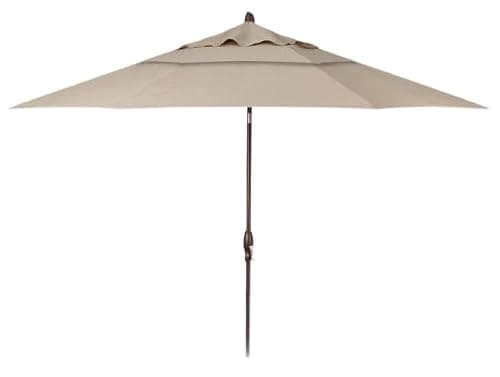 Treasure Garden Deluxe Auto-Tilt Market UmbrellaReplaceable canopy and ribs, auto-tilt that works under load - the one to pair a base to. | Best umbrella, through a table | 8.6 | $499.00 · View on Amazon #ad How we earn · Price as of October 16, 2026 |
| 2 | 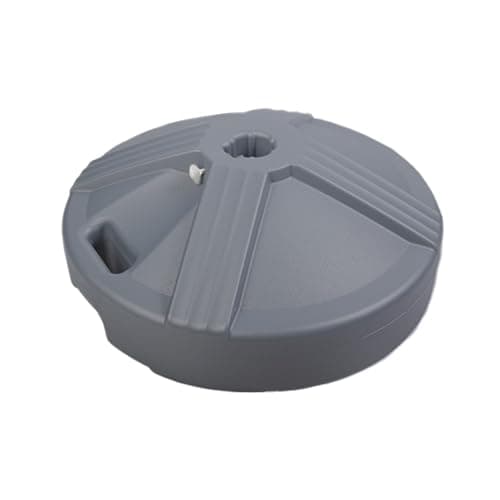 US Weight Durable Umbrella BaseFillable resin, so it ships light and weighs what it needs to once you fill it with sand. | Base for a table umbrella | 7.4 | $22.87 · View on Amazon #ad How we earn · Price as of October 16, 2026 |
| 3 | 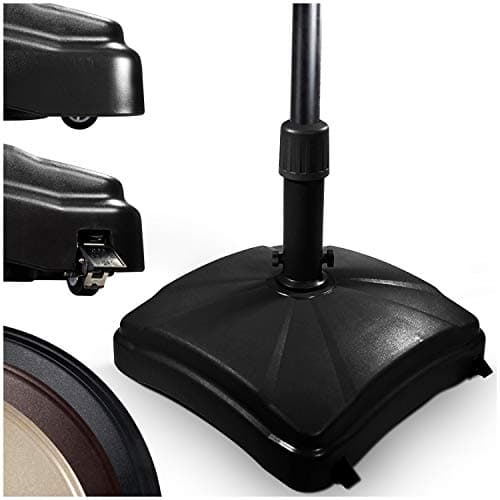 Shademobile Rolling Umbrella BaseThe only kind of heavy base you will actually reposition, because it rolls. | Base for a freestanding umbrella | 7.5 | $169.00 · View on Amazon #ad How we earn · Price as of October 16, 2026 |
| 4 | 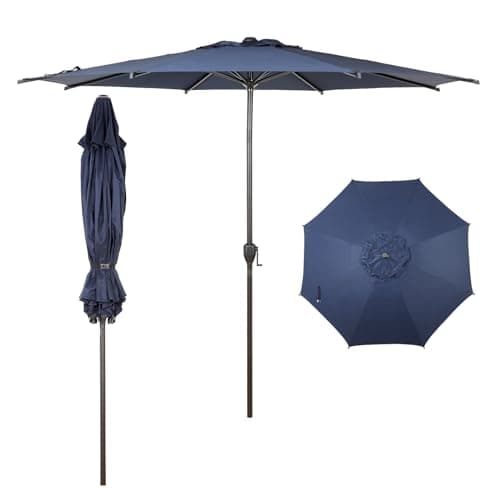 Abba Patio 9ft Market Umbrella with Push-Button TiltA nine-foot canopy that fits a six-seat table, with no illusions about high wind. | Mid-price pairing | 6.3 | $28.49 · View on Amazon #ad How we earn · Price as of October 16, 2026 |
| 5 | 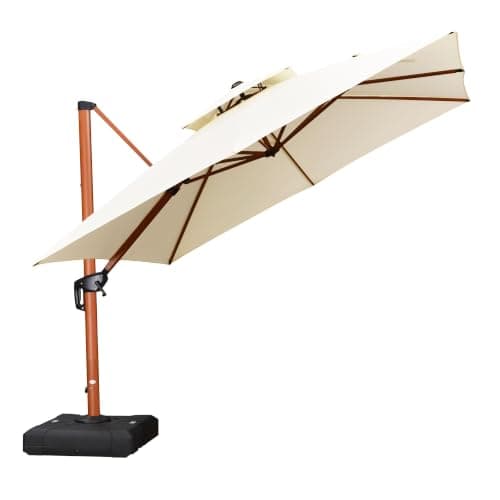 PURPLE LEAF 10ft Cantilever Patio UmbrellaCantilever shade, on the firm condition that the cross base gets properly loaded. | Freestanding, no pole in the table | 6.8 | $429.00 · View on Amazon #ad How we earn · Price as of October 16, 2026 |
Scores are our own, assessed from published specifications, warranty terms and owner-reported outcomes — not from laboratory testing. Prices are shown live on Amazon; we never print a figure we cannot verify.
The best patio umbrella and base pairing for most people is a nine-foot tilting market umbrella through a dining table, standing in a fillable resin base loaded with sand — the Treasure Garden Deluxe Auto-Tilt over a US Weight base is the version of that we would buy. If the umbrella has to stand on its own with no table to steady the pole, the base needs to roughly double and it needs wheels, or it will stay wherever you first put it.
The short answer
Searching for an umbrella "with a base" is the right instinct and the listings are the wrong place to satisfy it. An umbrella and its base are a single structural system: the canopy generates lift and overturning moment, and the base is the only thing resisting it. Buying them as separate line items — chosen to match — gets you a working system for less money than most bundles, because the bundle is where manufacturers save.
The rule of thumb worth carrying: a table umbrella needs a base that is adequate, because the table ring does most of the work. A freestanding umbrella needs a base that is serious, because nothing else is holding it.
Why bundled bases disappoint
A base is dense, heavy and expensive to ship, which puts it in direct conflict with the price of a bundle. Three consequences follow, and all three are visible before you buy:
- The included base is sized to the box, not the canopy. A bundle with a light base can be shipped in one carton. A bundle with an adequate one cannot.
- Fill capacity is quoted, not fill weight. A base described as "holds 40 lbs" weighs almost nothing in the box, and whether it reaches 40 depends entirely on what you put in it.
- Cantilever cross bases almost always exclude the plates. The base frame arrives; the weight that makes it a base is a separate purchase, and on a 10ft offset umbrella it is a large one.
Matching weight to canopy
Canopy area is what the wind acts on, so base weight has to scale with it rather than with the umbrella's price. The conventional guidance in the category is roughly 10 lbs of base per foot of canopy diameter for a table umbrella, and double that for a freestanding one — with cantilevers in a category of their own because their mass sits offset from the base.
Base weight by canopy size and mounting
| Canopy | Through a table | Freestanding | Notes |
|---|---|---|---|
| 6 to 7.5ft market | Around 50 lbs filled | Around 75 lbs filled | Balcony and bistro sizes; a filled resin base covers it |
| 9ft market (the common size) | Around 70 lbs filled | 125 lbs or more | Fits a six-seat table. The default pairing on this page |
| 10 to 11ft market | Around 90 lbs filled | 150 lbs or more | Freestanding at this size wants a rolling base |
| 10ft cantilever / offset | Not applicable | Cross base plus 200 lbs of plates or slabs | The plates are nearly always a separate purchase |
| 10 x 13ft rectangular offset | Not applicable | Cross base plus as much as it will take | Largest sail area in the category - close it in any real wind |
These are structural minimums for ordinary conditions, not wind ratings. No umbrella at any base weight should be left open in a gale - the NOAA Beaufort bands are the honest reference, not manufacturer wind claims.
Those numbers are also why the table matters so much. A pole running through a table ring and down into a base is braced at two heights, which converts most of the overturning force into something the table resists. Remove the table and the base alone has to take it, hence the doubling. The geometry is worked through in how to stop a patio umbrella blowing over.
Pole diameter and table-hole fit
The second half of "with a base" is whether the parts physically fit, and this is where otherwise good pairings fail on the deck:
- Pole diameter. Market umbrella poles are commonly 1.5 inches, with 1.38 and 1.9 both in circulation. Most bases ship with reducer collars; check that yours covers your pole before ordering.
- Table hole. Patio table umbrella holes are typically 1.5 to 2 inches. A pole narrower than the hole rattles and wears the ring; a pole wider than it simply will not pass.
- Base footprint under the table. A square base plate between table legs is a tripping hazard and sometimes does not fit at all. Measure the clear space before you buy a wide base.
- Two-piece poles. Convenient for storage, and the joint is the weak point. If the umbrella will live outside through a season, prefer a single-piece pole.
Sand, water and plates
Most disappointment with fillable bases traces to a single decision. Water weighs roughly 8.3 lbs per gallon; dry sand runs closer to 13 lbs for the same volume. Filling with water instead of sand costs you something like a third of the base's working weight, and the base is the only thing holding the umbrella down.
So: sand, through a funnel, and seal the plug. Water is for a base you intend to drain and move seasonally — and if moving it is the problem, a rolling base solves that better than under-filling does. On cantilever cross bases, standard patio slabs are usually cheaper and heavier than proprietary plates, which is the one real saving available in this whole category. Our umbrella bases roundup compares the base designs on their own terms.
Three pairings that work
- Dining table, six seats. A nine-foot tilting market umbrella through the table, over a sand-filled resin base. The best-value version of this whole category, and the one most buyers searching for an umbrella with a base actually want.
- Freestanding over a lounge group. A nine or ten-foot market umbrella in a rolling base loaded with sand. The wheels are not a luxury here — a base heavy enough to work is too heavy to drag, so without them it never moves and the shade never follows the sun.
- No pole in the middle. A 10ft cantilever on a cross base loaded with slabs. Budget for the ballast at the same time as the umbrella, and accept that this is the least wind-tolerant configuration on the page — the trade-off is set out in cantilever versus market umbrella.
Sizing the canopy itself is a separate question, and the one most people get wrong in the other direction: see what size patio umbrella you need.
The picks in full
Each entry states what the product is, how it scores on our five criteria, what it gives up, and how the pick was made.
1. Best umbrella, through a table
Treasure Garden Deluxe Auto-Tilt Market Umbrella
Treasure Garden · Score 8.6/10
The market umbrella people replace their third cheap umbrella with, usually after the third cheap umbrella.
Key specifications
- Aluminum pole with auto-tilt crank
- Sunbrella and other performance canopy fabrics offered
- Replaceable canopy and ribs
- Fabric warranty follows the fabric maker's terms
How it scores
- Fade resistance
- 9.0
- Rust and corrosion
- 8.5
- Wind and stability
- 7.0
- Build and hardware
- 9.0
- Warranty strength
- 8.5
What works
- Parts are replaceable, so a broken rib is not a landfill event
- Solution-dyed acrylic canopies are the only ones that hold color for years
- Auto-tilt actually works under load
The trade-offs
- Costs more than most people expect to spend on an umbrella
- Still must be closed in wind — no umbrella is a wind product
#ad How we earn · Price as of October 16, 2026
Selected on published specification, warranty terms and owner-reported outcomes; not personally tested.
2. Base for a table umbrella
US Weight Durable Umbrella Base
US Weight · Score 7.4/10
Fillable rather than cast, so it ships light and weighs what it needs to once you fill it — and it cannot rust.
Key specifications
- Fillable resin base
- Accepts sand or water fill
- Fits standard market umbrella poles
- No steel structure to corrode
How it scores
- Fade resistance
- 7.0
- Rust and corrosion
- 9.5
- Wind and stability
- 7.5
- Build and hardware
- 7.0
- Warranty strength
- 5.0
What works
- Cheap to ship empty, heavy once filled with sand
- Nothing on it rusts, unlike a cast-iron base
- Sand fill weighs considerably more than the same volume of water
The trade-offs
- Water fill is much lighter than sand — most disappointment traces to this
- Resin looks less substantial than cast metal
#ad How we earn · Price as of October 16, 2026
Selected on published specification, warranty terms and owner-reported outcomes; not personally tested.
3. Base for a freestanding umbrella
Shademobile Rolling Umbrella Base
Shademobile · Score 7.5/10
Solves the actual problem with heavy bases: a base heavy enough to work is too heavy to move, unless it has wheels.
Key specifications
- Fillable base with integrated wheels
- Sand or paver fill
- Tilt-and-roll handle
- Fits standard market umbrella poles
How it scores
- Fade resistance
- 7.0
- Rust and corrosion
- 8.0
- Wind and stability
- 8.0
- Build and hardware
- 7.5
- Warranty strength
- 5.0
What works
- You can load it properly and still move it, which means you will move it
- Heavier fill capacity than most free-standing bases
The trade-offs
- Costs more than a plain fillable base
- Wheels add height under the pole
#ad How we earn · Price as of October 16, 2026
Selected on published specification, warranty terms and owner-reported outcomes; not personally tested.
4. Mid-price pairing
Abba Patio 9ft Market Umbrella with Push-Button Tilt
Abba Patio · Score 6.3/10
The default mid-price market umbrella: adequate fabric, adequate frame, no illusions about high wind.
Key specifications
- 9ft canopy, eight ribs
- Rust-resistant aluminum pole
- Push-button tilt
- Polyester canopy on standard variants
How it scores
- Fade resistance
- 6.0
- Rust and corrosion
- 7.5
- Wind and stability
- 6.0
- Build and hardware
- 6.5
- Warranty strength
- 5.0
What works
- Covers a standard six-seat table
- Simple mechanism with little to break
- Broad color range
The trade-offs
- Polyester canopy fades faster than solution-dyed acrylic
- Single-tier canopy has no vent to relieve wind load
#ad How we earn · Price as of October 16, 2026
Selected on published specification, warranty terms and owner-reported outcomes; not personally tested.
5. Freestanding, no pole in the table
PURPLE LEAF 10ft Cantilever Patio Umbrella
PURPLE LEAF · Score 6.8/10
Cantilever shade without a pole through the table, on the condition you weight the base properly — which is not optional.
Key specifications
- 10ft offset canopy with 360-degree rotation
- Aluminum frame
- Crank lift with multi-position tilt
- Base weights sold separately on most listings
How it scores
- Fade resistance
- 7.0
- Rust and corrosion
- 8.0
- Wind and stability
- 5.5
- Build and hardware
- 7.0
- Warranty strength
- 5.5
What works
- Shades a seating group without a pole in the middle of it
- Rotates to follow the sun through an afternoon
- Aluminum frame will not rust
The trade-offs
- Cantilever geometry is inherently less wind-stable than a center pole
- The cross base needs heavy plates that are usually a separate purchase
- Much heavier to put away for winter
#ad How we earn · Price as of October 16, 2026
Selected on published specification, warranty terms and owner-reported outcomes; not personally tested.
Common questions
How heavy should a patio umbrella base be?
Are patio umbrella and base sets worth buying?
Should I fill an umbrella base with sand or water?
What size pole do patio umbrellas use?
Sources
- Customer Support — Limited Warranty — Treasure Garden. Checked 2026-09-24.
Frame warranty lengths by umbrella style (3 years FLEX, 2 years auto-tilt and collar-tilt, 1 year push-button and accessories) and fabric fade cover of 5 years on Sunbrella, Outdura and Tempotest against 4 years on O'bravia.
- About Treasure Garden — Treasure Garden. Checked 2026-10-01.
That Treasure Garden describes itself as headquartered in Southern California and as a vertically integrated manufacturer producing over 90% of its own components, and that the page makes no Made in USA or Assembled in USA origin claim.
- About Us — US Weight. Checked 2026-10-01.
The manufacturer's statement that its management team and its manufacturing facility are both located in Olney, Illinois.
- Beaufort Wind Chart — Estimating Wind Speeds — National Weather Service (NOAA). Checked 2026-09-23.
Wind-speed bands and their observable effects, used instead of manufacturer wind claims we cannot verify.
Read next
More from Shade
Market and cantilever umbrellas, the fabric that holds color, and the base weight that keeps it standing.