Buying guide
What size patio umbrella do you need?
Size to the furniture plus the chairs pulled out — and remember the sun moves.
How this page is funded: Deck & Dusk earns a commission when you buy through the Amazon links below, at no extra cost to you. Commission never decides a ranking — our picks and our criteria are set before any link is added. Read the full disclosure.
Quick picks
Sizing picks across the range, from a standard six-seat table to a full seating group.
| # | Product | Best for | Score | Price |
|---|---|---|---|---|
| 1 | 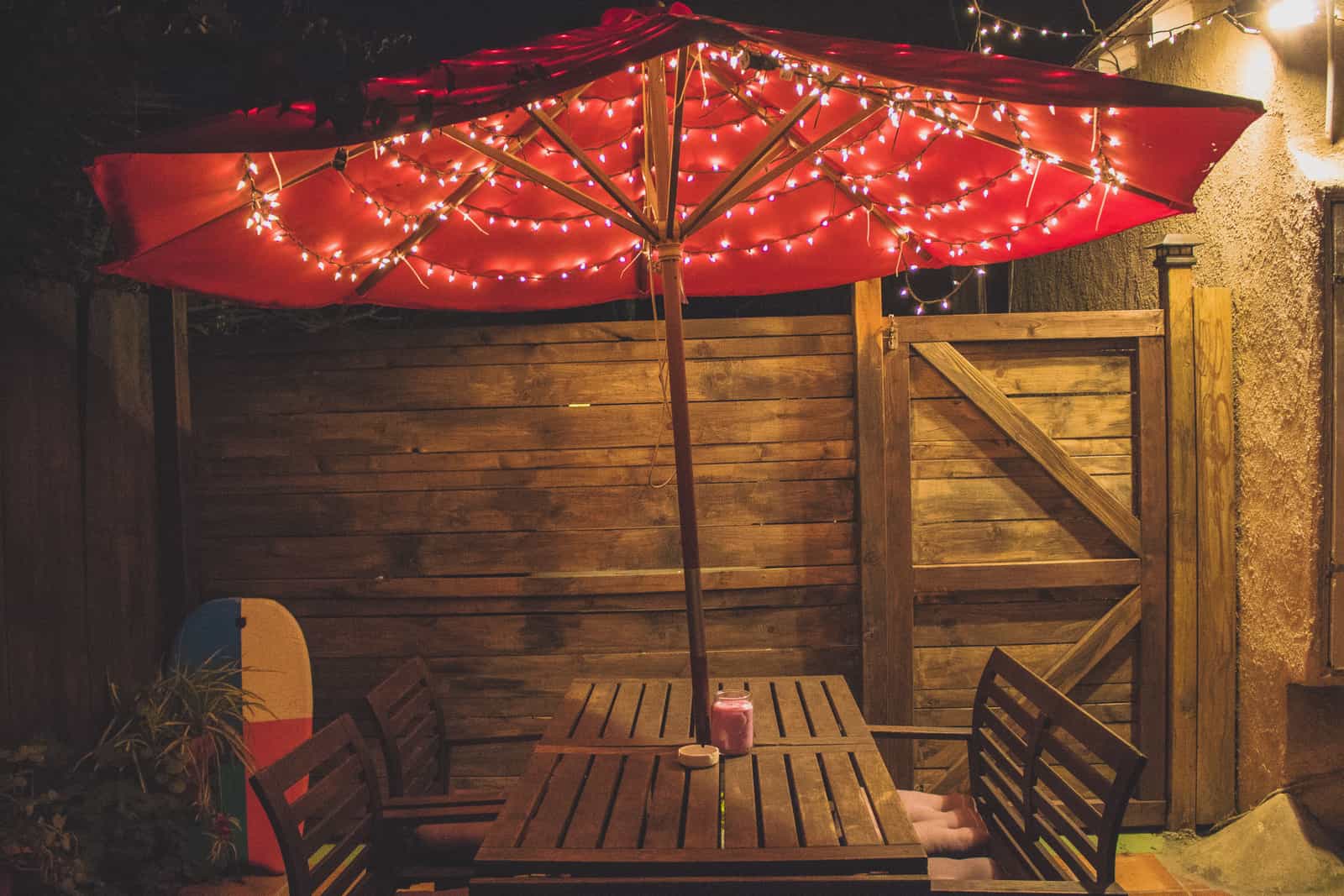 Abba Patio 9ft Market Umbrella with Push-Button TiltThe common size, for the common table. | A standard six-seat table | 6.3 | Check price on Amazon #ad How we earn · Live price at Amazon |
| 2 | Treasure Garden Deluxe Auto-Tilt Market UmbrellaAuto-tilt handles the sun-angle problem sizing alone cannot. | Tilt for the afternoon sun | 8.6 | Check price on Amazon #ad How we earn · Live price at Amazon |
| 3 |  Abba Patio 10x13ft Rectangular Offset Cantilever UmbrellaRectangular coverage, and the biggest ballast requirement here. | Long tables and sofa runs | 6.0 | Check price on Amazon #ad How we earn · Live price at Amazon |
| 4 | 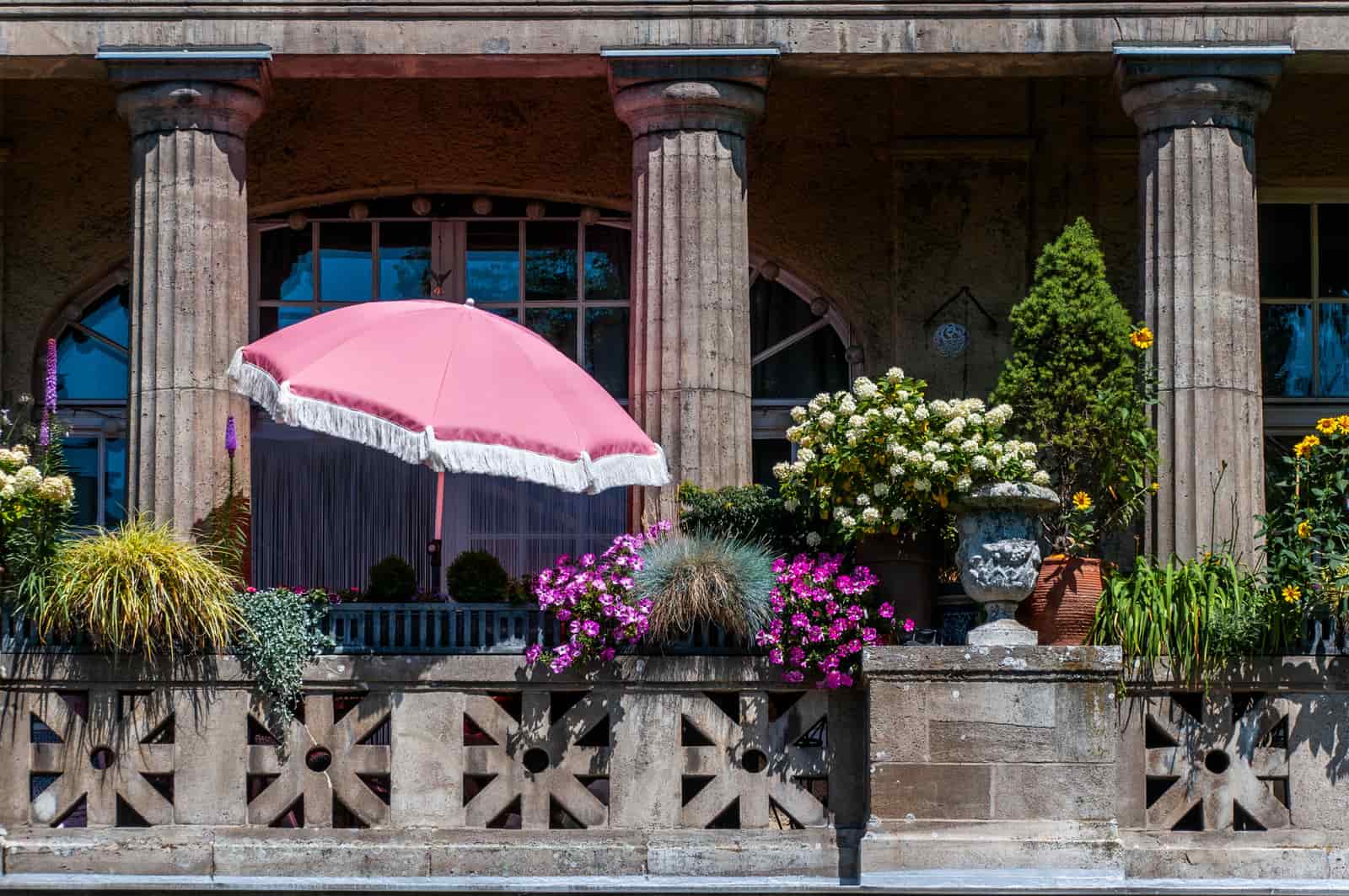 US Weight Durable Umbrella BaseBigger canopy means disproportionately more weight underneath. | Scaling the base with the canopy | 7.4 | Check price on Amazon #ad How we earn · Live price at Amazon |
Scores are our own, assessed from published specifications, warranty terms and owner-reported outcomes — not from laboratory testing. Prices are shown live on Amazon; we never print a figure we cannot verify.
The overhang rule
Size the canopy to the furniture plus the chairs pulled out, not to the table alone. This is the single most common sizing mistake: a canopy that exactly covers the tabletop leaves everyone sitting at it in full sun, because people sit outside the table edge, not on top of it.
The working rule is to allow meaningful overhang beyond the furniture on every side — a couple of feet all round is a reasonable target for a dining table. That single adjustment is usually the difference between an umbrella that works and one that shades the food while everyone squints.
| Furniture | Aim for a canopy that... | Notes |
|---|---|---|
| Bistro table, 2 seats | Extends well past both occupied chairs | A small canopy is fine; the constraint is usually balcony rules, not size |
| Round table, 4 seats | Overhangs the pulled-out chair backs all round | Round canopy on a round table gives even coverage with no bare corner |
| Rectangular table, 6 seats | Overhangs both long sides with chairs out | A single center canopy will still leave the ends in sun part of the day |
| Long table, 8 seats | Cannot be done with one center umbrella | Use two umbrellas, or a rectangular cantilever placed to one side |
| Sectional or loungers | Covers the seating area from the side | This is cantilever territory — a center pole has nowhere to go |
The sun-angle problem
A canopy directly overhead shades the area directly underneath. The sun is directly overhead for a small part of the day and at an angle for the rest of it — which means a correctly sized umbrella still leaves people in sun at four in the afternoon, when you are most likely to want it.
Three responses, in order of usefulness:
- Buy a tilting umbrella. Tilt is what turns a midday umbrella into an afternoon one. Auto-tilt mechanisms — which tilt as you crank past full open — are the most usable, because a tilt you have to fight is a tilt you will not use.
- Oversize slightly. Extra canopy compensates for angle at no extra effort, at the cost of more ballast.
- Reposition instead. A free-standing umbrella on a rolling base can simply be moved as the sun swings, which a table-mounted one cannot.
Note the trade-off: a tilted canopy presents an asymmetric surface to the wind and loads one side of the base much harder. Tilt it for the afternoon, and straighten it before you leave it unattended.
Matching shape to furniture
- Round canopy, round table. Even coverage, no wasted shade. Our round-table page covers why round tables suit small patios generally.
- Square canopy, square table. Same logic. Square canopies also tuck into a corner more usefully than round ones.
- Rectangular canopy, long table or sofa run. The only shape that matches the geometry — and the shape with the most sail area, so the ballast requirement rises steeply.
- Round canopy over a rectangular table. Works, wastes shade at the corners, and is often the pragmatic choice because round umbrellas are cheaper and more widely available.
Size drives ballast
Every step up in canopy size increases the wind force on it, and because that force acts through a lever arm the base requirement grows faster than the canopy does. Going a size up is not a neutral decision — it is a decision to buy more weight.
The practical version: whenever you size up a canopy, size up the base at the same time, and fill it with sand rather than water. The base page covers the fill and geometry decisions, and the wind page covers what happens when you do not.
The picks in full
Each entry states what the product is, how it scores on our five criteria, what it gives up, and how the pick was made.
1. A standard six-seat table
Abba Patio 9ft Market Umbrella with Push-Button Tilt
Abba Patio · Score 6.3/10
The default mid-price market umbrella: adequate fabric, adequate frame, no illusions about high wind.
Key specifications
- 9ft canopy, eight ribs
- Rust-resistant aluminum pole
- Push-button tilt
- Polyester canopy on standard variants
How it scores
- Fade resistance
- 6.0
- Rust and corrosion
- 7.5
- Wind and stability
- 6.0
- Build and hardware
- 6.5
- Warranty strength
- 5.0
What works
- Covers a standard six-seat table
- Simple mechanism with little to break
- Broad color range
The trade-offs
- Polyester canopy fades faster than solution-dyed acrylic
- Single-tier canopy has no vent to relieve wind load
#ad How we earn · Live price at Amazon
Selected on published specification, warranty terms and owner-reported outcomes; not personally tested.
2. Tilt for the afternoon sun
Treasure Garden Deluxe Auto-Tilt Market Umbrella
Treasure Garden · Score 8.6/10
The market umbrella people replace their third cheap umbrella with, usually after the third cheap umbrella.
Key specifications
- Aluminum pole with auto-tilt crank
- Sunbrella and other performance canopy fabrics offered
- Replaceable canopy and ribs
- Fabric warranty follows the fabric maker's terms
How it scores
- Fade resistance
- 9.0
- Rust and corrosion
- 8.5
- Wind and stability
- 7.0
- Build and hardware
- 9.0
- Warranty strength
- 8.5
What works
- Parts are replaceable, so a broken rib is not a landfill event
- Solution-dyed acrylic canopies are the only ones that hold color for years
- Auto-tilt actually works under load
The trade-offs
- Costs more than most people expect to spend on an umbrella
- Still must be closed in wind — no umbrella is a wind product
#ad How we earn · Live price at Amazon
Selected on published specification, warranty terms and owner-reported outcomes; not personally tested.
3. Long tables and sofa runs
Abba Patio 10x13ft Rectangular Offset Cantilever Umbrella
Abba Patio · Score 6.0/10
Rectangular coverage for long tables and sofa runs, and the largest sail area on this list — treat wind accordingly.
Key specifications
- 10 x 13ft rectangular canopy
- Powder-coated steel or aluminum frame by variant
- Crank lift, tilt and rotation
- Cross base included on some listings
How it scores
- Fade resistance
- 6.5
- Rust and corrosion
- 6.0
- Wind and stability
- 4.5
- Build and hardware
- 6.5
- Warranty strength
- 5.0
What works
- Covers a long dining table or a full sofa run that a round canopy misses
- Tilt and rotation cover a whole afternoon of sun movement
The trade-offs
- The biggest canopy here means the biggest wind load here
- Steel-framed variants are a rust risk at every joint
- Needs serious ballast — far more than the included base on most listings
#ad How we earn · Live price at Amazon
Selected on published specification, warranty terms and owner-reported outcomes; not personally tested.
4. Scaling the base with the canopy
US Weight Durable Umbrella Base
US Weight · Score 7.4/10
Fillable rather than cast, so it ships light and weighs what it needs to once you fill it — and it cannot rust.
Key specifications
- Fillable resin base
- Accepts sand or water fill
- Fits standard market umbrella poles
- No steel structure to corrode
How it scores
- Fade resistance
- 7.0
- Rust and corrosion
- 9.5
- Wind and stability
- 7.5
- Build and hardware
- 7.0
- Warranty strength
- 5.0
What works
- Cheap to ship empty, heavy once filled with sand
- Nothing on it rusts, unlike a cast-iron base
- Sand fill weighs considerably more than the same volume of water
The trade-offs
- Water fill is much lighter than sand — most disappointment traces to this
- Resin looks less substantial than cast metal
#ad How we earn · Live price at Amazon
Selected on published specification, warranty terms and owner-reported outcomes; not personally tested.
Common questions
What size patio umbrella do I need for my table?
Should I buy a bigger patio umbrella than I need?
Do I need a tilting patio umbrella?
Can one umbrella shade a long dining table?
Sources
- Beaufort Wind Chart — Estimating Wind Speeds — National Weather Service (NOAA). Checked 2026-09-23.
Wind-speed bands and their observable effects, used instead of manufacturer wind claims we cannot verify.
Read next
More from Shade
Market and cantilever umbrellas, the fabric that holds color, and the base weight that keeps it standing.