Buying guide
Why is patio furniture so expensive?
Some of the price is real engineering. Some of it is shipping air. Knowing which is which is the whole skill.
How this page is funded: Deck & Dusk earns a commission when you buy through the Amazon links below, at no extra cost to you. Commission never decides a ranking — our picks and our criteria are set before any link is added. Read the full disclosure.
Quick picks
Three pieces across the price range, chosen to show what the extra money buys and where it stops buying anything.
| # | Product | Best for | Score | Price |
|---|---|---|---|---|
| 1 | 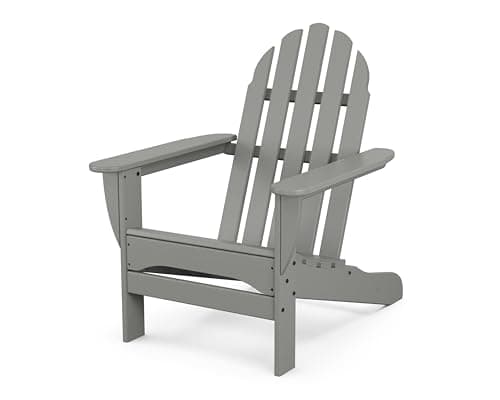 POLYWOOD Classic Adirondack ChairThrough-color HDPE, stainless hardware and a 20-year warranty you can read. | Where the money is real | 9.3 | $199.00 · View on Amazon #ad How we earn · Price as of October 11, 2026 |
| 2 | 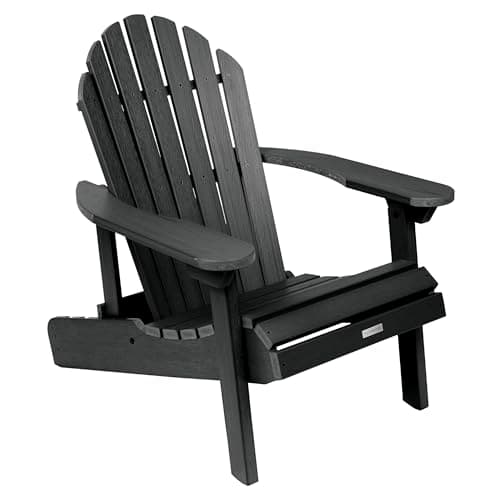 Highwood Hamilton Folding Adirondack ChairMost of the material story for less, with a shorter warranty to match. | The sensible middle | 8.6 | $219.00 · View on Amazon #ad How we earn · Price as of October 11, 2026 |
| 3 | 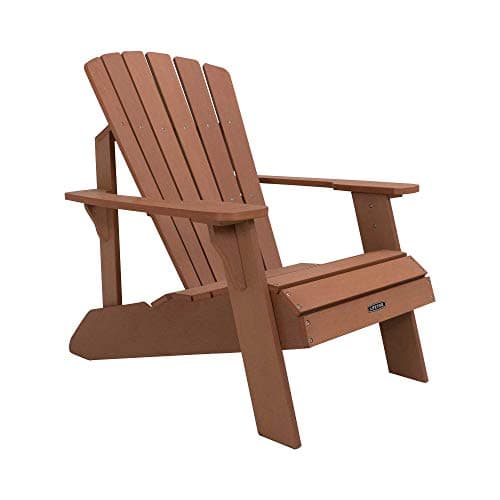 Lifetime Adirondack ChairA hollow shell chair that admits what it is instead of pretending otherwise. | Where cheap is honest | 6.1 | $199.00 · View on Amazon #ad How we earn · Price as of October 11, 2026 |
Scores are our own, assessed from published specifications, warranty terms and owner-reported outcomes — not from laboratory testing. Prices are shown live on Amazon; we never print a figure we cannot verify.
The short answer
Outdoor furniture is expensive because it has to survive conditions that would destroy indoor furniture, and the things that make that possible — UV-stable polymer, corrosion-proof hardware, finishes rated for years of weathering — all cost real money. On top of that sits a genuine logistics problem: this furniture is heavy, bulky and seasonal, and somebody pays to move and store it. What is not worth paying for is cushion fabric you will replace anyway, glass, and brand positioning with no specification behind it. Our is patio furniture worth it page takes the value question; this one takes the cost question.
The material actually costs more
The gap between cheap and expensive outdoor furniture is mostly a materials gap, and it is not subtle:
- Through-color versus surface color. HDPE poly lumber has pigment and UV inhibitors compounded through the material, so a scratch exposes the same color. Painted or coated furniture has color on the surface only, where it can wear off. Compounding costs more than coating.
- UV inhibitor loading. UV stabilizers are an additive with a real price, and they are the difference between a resin chair that lasts a decade and one that goes chalky and brittle in three summers. You cannot see the difference in a photo.
- Aluminum versus steel. Aluminum costs more per pound and more to fabricate, and it is the reason the furniture does not rust. See the best metal for outdoor furniture.
- Teak heartwood versus sapwood or plantation acacia. Teak's durability lives in the heartwood, which is the slow-grown inner wood of a mature tree, and there is not much of it per tree. That is a supply constraint, not a markup. See our teak reference.
- Coating tier. The AAMA 2605 specification requires ten years of South Florida weathering against 2604's five, built on roughly 70% fluoropolymer resin against 50%. More resin, more cost.
Hardware and fasteners
A set of stainless bolts costs several times a set of zinc-plated steel ones, and on a seven-piece dining set there are a lot of them. It is a small line item that shows up in the shelf price and a large one in the lifespan: plated steel fasteners rust, seize and become the reason you cannot even disassemble the furniture to repair it. Grade matters too, though 304 is the realistic ceiling in consumer furniture.
This is one of the clearest cases where the expensive option is simply the correct one, and where a cheap set can be meaningfully improved for very little: replacing the hardware at assembly is cheap. The reasoning is on our assembly page.
Shipping weight and air
Outdoor furniture is one of the worst product categories to ship, and that cost reaches you:
Why the logistics cost is high
| Factor | Why it costs | Who pays |
|---|---|---|
| Weight | The good materials are dense - cast aluminum, poly lumber, hardwood | Freight, priced by weight |
| Bulk | A sectional is mostly air, and air occupies a container | Freight, priced by volume |
| Damage rate | Large heavy items get damaged in transit more often | Returns and replacement reserve |
| Seasonality | Stock arrives before spring and must be warehoused | Carrying cost, then end-of-season discounting |
| Assembly avoided | Flat-packing is the fix for bulk, and it works | You, in labor - which is why it is cheaper |
Seasonality is the one of these you can exploit directly: the same set costs meaningfully less at the end of the season than at the start.
That last row is actionable rather than theoretical. The structural discounting cycle in this category is predictable enough to plan around, and it is the single largest lever a buyer has — see when to buy patio furniture.
A long warranty is priced in
A twenty-year warranty is a financial liability the manufacturer carries, and it is funded out of the purchase price. That sounds like a reason to be cynical and is actually the reverse: a company that publishes specific failure modes — splintering, cracking, chipping, peeling, rot — has priced in the expectation of honoring it, and a competitor matching those terms is competing on the same basis.
What makes warranty length worth paying for is the specificity. "Limited lifetime warranty" with no named failure modes and no stated remedy costs the manufacturer nothing and tells you nothing. A twenty-year term that names what it covers has a real number behind it.
What is not worth paying for
Four places the money stops buying durability:
- Premium cushions bundled into the set. Cushions are on a much shorter replacement clock than the frame regardless of what you pay, so paying frame money for them rarely pays back. Buy the frame well and the cushions separately — the cushion lifespan page explains the clocks.
- Glass table tops. A cost and a liability at the same time.
- Unstated specifications at premium prices. "Marine-grade," "all-weather" and "commercial-grade" with no number attached are words, not specifications.
- Showroom brands you cannot buy parts for. Serviceability is worth more over twenty years than a nicer casting.
The picks in full
Each entry states what the product is, how it scores on our five criteria, what it gives up, and how the pick was made.
1. Where the money is real
POLYWOOD Classic Adirondack Chair
POLYWOOD · Score 9.3/10
The reference HDPE Adirondack: color compounded through the lumber, a 20-year residential warranty, and nothing on it to rust or splinter.
Key specifications
- 100% HDPE lumber, color and UV inhibitors compounded through the material
- Marine-grade stainless hardware
- 20-year residential lumber warranty
- Arrives flat-packed; bolt-together assembly
How it scores
- Fade resistance
- 9.5
- Rust and corrosion
- 9.5
- Wind and stability
- 8.5
- Build and hardware
- 9.0
- Warranty strength
- 9.5
What works
- Fade behavior is a material property here, not a surface coat that can wear off
- Warranty language explicitly covers splintering, cracking, chipping, peeling and rot
- Heavy enough to stay put on a gusty evening
- Washes clean with soap and water — no sealing, oiling or refinishing, ever
The trade-offs
- Costs multiples of a big-box resin chair, and the value only shows up over years
- Heavy to move around a deck on your own
- Sanding it voids the warranty, so deep scratches stay
#ad How we earn · Price as of October 11, 2026
Selected on published specification, warranty terms and owner-reported outcomes; not personally tested.
2. The sensible middle
Highwood Hamilton Folding Adirondack Chair
Highwood · Score 8.6/10
The one HDPE Adirondack that folds, which is the whole argument if you have to clear the deck for winter or a storm.
Key specifications
- highwood HDPS synthetic lumber; color and UV inhibitors run through the material
- Folds flat for storage
- 12-year residential warranty
- Stainless hardware
How it scores
- Fade resistance
- 9.0
- Rust and corrosion
- 9.0
- Wind and stability
- 7.5
- Build and hardware
- 8.5
- Warranty strength
- 8.0
What works
- Folding is a genuine functional difference in this category, not a gimmick
- Much easier to move and store than a fixed poly chair
- Same no-maintenance cleaning story as any HDPE chair
The trade-offs
- 12-year warranty against 20 from POLYWOOD and Trex
- Folding hinges add the only moving parts on an otherwise inert chair
#ad How we earn · Price as of October 11, 2026
Selected on published specification, warranty terms and owner-reported outcomes; not personally tested.
3. Where cheap is honest
Lifetime Adirondack Chair
Lifetime · Score 6.1/10
Blow-molded polyethylene rather than solid poly lumber — a different product at a fraction of the price, and honest about being one.
Key specifications
- UV-protected blow-molded high-density polyethylene shell
- Powder-coated steel frame
- Lightweight; folds on some models
- Typically a 2-5 year limited warranty
How it scores
- Fade resistance
- 7.0
- Rust and corrosion
- 6.0
- Wind and stability
- 5.0
- Build and hardware
- 6.0
- Warranty strength
- 5.0
What works
- Cheapest legitimate route into a weatherproof Adirondack
- Light enough for one person to rearrange a whole deck
- Shell will not rot or absorb water
The trade-offs
- Hollow shell, not solid lumber — it flexes and it reads as cheaper
- Light weight means it moves in wind
- The steel frame is the failure point: if the coating chips, it rusts
#ad How we earn · Price as of October 11, 2026
Selected on published specification, warranty terms and owner-reported outcomes; not personally tested.
Common questions
Why is outdoor furniture so expensive?
Is expensive patio furniture worth the money?
What is the cheapest way to buy good patio furniture?
Why is teak patio furniture so expensive?
Does a longer warranty mean better patio furniture?
Sources
- Our Materials — POLYWOOD. Checked 2026-09-23.
Manufacturer statement that POLYWOOD lumber is 100% HDPE with UV inhibitors and pigments compounded through the material rather than applied as a surface coat.
- POLYWOOD Limited Residential Warranty — POLYWOOD. Checked 2026-09-23.
The 20-year residential lumber warranty terms, including the splinter / crack / chip / peel / rot language and the sanding and painting exclusions.
- 304 vs 316 Stainless Steel Screws — SFS USA. Checked 2026-09-23.
Why 316 fasteners resist chloride pitting and 304 do not: the 2-3% molybdenum addition that stabilizes the passive layer.
- Understanding AAMA 2604 vs. AAMA 2605 — AMICO Architectural Metals. Checked 2026-09-23.
The South Florida natural-weathering requirement behind each tier — 5 years for 2604, 10 years for 2605 — and the 50% vs 70% fluoropolymer resin difference.
- Trex Outdoor Furniture Warranty — Trex Outdoor Furniture (POLYWOOD, LLC). Checked 2026-09-24.
The 20-year residential lumber warranty and its splinter / crack / chip / peel / rot language, the separate 5-year terms on welds, powder coat and hardware, and the fact that POLYWOOD, LLC is the warrantor and licensee.
Read next
More from Durability & Lifespan
Lifespan by material, the three failure modes that end most patio sets, and how to read a warranty.