Durability
How long do wooden Adirondack chairs last?
Anywhere from three years to thirty. The species sets the range and the joinery sets where in it you land.
How this page is funded: Deck & Dusk earns a commission when you buy through the Amazon links below, at no extra cost to you. Commission never decides a ranking — our picks and our criteria are set before any link is added. Read the full disclosure.
Quick picks
Three wooden chairs at different points on the species range, plus the cleaner that does the maintenance and the chair for anyone who has decided not to do any.
| # | Product | Best for | Score | Price |
|---|---|---|---|---|
| 1 | No image Cambridge Casual Teak Adirondack ChairTeak heartwood carries its decay resistance in the wood, so neglect costs you color rather than structure. | Longest-lived wood | 7.8 | Check price on Amazon #ad How we earn · Live price at Amazon |
| 2 | No image Christopher Knight Home Acacia Adirondack ChairA good-looking chair with a real maintenance contract attached - seal it annually or lose it early. | Acacia, with the caveat | 6.0 | Check price on Amazon #ad How we earn · Live price at Amazon |
| 3 | 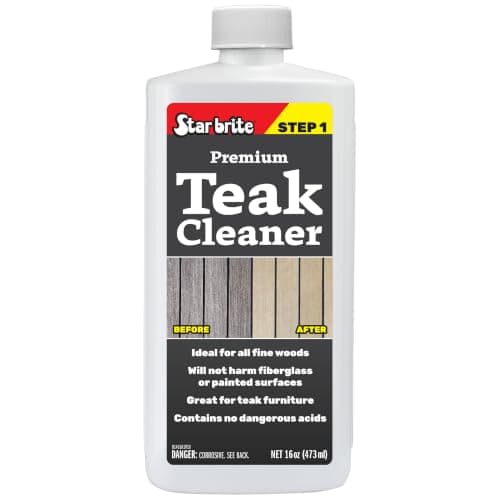 Star brite Premium Outdoor Teak CleanerA two-part cleaner takes grayed wood back without removing material the way sanding does. | The maintenance | 7.5 | $13.59 · View on Amazon #ad How we earn · Price as of October 16, 2026 |
| 4 | 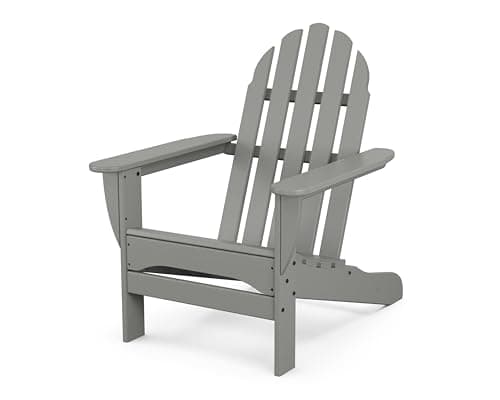 POLYWOOD Classic Adirondack ChairThe same silhouette in HDPE, with a 20-year warranty and no maintenance contract at all. | If you would rather not | 9.3 | $199.00 · View on Amazon #ad How we earn · Price as of October 16, 2026 |
Scores are our own, assessed from published specifications, warranty terms and owner-reported outcomes — not from laboratory testing. Prices are shown live on Amazon; we never print a figure we cannot verify.
A wooden Adirondack chair lasts between three and thirty years outside, and the species decides which end you are near. Teak heartwood goes 20 years and often well beyond with almost no care. Western red cedar and white oak sit around 10 to 15 years. Acacia, eucalyptus and pine run three to seven unless they are sealed every year, and even then the fasteners usually give out before the boards do.
The short answer
Two properties set the range, and they are independent of each other. The first is natural decay resistance — whether the wood's own extractives discourage the fungi that cause rot, which the USDA Forest Products Laboratory classifies by species. The second is hardness, which governs dents and wear but says nothing about rot. Teak is a useful demonstration of the gap: the Wood Database puts teak at 1,070 lbf Janka, softer than plenty of furniture woods, while rating its decay resistance as very durable. Hardness and lifespan are not the same axis.
A chair bought for decades should therefore be chosen on decay resistance. Hardness is a comfort-and-appearance question.
Lifespan by species
Wooden Adirondack chair lifespan in full outdoor exposure
| Species | Decay resistance | Maintenance it needs | Realistic outdoor life |
|---|---|---|---|
| Teak heartwood | Very durable - resistance is in the wood | Optional. Clean when gray bothers you | 20 years and up, often much longer |
| Western red cedar | Durable, and light enough to move easily | Seal or let it silver; either is viable | 10 to 15 years |
| White oak | Durable, and very hard | Annual finish helps it considerably | 10 to 15 years |
| Acacia | Moderate at best, and grade varies widely | Annual sealing is not optional | 3 to 7 years; 7 only if you keep the contract |
| Eucalyptus | Moderate, and prone to checking | Annual oiling, plus winter storage | 4 to 8 years |
| Pine, treated or painted | Low unless pressure-treated | Repaint on a cycle; water finds every breach | 3 to 6 years |
Teak sapwood is not teak heartwood and does not carry the same resistance. A cheap teak chair is usually cheap because of how much sapwood is in it.
Two things narrow these ranges in practice. Standing water is the single biggest accelerator — a chair whose seat slats hold a puddle ages at a different rate from the identical chair on a sloping deck. And a chair stored dry over winter can roughly double the life of a moderate-resistance species, which is why winter storage matters far more for acacia than it does for teak.
The joints fail before the wood
On most wooden Adirondacks the boards are not what ends the chair. Three other things are, in rough order of frequency:
- Fasteners. Zinc-plated steel screws in wet wood corrode, stain the timber around them, and eventually strip out of their holes. Stainless hardware is the single cheapest upgrade available on a wooden chair, and on a bolted design you can make it yourself.
- End grain. Water enters wood fastest through cut ends, and an Adirondack has a lot of them — every slat, every leg bottom. A chair whose legs sit directly on a damp deck wicks moisture up through the end grain all season.
- Glued joints. Interior-grade adhesive on an outdoor chair fails as the wood moves through its wet-dry cycles. Mortise-and-tenon or through-bolted joinery survives that movement; a butt joint with glue and two screws does not.
What maintenance actually buys
It depends which problem the species has. On teak, maintenance is purely cosmetic: leaving it to weather to a silver-gray patina does not weaken it, so cleaning and oiling is a color decision. On acacia, eucalyptus and pine, the annual finish is structural — it is the only thing standing between moderate decay resistance and sustained wetting.
Use a penetrating oil or a wood sealer, not a varnish. A film finish on outdoor furniture cracks under UV and seasonal movement, water gets underneath, and the only honest fix is stripping the chair back; the full argument is on oil versus varnish. And clean before you treat — a two-part cleaner restores grayed wood with far less loss than sanding, which removes material every time you reach for it.
When a chair is finished
Wood gives clear warnings, and the useful distinction is between cosmetic and structural:
- Grey surface, raised grain, light surface checking: cosmetic. Clean, or leave it alone.
- Black staining around fasteners: corroding hardware. Replace the screws with stainless before the holes strip.
- Soft wood you can press a key into, especially at leg bottoms and seat fronts: rot. That member is finished, and often replaceable on a bolted chair.
- Deep checks running across a load-bearing slat, or any flex in the back frame: structural. Stop sitting in it.
If this reads like more upkeep than you want to sign for, that is a legitimate conclusion, and it is the reason HDPE poly lumber took this category over — POLYWOOD versus teak runs the comparison, and are Adirondack chairs worth it takes the broader question on.
The picks in full
Each entry states what the product is, how it scores on our five criteria, what it gives up, and how the pick was made.
1. Longest-lived wood
Cambridge Casual Teak Adirondack Chair
Cambridge Casual · Score 7.8/10
Real teak at an accessible price, which in practice means plantation teak: genuinely weatherproof, with more sapwood than a marine-grade board.
Key specifications
- Plantation-grown teak
- Brass or stainless fasteners depending on model
- Ships partly assembled
- Will silver within roughly a year outdoors unless oiled
How it scores
- Fade resistance
- 7.0
- Rust and corrosion
- 8.5
- Wind and stability
- 8.5
- Build and hardware
- 8.0
- Warranty strength
- 6.0
What works
- Teak heartwood carries its own decay resistance — no coating to fail
- Repairable and sandable, unlike every plastic in this list
- Ages into a gray that many people prefer to the honey color
The trade-offs
- Needs cleaning and optional oiling if you want to keep the color
- Lower grades include sapwood, which is the weak link outdoors
- Heavier and pricier than HDPE for a similar service life
#ad How we earn · Live price at Amazon
Selected on published specification, warranty terms and owner-reported outcomes; not personally tested.
2. Acacia, with the caveat
Christopher Knight Home Acacia Adirondack Chair
Christopher Knight Home · Score 6.0/10
Acacia looks like teak at a third of the price and behaves nothing like it: it needs sealing, and it needs it on a schedule.
Key specifications
- Kiln-dried acacia hardwood
- Factory stain or teak-oil finish
- Bolt-together assembly
- Requires annual resealing to stay weatherproof
How it scores
- Fade resistance
- 5.5
- Rust and corrosion
- 6.0
- Wind and stability
- 8.0
- Build and hardware
- 6.5
- Warranty strength
- 4.0
What works
- Genuine hardwood warmth at a price no teak chair reaches
- Heavy enough to stay put
The trade-offs
- Skip a season of sealing and it grays, checks and can develop soft spots
- Not in the same durability class as teak or HDPE, whatever the listing implies
- Hardware grade varies; budget models use plated steel that will rust
#ad How we earn · Live price at Amazon
Selected on published specification, warranty terms and owner-reported outcomes; not personally tested.
3. The maintenance
Star brite Premium Outdoor Teak Cleaner
Star brite · Score 7.5/10
The two-step teak cleaner that brings gray wood back without the aggressive sanding that thins a board every time.
Key specifications
- Two-part cleaner and brightener system
- Formulated for weathered gray or blackened teak
- Applied to dry wood, worked in for a few minutes, rinsed
- Compatible with teak oil and sealer afterward
How it scores
- Fade resistance
- 7.5
- Rust and corrosion
- 8.0
- Wind and stability
- 7.0
- Build and hardware
- 8.0
- Warranty strength
- 5.0
What works
- Chemical cleaning removes far less material than sanding does
- Works on the gray and black staining that soap alone will not shift
The trade-offs
- The two-step process takes an afternoon on a full set
- Needs rinsing away from planting — it is a cleaner, not a soap
#ad How we earn · Price as of October 16, 2026
Selected on published specification, warranty terms and owner-reported outcomes; not personally tested.
4. If you would rather not
POLYWOOD Classic Adirondack Chair
POLYWOOD · Score 9.3/10
The reference HDPE Adirondack: color compounded through the lumber, a 20-year residential warranty, and nothing on it to rust or splinter.
Key specifications
- 100% HDPE lumber, color and UV inhibitors compounded through the material
- Marine-grade stainless hardware
- 20-year residential lumber warranty
- Arrives flat-packed; bolt-together assembly
How it scores
- Fade resistance
- 9.5
- Rust and corrosion
- 9.5
- Wind and stability
- 8.5
- Build and hardware
- 9.0
- Warranty strength
- 9.5
What works
- Fade behavior is a material property here, not a surface coat that can wear off
- Warranty language explicitly covers splintering, cracking, chipping, peeling and rot
- Heavy enough to stay put on a gusty evening
- Washes clean with soap and water — no sealing, oiling or refinishing, ever
The trade-offs
- Costs multiples of a big-box resin chair, and the value only shows up over years
- Heavy to move around a deck on your own
- Sanding it voids the warranty, so deep scratches stay
#ad How we earn · Price as of October 16, 2026
Selected on published specification, warranty terms and owner-reported outcomes; not personally tested.
Common questions
How long do wooden Adirondack chairs last outside?
Do wooden Adirondack chairs need to be sealed every year?
What wood lasts longest for an Adirondack chair?
Why do the screws rust on wooden outdoor chairs?
Sources
- Teak (Tectona grandis) — The Wood Database. Checked 2026-10-15.
Janka hardness of 1,070 lbf for teak against its rot-resistance rating of 'very durable' — the pairing that shows hardness and decay resistance are independent properties.
- Acacia (genus overview) — The Wood Database. Checked 2026-10-15.
That acacia names a genus whose density is greatly variable, ranging from species lighter than black cherry to some of the heaviest and hardest woods in the world, and that the genus was recently split into five genera — the basis for this site's position that an acacia listing names no single material.
- Wood Handbook, Chapter 14: Biodeterioration of Wood — USDA Forest Products Laboratory. Checked 2026-09-23.
Heartwood decay-resistance categories, and the point that heartwood — not sapwood — carries a species' decay resistance.
- Effect of age on heartwood proportion, color, chemical composition, and biological resistance of teakwood — BioResources (NC State University). Checked 2026-09-23.
Peer-reviewed finding that teak heartwood is highly resistant to fungal attack while positions near pith and sapwood are only resistant — the basis for the Grade A / B / C distinction.
- Product Warranty — Cambridge Casual. Checked 2026-09-24.
The one-year manufacturer limited warranty on wood frames and cushions, and the exclusion of natural fading and changes in wood frames from that cover.
Read next
More from Durability & Lifespan
Lifespan by material, the three failure modes that end most patio sets, and how to read a warranty.