Seating
Best outdoor rocking chairs
Rocking chairs fail at the joints, which is exactly the part under repeated load.
How this page is funded: Deck & Dusk earns a commission when you buy through the Amazon links below, at no extra cost to you. Commission never decides a ranking — our picks and our criteria are set before any link is added. Read the full disclosure.
Quick picks
Ranked with joint construction weighted heavily, because on a rocker that is what fails rather than the material surface.
| # | Product | Best for | Score | Price |
|---|---|---|---|---|
| 1 | 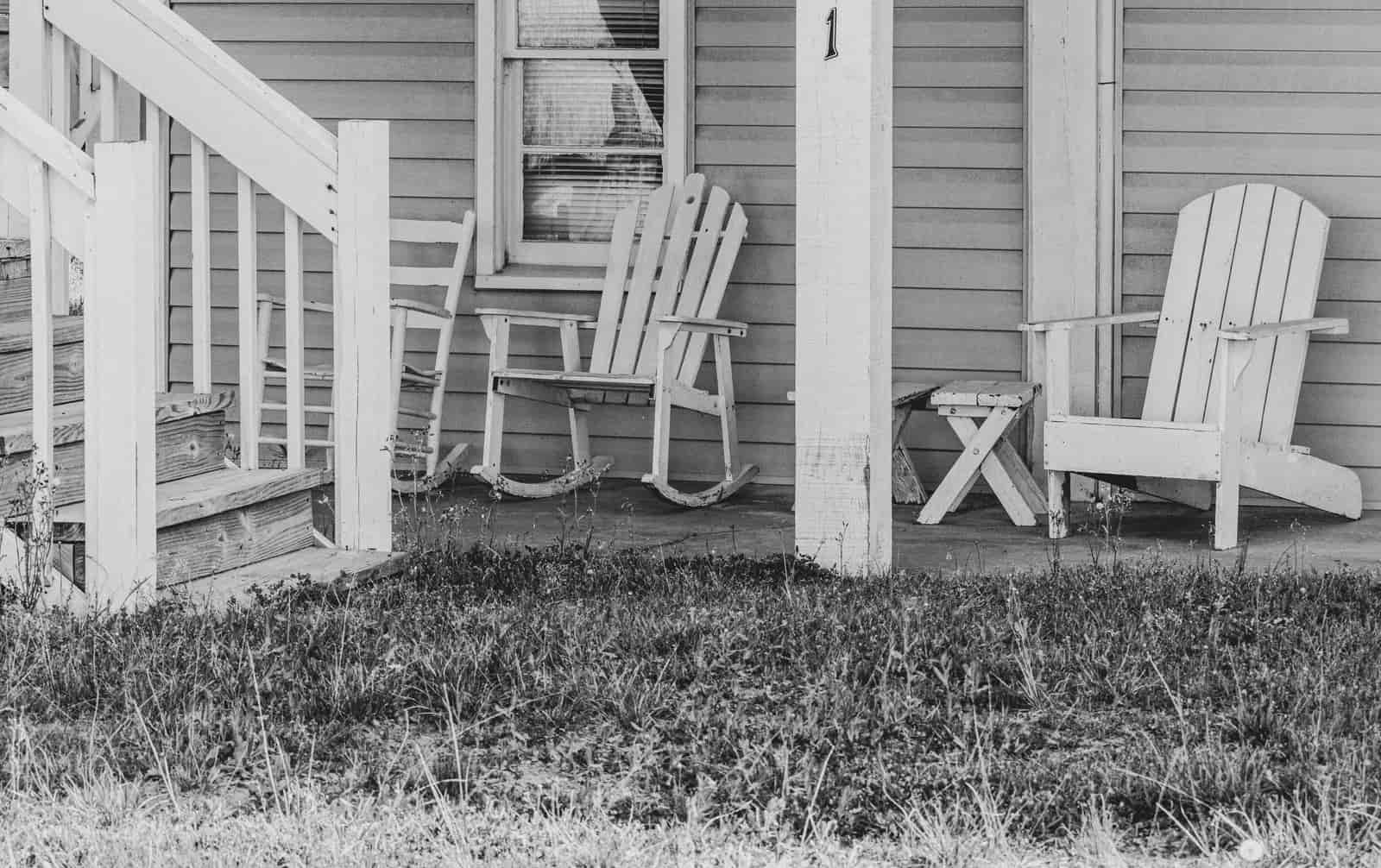 POLYWOOD Jefferson Rocking ChairNo glued joints to loosen, no finish to strip, 20-year warranty. | Best overall | 9.1 | Check price on Amazon #ad How we earn · Live price at Amazon |
| 2 | Trex Outdoor Furniture Yacht Club Rocking ChairCleaner lines, same 20-year HDPE proposition underneath. | Modern decks | 9.0 | Check price on Amazon #ad How we earn · Live price at Amazon |
| 3 | Highwood Lehigh Porch Rocking ChairSpindle-back profile in poly lumber at twelve years. | Traditional look, lower price | 8.5 | Check price on Amazon #ad How we earn · Live price at Amazon |
| 4 |  Classic Accessories Veranda Patio Furniture CoverIf you own wood, covering it is the highest-value habit there is. | Protecting a wooden rocker | 7.3 | Check price on Amazon #ad How we earn · Live price at Amazon |
Scores are our own, assessed from published specifications, warranty terms and owner-reported outcomes — not from laboratory testing. Prices are shown live on Amazon; we never print a figure we cannot verify.
Why rockers fail at the joints
A rocking chair is unusual among outdoor furniture in that it is under cyclic load every time it is used. A static chair carries weight; a rocker carries weight that shifts back and forth through every joint, thousands of times a season.
Add moisture to that. Outdoor wood swells and shrinks with humidity, working the glue line in every glued joint. Cyclic mechanical load plus moisture cycling is a much harsher combination than either alone, and it is why wooden rockers loosen years before wooden chairs of the same construction do.
The classic sequence: a faint creak in year two, visible movement at the arm-to-back joint in year four, and a chair that racks side to side by year six. At that point the repair is disassembly and re-gluing, which on an outdoor chair is rarely worth doing twice.
Rocker geometry
Rockers vary more in feel than they look like they should, and three things account for most of it:
- Runner curve radius. A tighter curve rocks faster and further through a shorter arc; a flatter curve gives a slower, longer motion. Flatter is generally more relaxing and less likely to feel tippy.
- Runner length behind the seat. Short rear runners let a chair tip backward more easily. Longer rear extension is a safety feature as much as a comfort one, particularly with children around.
- Center of mass. A heavy chair with a low center of mass rocks steadily and stops when you stop. A light one keeps moving and shifts position on the porch over time.
Porch versus open deck
A covered porch is a materially easier environment than an open deck, and it changes what is worth buying.
Under a roof, rain is mostly deflected, UV exposure is a fraction of open sun, and freeze-thaw cycling on wet wood largely does not happen. A wooden rocker on a covered porch can last a very long time — decades, with occasional refinishing. The same chair on an open deck is on a much shorter clock.
So if the chair is for a porch, wood is a legitimate choice and the rocking-joint problem is slowed considerably. If it is for an open deck, poly lumber is the answer for the same reasons it is the answer everywhere else on this site.
What surface it rocks on
Easy to overlook, and it affects both the chair and the floor:
- Wooden decking. Runners wear grooves into softwood decking over years, and grit trapped under a runner accelerates it. A small outdoor rug or runner pads solve it.
- Composite decking. More forgiving, but runners can leave marks where the surface has a texture.
- Concrete or stone. Hard on runners rather than the other way around. Poly lumber runners handle it; painted wooden runners lose their finish quickly.
- Uneven surfaces. A rocker needs a reasonably flat plane. On uneven flagstone it will rock diagonally, which is both irritating and hard on the frame.
One more consideration for a deck with gaps between boards: rocker runners can catch in a wide gap. Runners that sit across the boards rather than along them avoid it.
The picks in full
Each entry states what the product is, how it scores on our five criteria, what it gives up, and how the pick was made.
1. Best overall
POLYWOOD Jefferson Rocking Chair
POLYWOOD · Score 9.1/10
A porch rocker with no glued joints to loosen and no finish to strip — the two things that kill wooden rockers.
Key specifications
- 100% HDPE lumber with through-color
- Marine-grade stainless hardware
- 20-year residential warranty
- Weighted base geometry for a controlled rock
How it scores
- Fade resistance
- 9.5
- Rust and corrosion
- 9.5
- Wind and stability
- 8.0
- Build and hardware
- 9.0
- Warranty strength
- 9.5
What works
- Wooden rockers fail at the glued joints; there are none here
- Heavy enough that it does not walk across a porch
- Cleans with soap and water indefinitely
The trade-offs
- Expensive for a rocker
- Very heavy to reposition
#ad How we earn · Live price at Amazon
Selected on published specification, warranty terms and owner-reported outcomes; not personally tested.
2. Modern decks
Trex Outdoor Furniture Yacht Club Rocking Chair
Trex Outdoor Furniture · Score 9.0/10
Cleaner lines than a traditional rocker, with the same 20-year HDPE proposition underneath.
Key specifications
- HDPE lumber, through-color
- 20-year residential warranty
- Stainless hardware
- Contemporary slat profile
How it scores
- Fade resistance
- 9.5
- Rust and corrosion
- 9.5
- Wind and stability
- 8.0
- Build and hardware
- 9.0
- Warranty strength
- 9.5
What works
- Suits a modern deck where a spindle rocker would look out of place
- Category-leading warranty
The trade-offs
- Premium price
- Firmer than a cushioned rocker
#ad How we earn · Live price at Amazon
Selected on published specification, warranty terms and owner-reported outcomes; not personally tested.
3. Traditional look, lower price
Highwood Lehigh Porch Rocking Chair
Highwood · Score 8.5/10
The traditional-profile poly rocker: same maintenance-free material, a shorter warranty, usually a lower price.
Key specifications
- Synthetic HDPE-based lumber
- 12-year residential warranty
- Stainless hardware
- Classic spindle-back silhouette
How it scores
- Fade resistance
- 9.0
- Rust and corrosion
- 9.0
- Wind and stability
- 7.5
- Build and hardware
- 8.5
- Warranty strength
- 8.0
What works
- Looks like a painted wood rocker without being one
- Often noticeably cheaper than the 20-year brands
The trade-offs
- 12-year warranty, not 20
- Spindle backs collect more debris than slats
#ad How we earn · Live price at Amazon
Selected on published specification, warranty terms and owner-reported outcomes; not personally tested.
4. Protecting a wooden rocker
Classic Accessories Veranda Patio Furniture Cover
Classic Accessories · Score 7.3/10
The mid tier of the same family: vented and strapped like the Ravenna, lighter fabric, lower price.
Key specifications
- Water-resistant polyester with a laminated backing
- Air vents
- Elastic hem and click-close straps
- Broad size range across furniture types
How it scores
- Fade resistance
- 6.5
- Rust and corrosion
- 9.0
- Wind and stability
- 7.0
- Build and hardware
- 7.0
- Warranty strength
- 6.5
What works
- Keeps the vent-and-strap design that actually matters
- Widely available in odd sizes
The trade-offs
- Thinner fabric abrades faster at corners
- Shorter service life than the heavy tier
#ad How we earn · Live price at Amazon
Selected on published specification, warranty terms and owner-reported outcomes; not personally tested.
Common questions
What is the best material for an outdoor rocking chair?
Why do wooden rocking chairs come apart outdoors?
Are outdoor rocking chairs safe on a deck?
Will a rocking chair damage my deck?
Sources
- POLYWOOD Limited Residential Warranty — POLYWOOD. Checked 2026-09-23.
The 20-year residential lumber warranty terms, including the splinter / crack / chip / peel / rot language and the sanding and painting exclusions.
- 304 vs 316 Stainless Steel Screws — SFS USA. Checked 2026-09-23.
Why 316 fasteners resist chloride pitting and 304 do not: the 2-3% molybdenum addition that stabilizes the passive layer.
Read next
More from Seating
Adirondacks, sectionals, loungers and rockers — our picks and the material logic behind each one.