Comparison
Adirondack chair vs Muskoka chair
Mostly the same chair with two regional names — plus the small differences that are real.
How this page is funded: Deck & Dusk earns a commission when you buy through the Amazon links below, at no extra cost to you. Commission never decides a ranking — our picks and our criteria are set before any link is added. Read the full disclosure.
Quick picks
Whichever name the listing uses, the material decision is the same. These are the chairs worth buying under either label.
| # | Product | Best for | Score | Price |
|---|---|---|---|---|
| 1 | 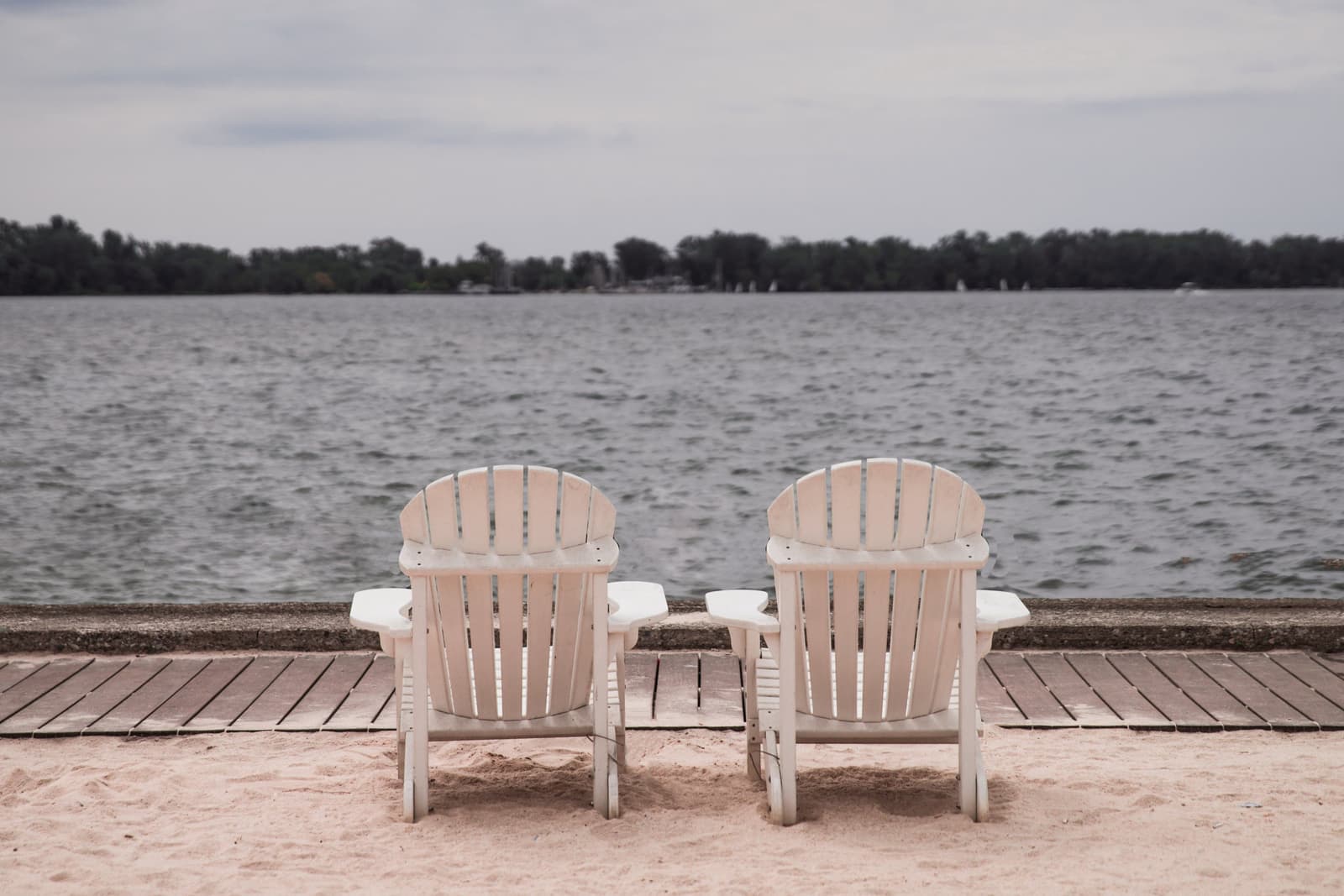 POLYWOOD Classic Adirondack ChairThe shape most people picture, in the material that lasts. | The classic fan-back profile | 9.3 | Check price on Amazon #ad How we earn · Live price at Amazon |
| 2 | Trex Outdoor Furniture Cape Cod AdirondackCloser to the Muskoka silhouette, same 20-year material. | The flatter, squarer profile | 9.1 | Check price on Amazon #ad How we earn · Live price at Amazon |
| 3 | 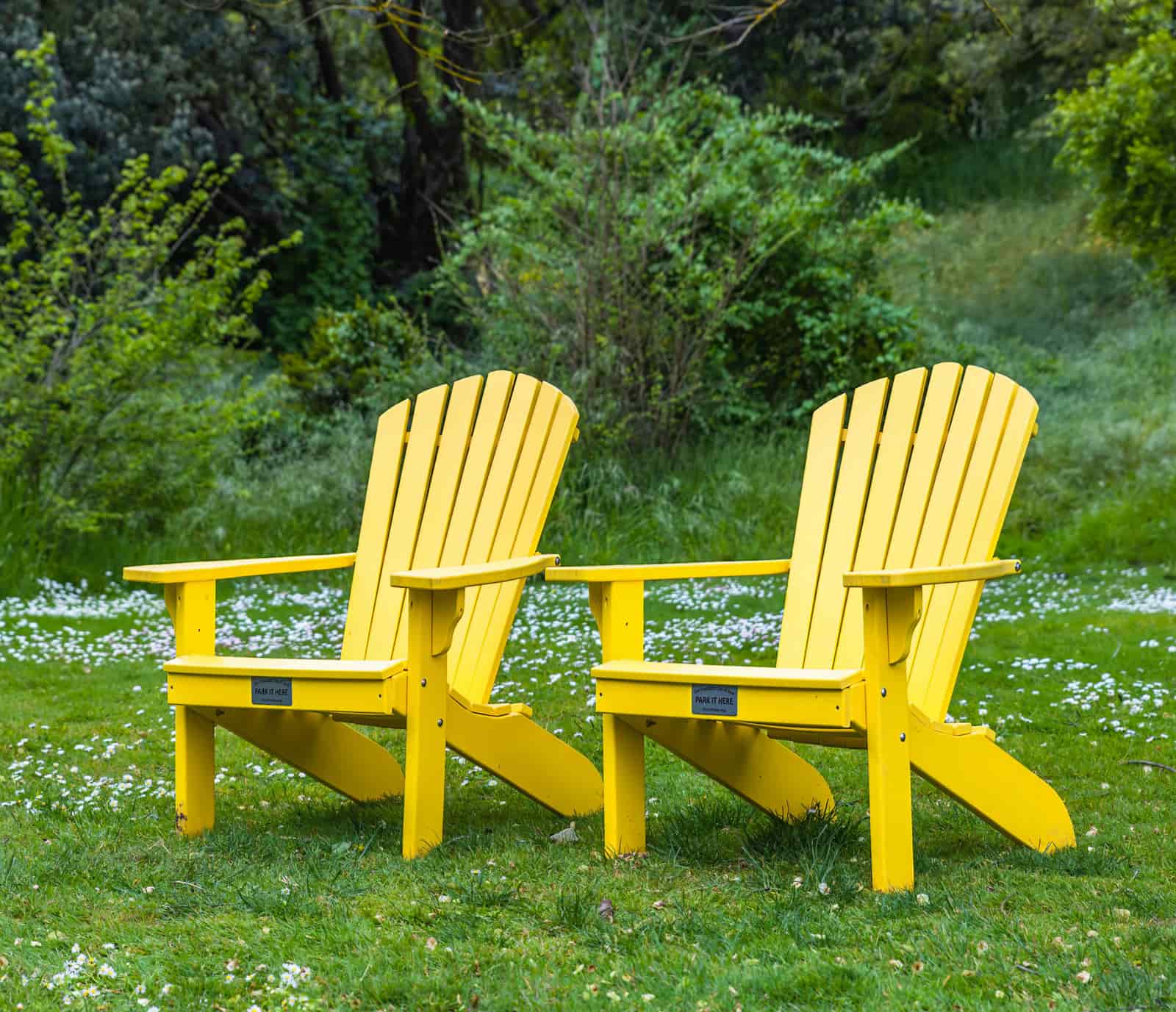 Cambridge Casual Teak Adirondack ChairThe original material, done properly. | Traditional wood | 7.8 | Check price on Amazon #ad How we earn · Live price at Amazon |
Scores are our own, assessed from published specifications, warranty terms and owner-reported outcomes — not from laboratory testing. Prices are shown live on Amazon; we never print a figure we cannot verify.
They are largely the same chair
The Adirondack chair and the Muskoka chair are the same basic design under two regional names: Adirondack in the United States, after the mountain region in upstate New York where the design originated in the early 1900s, and Muskoka in Canada, after the cottage region north of Toronto where the style became a fixture.
Both share the defining features: a steeply reclined slatted back, a seat that slopes toward the rear, and wide flat arms broad enough to hold a drink. If you are shopping in the US you will overwhelmingly see "Adirondack." If a listing says Muskoka, it is usually a Canadian brand or a retailer using the term deliberately.
The differences that are real
There is no standard defining either chair, so these are tendencies rather than rules. They hold often enough to be worth knowing.
| Typical Adirondack | Typical Muskoka | |
|---|---|---|
| Back shape | Often fan-shaped or contoured, with a curved top rail | More often flat and squared across the top |
| Back slats | Frequently shaped, sometimes with a rounded or scalloped crown | Usually straight vertical slats, plainer |
| Seat | Often contoured for comfort | More often a flat plank seat |
| Arms | Wide and flat | Wide and flat — no meaningful difference |
| Overall look | More decorative | Plainer, more utilitarian |
Tendencies, not definitions. Plenty of chairs sold as Adirondack have flat backs, and plenty sold as Muskoka are contoured.
The practical consequence is small but genuine: a contoured back and seat are noticeably more comfortable over a long sit than flat ones. If a listing photograph shows a curved top rail and a shaped seat, that is worth a little more than the name on the label.
Does the name matter when buying?
No. Search for whichever term your retailer uses and evaluate on the specifications that actually decide whether you will be happy — which are the same either way, and are laid out in our buying guide:
- Material. HDPE poly lumber or teak if it lives outdoors year-round.
- Seat angle and height. The comfort and mobility variables.
- Weight. Heavy chairs stay put; light chairs do not.
- Hardware. Stainless throughout, 316 near the coast.
- Warranty. Length and, more usefully, what it names.
One related shape worth knowing while you are here: the Westport chair is the historical ancestor of both, patented in 1905 with a single wide plank back rather than slats. Original Westports are collectibles; the slatted versions that followed are what everyone now calls Adirondack or Muskoka.
The picks in full
Each entry states what the product is, how it scores on our five criteria, what it gives up, and how the pick was made.
1. The classic fan-back profile
POLYWOOD Classic Adirondack Chair
POLYWOOD · Score 9.3/10
The reference HDPE Adirondack: color compounded through the lumber, a 20-year residential warranty, and nothing on it to rust or splinter.
Key specifications
- 100% HDPE lumber, color and UV inhibitors compounded through the material
- Marine-grade stainless hardware
- 20-year residential lumber warranty
- Arrives flat-packed; bolt-together assembly
How it scores
- Fade resistance
- 9.5
- Rust and corrosion
- 9.5
- Wind and stability
- 8.5
- Build and hardware
- 9.0
- Warranty strength
- 9.5
What works
- Fade behavior is a material property here, not a surface coat that can wear off
- Warranty language explicitly covers splintering, cracking, chipping, peeling and rot
- Heavy enough to stay put on a gusty evening
- Washes clean with soap and water — no sealing, oiling or refinishing, ever
The trade-offs
- Costs multiples of a big-box resin chair, and the value only shows up over years
- Heavy to move around a deck on your own
- Sanding it voids the warranty, so deep scratches stay
#ad How we earn · Live price at Amazon
Selected on published specification, warranty terms and owner-reported outcomes; not personally tested.
2. The flatter, squarer profile
Trex Outdoor Furniture Cape Cod Adirondack
Trex Outdoor Furniture · Score 9.1/10
The same HDPE story as POLYWOOD with a squarer, more architectural profile and a matching 20-year warranty.
Key specifications
- HDPE lumber with through-color pigmentation
- Stainless steel hardware
- 20-year residential warranty
- Slightly more upright seat angle than a classic Adirondack
How it scores
- Fade resistance
- 9.5
- Rust and corrosion
- 9.5
- Wind and stability
- 8.5
- Build and hardware
- 9.0
- Warranty strength
- 9.5
What works
- The straighter back suits people who find classic Adirondacks too reclined
- Warranty matches the category leader
- Color range leans contemporary rather than cottage
The trade-offs
- Firmer seat — the comfort trade-off for the upright angle
- Fewer retailers stock the full color range
#ad How we earn · Live price at Amazon
Selected on published specification, warranty terms and owner-reported outcomes; not personally tested.
3. Traditional wood
Cambridge Casual Teak Adirondack Chair
Cambridge Casual · Score 7.8/10
Real teak at an accessible price, which in practice means plantation teak: genuinely weatherproof, with more sapwood than a marine-grade board.
Key specifications
- Plantation-grown teak
- Brass or stainless fasteners depending on model
- Ships partly assembled
- Will silver within roughly a year outdoors unless oiled
How it scores
- Fade resistance
- 7.0
- Rust and corrosion
- 8.5
- Wind and stability
- 8.5
- Build and hardware
- 8.0
- Warranty strength
- 6.0
What works
- Teak heartwood carries its own decay resistance — no coating to fail
- Repairable and sandable, unlike every plastic in this list
- Ages into a gray that many people prefer to the honey color
The trade-offs
- Needs cleaning and optional oiling if you want to keep the color
- Lower grades include sapwood, which is the weak link outdoors
- Heavier and pricier than HDPE for a similar service life
#ad How we earn · Live price at Amazon
Selected on published specification, warranty terms and owner-reported outcomes; not personally tested.
Common questions
What is the difference between an Adirondack chair and a Muskoka chair?
Is a Muskoka chair more comfortable than an Adirondack chair?
What is a Westport chair?
Read next
More from Seating
Adirondacks, sectionals, loungers and rockers — our picks and the material logic behind each one.